 Save
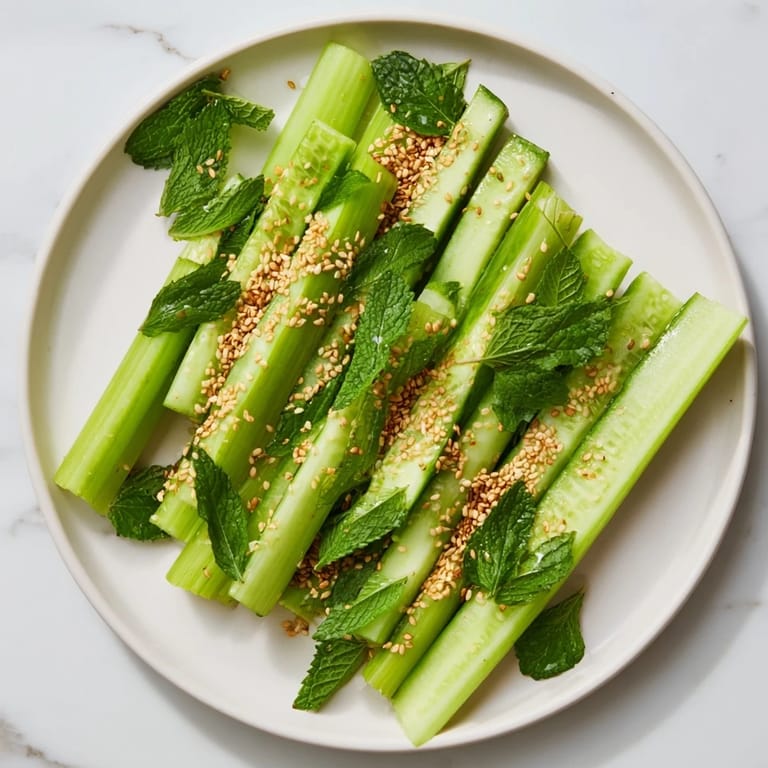
Save There's a quiet confidence in serving something that looks effortless. Years ago, a friend brought me to a tiny restaurant where the chef arranged vegetables so deliberately that I stopped mid-conversation just to admire the plate. Since then, I've realized that simplicity is its own kind of art, and this celery and cucumber arrangement has become my way of reminding myself that sometimes the most elegant meals ask the least of the kitchen.
I made this for a dinner party when a guest mentioned she'd been craving something light. What I loved most wasn't the compliments about presentation, but watching her actually pause between bites, seeming to breathe a little easier as she ate. That's when I understood this dish isn't about impressing anyone with technique—it's about offering a small, edible sanctuary.
Ingredients
- Cucumbers: Two large ones give you enough to create actual presence on the plate, and their subtle sweetness balances the earthiness of celery perfectly.
- Celery stalks: Choose thick, pale ones from the heart of the bunch—they're crunchier and less fibrous than the outer stalks.
- Toasted sesame seeds: A light scatter changes everything, adding a nutty warmth that makes even naked vegetables feel intentional.
- Soy sauce or tamari: Use tamari if you need gluten-free, and don't skip this dipping sauce—it's the quiet flavor anchor.
- Rice vinegar: Just one teaspoon brightens the dipping sauce without overpowering the vegetables' delicate nature.
- Fresh mint or basil: Whichever you choose should smell vibrant when you pinch it—that's how you know it's fresh enough to matter.
Tired of Takeout? 🥡
Get 10 meals you can make faster than delivery arrives. Seriously.
One email. No spam. Unsubscribe anytime.
Instructions
- Wash everything thoroughly:
- Run cool water over the cucumbers and celery, rubbing them gently with your fingers. This matters more than you'd think because the vegetables are bare—any grit will be noticeable on your tongue.
- Trim the ends:
- Cut about half an inch off each end to remove any browning or dryness. Fresh-looking cuts make the whole presentation feel intentional.
- Cut into long sticks:
- Aim for 4 to 5 inches, keeping them uniform so they look like they belong together. A sharp knife makes this easy; a dull one will crush the fibers and turn everything sad.
- Arrange with purpose:
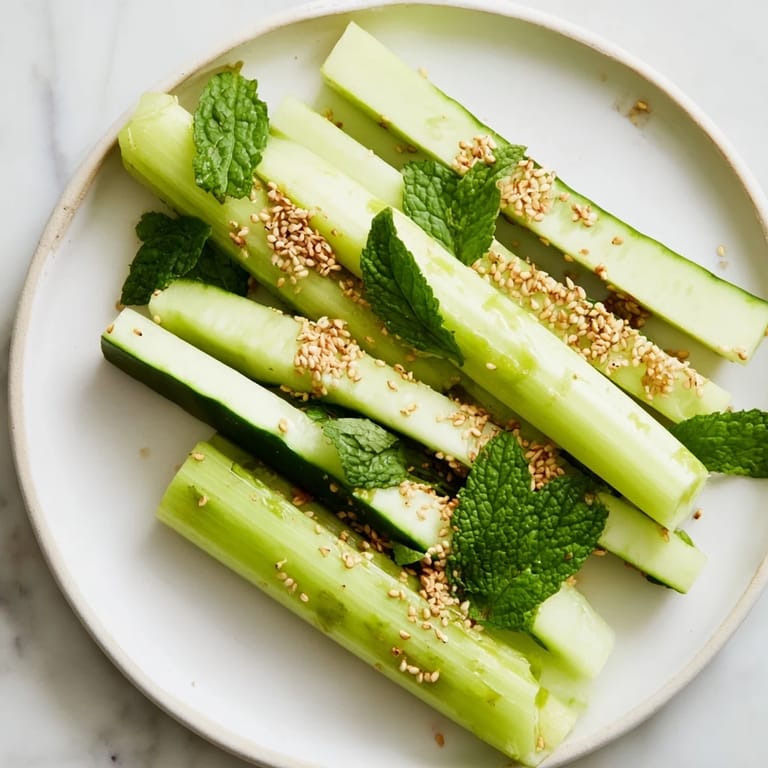
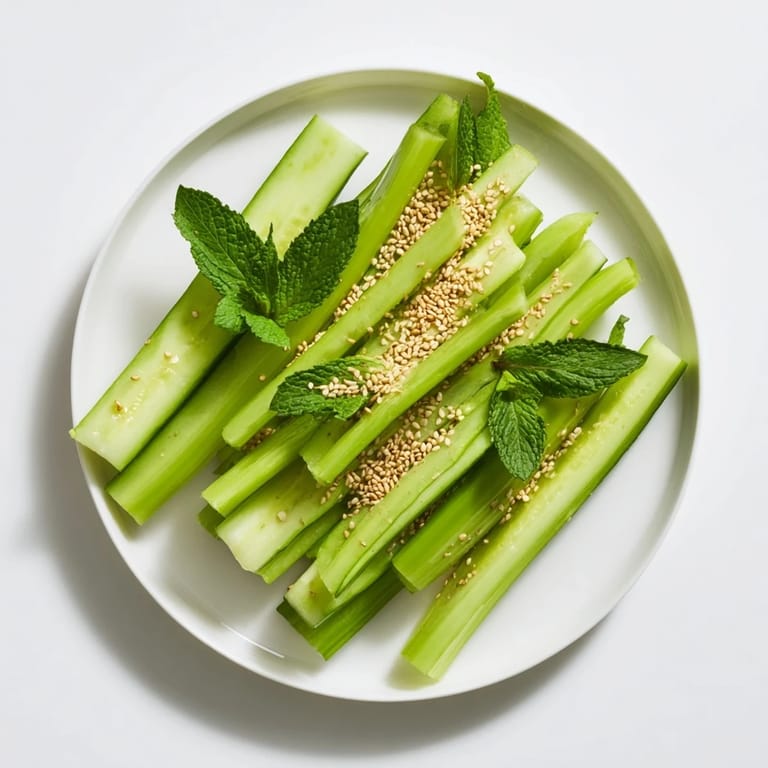
- Stand some pieces vertically, lay others horizontally, and leave a little breathing room between them. Think of it like a minimalist garden rather than a crowded plate.
- Add the finishing touches:
- Sprinkle sesame seeds where they'll catch light, tuck mint or basil leaves between the vegetables so their aroma drifts up as people eat. This step takes two minutes but changes how the dish feels.
- Make the dipping sauce and chill:
- Mix one tablespoon soy sauce with one teaspoon rice vinegar in a small bowl, then refrigerate everything until serving. The cold makes the vegetables snap when you bite them.
 Save
Save I served this during a particularly tense afternoon, and watching everyone's shoulders drop as they ate felt like a small magic trick. Sometimes food's greatest power isn't in how it tastes, but in how it creates space for people to slow down.
The Art of Arrangement
The way you arrange vegetables on a plate tells a story without words. After years of chaotic, overstuffed appetizer platters, I learned that leaving space between pieces actually makes people notice each vegetable more. When things are tightly packed, your eye doesn't know where to land, but with breathing room, each stick becomes something you actually see. This is true for almost everything we serve, really—sometimes the empty space is the most important ingredient.
Variations and Improvisation
Once you understand the basic formula, this dish becomes a canvas. Daikon radish adds a peppery bite, carrots bring sweetness and color, and thinly sliced radishes look strikingly beautiful arranged alongside the green and white. I've also experimented with different dipping sauces—a paste of miso and rice vinegar, or a drizzle of toasted sesame oil mixed with lemon juice. The vegetables stay the same, but the feeling changes completely depending on what you pair them with.
Why Simple Appetizers Matter
There's pressure in entertaining to make everything complicated, but honestly, the meals I remember most are the ones where the host seemed relaxed enough to enjoy their own party. This dish lets you do exactly that—prepare it in the morning, arrange it just before people arrive, then sit down and be present. It's a reminder that feeding people well doesn't always mean spending hours in the kitchen; sometimes it means knowing when to stop.
- Plan to make this in the morning and cover the platter with a damp kitchen towel to keep vegetables crisp until serving.
- If you're serving wine, a chilled white or light sake complements the vegetables' fresh simplicity without fighting for attention.
- Always arrange on a platter you actually love looking at—the beauty of this dish lives in its presentation, so let your serving piece be part of the story.
 Save
Save This is the kind of dish that whispers rather than shouts, perfect for those moments when you want to nourish people without exhausting yourself. Serve it with presence, and watch how something so simple becomes exactly what everyone needed.
Recipe FAQs
- → How should the celery and cucumber be cut?
Cut both into long, even sticks roughly 10–12 cm (4–5 inches) to maintain a crisp, elegant texture.
- → Can I prepare this ahead of time?
Yes, soaking the sticks in ice water for about 10 minutes before serving enhances their crunch and freshness.
- → What garnishes complement the bamboo arrangement?
Toasted sesame seeds and fresh mint or basil leaves add aroma, color, and subtle flavor contrasts.
- → What dipping sauce pairs well?
A simple mix of light soy sauce or tamari with rice vinegar provides a tangy and savory accompaniment.
- → Are variations possible for this dish?
Yes, adding carrot or daikon sticks can introduce color and texture variations while keeping the minimalist style.