 Save
Save There's something about a wooden board covered in contrasting textures that stops conversation mid-sentence. I discovered this while standing in a small Barcelona market, watching an elderly vendor arrange a platter with the casualness of someone who'd done it a thousand times—thick slabs of jamón next to paper-thin Manchego, everything unapologetic and real. That moment taught me that elegance doesn't require fussiness; it just needs intention and the right ingredients.
I made this for my partner's family dinner last spring, nervous because I wanted to impress without overdoing it. When my mother-in-law bit into a piece of smoked beef draped with Parmigiano and topped with a tiny dab of mustard, she closed her eyes and smiled. That's when I realized the beauty of a charcuterie board isn't about complexity—it's about letting each element shine.
Ingredients
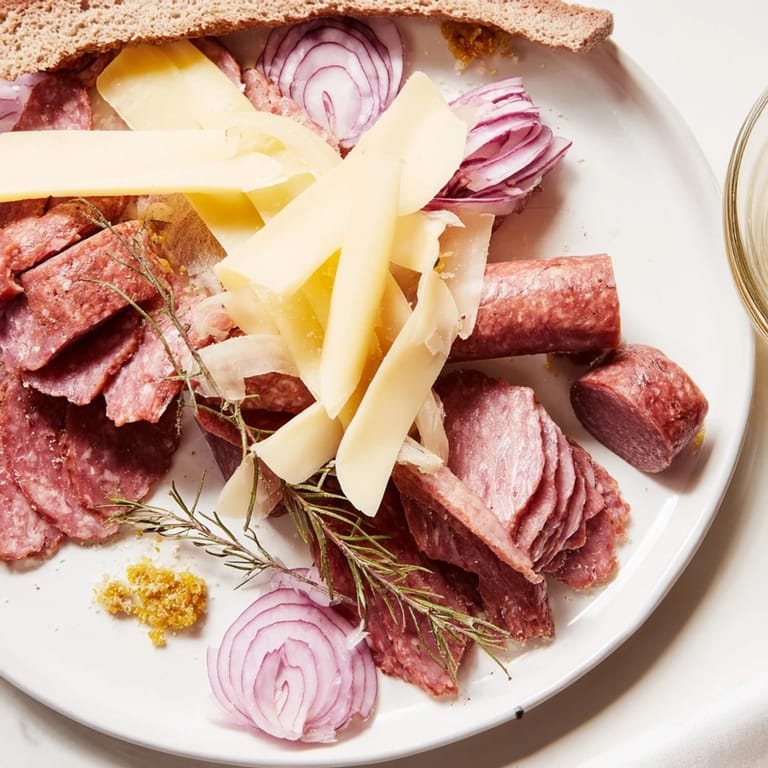
- Smoked beef: Buy it sliced thick and tear it by hand rather than cutting it—you'll preserve the smoky edges and get that rustic, abundant feeling.
- Rustic country ham: Rough chopping by hand gives it character; a knife feels too uniform for this kind of platter.
- Smoked sausage: The thick rounds hold their shape and feel substantial next to delicate elements.
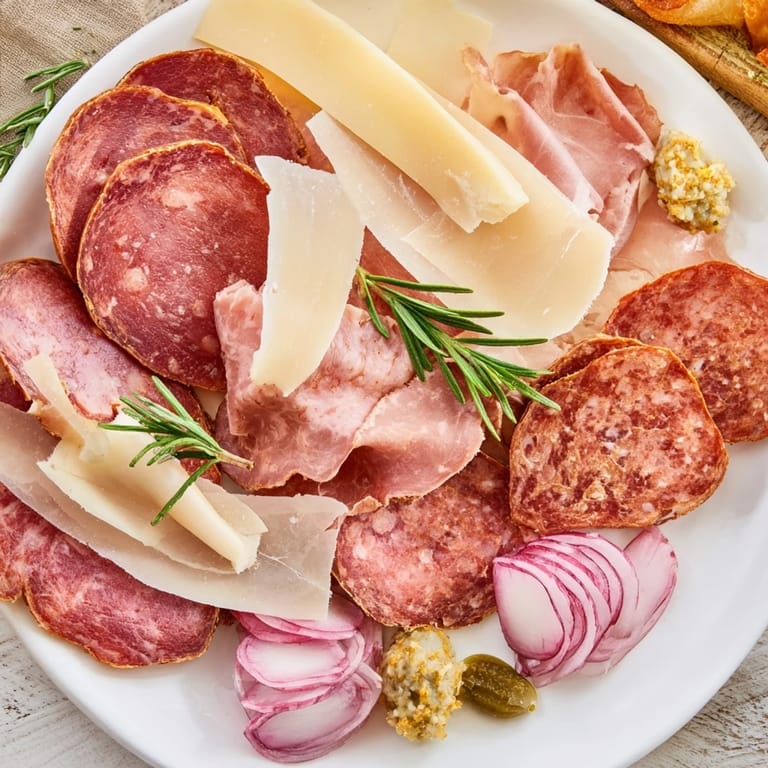
- Parmigiano Reggiano: Use a cheese plane to shave it into translucent ribbons—the thinner, the more elegant it becomes.
- Aged Manchego: Its firm texture and slightly nutty flavor bridge the gap between the boldness of the meats and the refinement of presentation.
- Gruyère: The caramel notes round out the board and add warmth to the flavor profile.
- Cornichons: Their brine cuts through richness and gives your palate a reset between bites.
- Red onion: Slice it paper-thin; the sharpness becomes almost sweet when it's transparent.
- Grainy mustard: Apply sparingly—it's a whisper, not a shout.
- Fresh herbs: Thyme or rosemary add aroma and visual texture without being eaten (though no one will stop you).
Tired of Takeout? 🥡
Get 10 meals you can make faster than delivery arrives. Seriously.
One email. No spam. Unsubscribe anytime.
Instructions
- Prepare your canvas:
- Lay out your wooden board or platter, making sure it's large enough that ingredients can breathe. I learned the hard way that crowding a board makes it look chaotic rather than abundant.
- Arrange the meats:
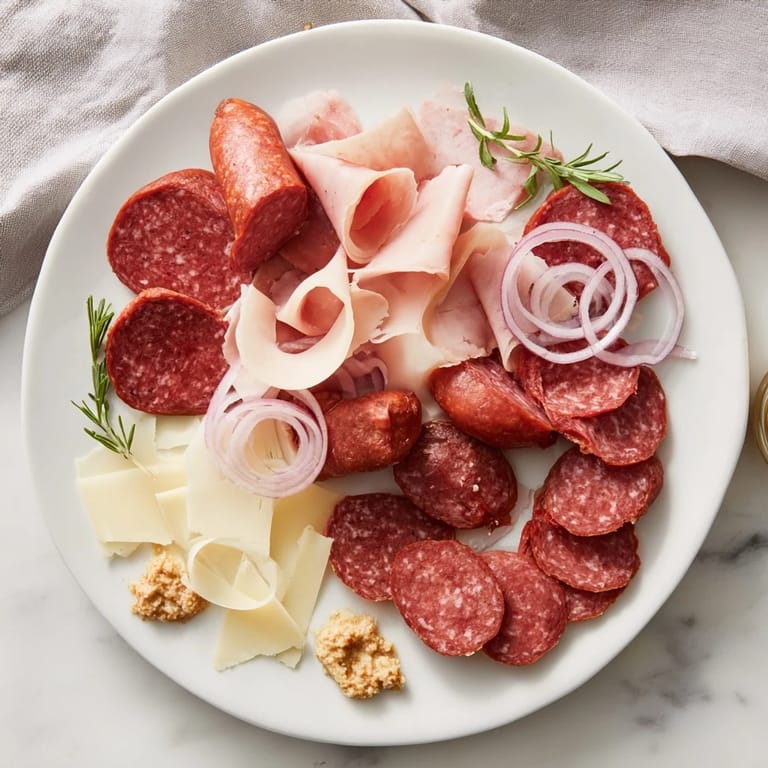
- Tear the smoked beef into rough pieces and layer them in loose, overlapping mounds. Chop the country ham into ragged chunks and group it beside the beef. Slice the sausage into thick rounds or wedges and create a third cluster. The goal is abundance with intention—you want people to see each component clearly.
- Add the cheeses:
- Using a cheese plane or vegetable peeler, shave each cheese into thin ribbons. The sound and motion are meditative; let the cheese guide you. Drape the shavings across the meats and fill in gaps—they should catch light and look almost gossamer.
- Scatter the companions:
- Place cornichons in small clusters. Scatter the onion slices so their translucence creates visual interest. Add small dollops of mustard (roughly pea-sized) in three or four spots around the board rather than spreading it everywhere.
- Finish with fragrance:
- Tuck fresh herb sprigs into the arrangement. They'll scent the platter and give the whole thing a garden-fresh quality.
- Serve with intention:
- Bring the board to the table and let people serve themselves. If you're offering bread, slice it fresh and place it nearby but separate; let guests decide if they want it.
 Save
Save What struck me most was watching my friends linger over this board, not rushing through it like a standard appetizer. They paired different combinations—beef with Gruyère, ham with onion and mustard—as though creating tiny, intentional bites. Suddenly, a board of meat and cheese became an edible conversation.
The Poetry of Contrast
The magic of this platter lives in tension: rough against delicate, salty against sharp, smoky against refined. Every texture on a board like this exists to highlight something else. Thick-cut meats make the cheese shavings seem impossibly elegant by comparison. The brine of cornichons makes the meatiness richer. Understanding this principle means you can swap ingredients freely and the board will still work.
Building Your Own Board
Once you grasp the structure, you'll find yourself building these boards instinctively. Think in categories: proteins, cheeses, pickled elements, fresh elements, and something with a little heat or bite. The ratio matters less than the interplay. I've made this board with different meats and cheeses each time, and it's never failed because the principle remains constant.
Wine and Company
This board is unapologetically social. It's designed for sharing, for people reaching across each other, for lingering over a glass of wine. A bold red wine with tannins plays beautifully against the saltiness of the meats; a crisp white wine cuts through the richness and resets your palate between bites. Honestly, the best pairing is good conversation and people you enjoy.
- Assemble the board no more than 2 hours before serving to keep everything fresh and the cheeses properly textured.
- If you're feeding a crowd, make two smaller boards rather than one overwhelming platter—it's easier to manage and looks intentional.
- Leftover meats and cheeses become the foundation of tomorrow's lunch; nothing goes to waste on a board like this.
 Save
Save A board like this reminds you that hospitality is simple when you choose the best ingredients and arrange them with care. Serve it with warmth and watch what happens.
Recipe FAQs
- → What cheeses complement the smoked meats best?
Aged cheeses like Parmigiano Reggiano, Manchego, and Gruyère offer rich, salty notes that beautifully contrast the smoky, hearty meats.
- → Can I prepare this platter ahead of time?
It's best assembled just before serving to preserve the freshness and delicate textures of the meats and cheeses.
- → What garnishes enhance the flavor profile?
Cornichons, thinly sliced red onions, grainy mustard, and fresh rosemary or thyme brighten and add complexity to the platter.
- → Are there recommended pairings with this platter?
A bold red wine or a crisp, dry white pairs beautifully and complements the smoky and creamy elements.
- → What tools help prepare this arrangement efficiently?
A sharp chef's knife and a vegetable peeler or cheese plane are essential for cutting meats and shaving cheeses elegantly.