 Save
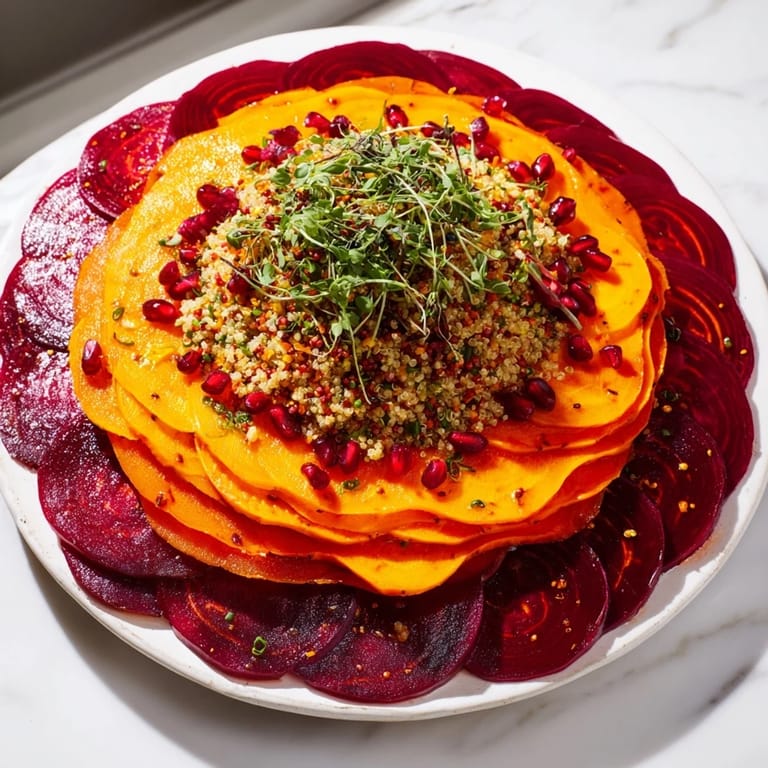
Save I'll never forget the evening I first attempted plating food like an artist instead of just a home cook. A friend challenged me to think beyond flavor and consider what a plate could say to the eye before it touched the lips. That's when I discovered the power of concentric rings—a simple geometric principle that transformed how I saw cooking. The first time I assembled these layers, watching each flavor ring reveal itself like a story being told from the outside in, I felt something shift. Food became a conversation with color, texture, and taste all at once.
I made this for my sister's birthday dinner, not knowing if it would actually work or just look pretty and taste confused. When she took that first bite, her eyes widened. She tasted the honey-sweetness of the beet first, then the earthiness and brightness of the quinoa, and finally that small kick from the jalapeño. She called it 'a flavor story,' and I realized then that structure and intention in plating actually do change how food tastes. It became the dish I'm now known for making.
Ingredients
- Golden Beet (1 large, peeled and thinly sliced): The golden variety has a gentler, more delicate sweetness than red beets, and it won't bleed color into the other rings. Slicing it paper-thin at 1–2 mm is the real secret—it lets the marinade penetrate and makes each slice tender enough to place without cracking.
- Honey (1 tablespoon): The sweetness here isn't overwhelming; it balances the beet's natural earthiness and gives the slices that glossy, candied appearance.
- Lemon juice (1 teaspoon): This brightens the sweetness and adds just enough acidity to keep the beet ring from feeling cloying.
- Cooked Quinoa (1 cup, cooled): Quinoa is sturdy enough to hold its shape in a ring and creates a neutral canvas that lets you taste the feta and herbs. Make sure it's cooled completely, or the mixture will be too warm to handle.
- Feta Cheese (2 tablespoons, crumbled): The saltiness and tang here anchor the middle ring. This is non-negotiable for the savory component, though vegan versions work too.
- Extra-Virgin Olive Oil (1 tablespoon): This binds the quinoa mixture and adds richness that bridges to the spicy ring.
- Fresh Thyme (1 teaspoon leaves): Thyme feels like a secret whisper in the savory ring—aromatic and just herbaceous enough.
- Red Bell Pepper (1/2 small, thinly sliced into rings): The sweetness here is subtle, and the rings give you beautiful geometry without adding another distinct flavor category.
- Fresh Jalapeño (1/2, thinly sliced into rings, seeds removed): Removing the seeds means you get the bright jalapeño flavor without an overwhelming heat that would overshadow the other rings.
- Rice Vinegar (1 tablespoon): This pickling liquid is gentle enough not to overpower but acidic enough to preserve and crisp the peppers.
- Chili Flakes (1/4 teaspoon): A small amount gives you the spicy ring's final layer of heat and complexity.
- Microgreens (2 tablespoons, center garnish): These add a whisper of freshness and texture at the heart of the plate. Think of them as the bow on a gift.
- Toasted Sesame Seeds (1 teaspoon): Toasting these for just 2–3 minutes makes them nutty and aromatic, adding crunch and a subtle Asian note that ties everything together.
Tired of Takeout? 🥡
Get 10 meals you can make faster than delivery arrives. Seriously.
One email. No spam. Unsubscribe anytime.
Instructions
- Slice the Beets Paper-Thin:
- Pull out your mandoline or your sharpest knife and slice the peeled golden beet into rounds so thin you could almost see light through them—aim for 1–2 mm. Uniform thickness is everything here; it's what makes the difference between a ring that looks intentional and one that looks accidental. Take your time, and remember that a mandoline does this faster, but if you're using a knife, gentle, even pressure is your friend.
- Create the Sweet Marinade:
- In a bowl, whisk together the honey, lemon juice, and a pinch of salt until the honey dissolves completely into a light glaze. This should taste slightly sweet-tart, like the beet's best version of itself.
- Marinate the Beets:
- Drop the beet slices into the marinade and gently toss them around, making sure each one gets coated. Set a timer for 15 minutes—not a second more. This is the sweet spot: long enough for the beets to become glossy and pliable, but not so long that they turn soft and lose their ability to hold the ring. While they sit, you'll see them absorb the marinade and become more vibrant.
- Mix the Savory Ring:
- In a separate bowl, combine the cooled quinoa, crumbled feta, olive oil, fresh thyme, black pepper, and a pinch of sea salt. Use a fork to gently mix everything until the herbs and cheese are distributed evenly and the texture is fluffy, not clumpy. This mixture should smell herbaceous and salty—taste a small spoonful to make sure the seasoning feels right to you.
- Prepare the Spicy Marinade:
- In a small bowl, dissolve the sugar and salt into the rice vinegar by stirring gently until the crystals disappear. Then stir in the chili flakes. This creates a light pickling liquid that's sweet, salty, sour, and spicy all at once.
- Quick-Pickle the Peppers:
- Combine the sliced red bell pepper and jalapeño in a bowl, then pour the pickling liquid over them and give everything a gentle toss. Let them sit for exactly 10 minutes—they should become slightly glossy and softer but still have a faint crunch when you bite them. This is the texture you're after: not raw, not limp, but in between.
- Toast the Sesame Seeds:
- Pour the sesame seeds into a dry skillet over medium heat and stir them constantly for 2–3 minutes. You're listening and watching for the moment they turn golden and smell toasted and nutty. The second they reach that point, transfer them to a plate immediately or they'll burn. This step takes less than 5 minutes but transforms those seeds from bland to aromatic.
- Rinse and Dry the Microgreens:
- Gently rinse the microgreens under cool water and pat them completely dry with a paper towel. They're delicate, so treat them like you're handling something precious.
- Assemble the First Ring (Sweet):
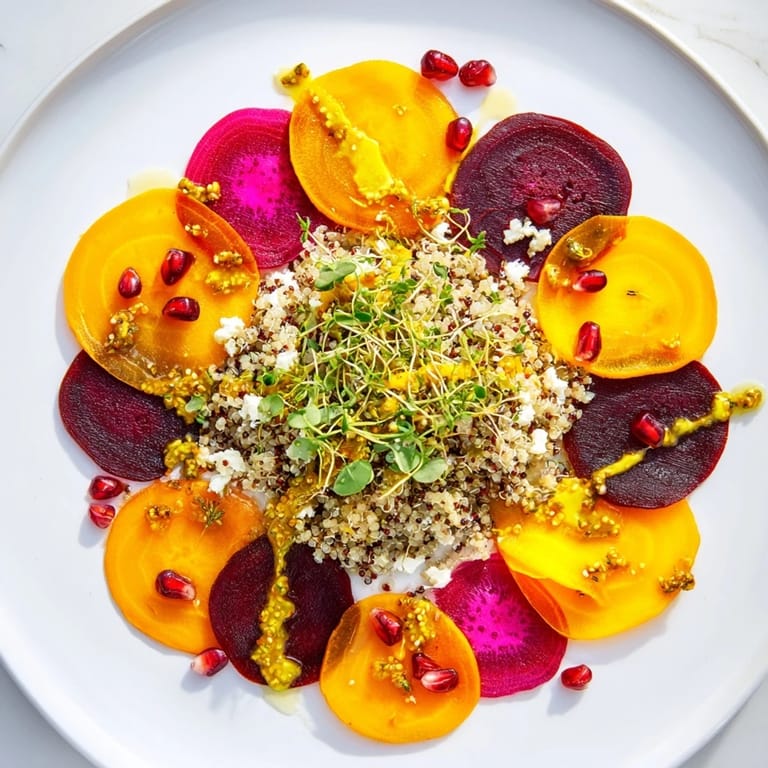
- Place a large, flat, preferably white plate in front of you. Using the back of a spoon or a ring mold as a guide, imagine three concentric circles on your plate. Starting with the outer ring, arrange your marinated beet slices in a perfect circle around the edge. Each slice should just barely touch the next one—they should form an unbroken ring with no gaps and no overlaps. The glossy, golden color is your visual anchor here. Step back and look at it from above; it should look intentional and beautiful.
- Add the Second Ring (Savory):
- Using a spoon, mound the quinoa-feta mixture in a ring just inside the beet ring. You can use your fingers or a ring mold for precision. Compress it gently so it holds its shape, but don't flatten it—it should still look fluffy and alive. This ring should be distinct from the beet ring, with clear separation between them.
- Place the Third Ring (Spicy):
- Drain the marinated peppers well (reserve the liquid if you like, but it's not essential), and arrange the pepper and jalapeño rings inside the quinoa ring. Alternate the red and green colors for visual impact—it makes the plate pop. The edges should just touch, creating an unbroken ring of color.
- Crown the Center:
- Place a small nest of microgreens in the very center of the plate, right where all three rings meet. Sprinkle the toasted sesame seeds over the microgreens, and if you have them, scatter a few pomegranate seeds for brightness and crunch. This center becomes the final flavor note and adds texture.
- The Final Check:
- Step back and look at your plate from directly above. The rings should be even, unbroken, vividly colored, and clearly separated from one another. Smell the plate—you should detect sweet earthiness from the beet, herbaceous and salty notes from the feta and thyme, and a faint spicy aroma from the jalapeño. Serve immediately so every element stays crisp and vibrant.
 Save
Save There's something about plating this dish that makes you feel like a collaborator with the ingredients instead of just cooking them. When my friend took that photo of the rings and posted it, I was surprised by how many people said it looked like art. But the real gift isn't how it looks—it's how deliberately it tastes, how each ring tells its own flavor story while contributing to a larger whole. That's when I understood that precision in plating isn't pretentious; it's a form of respect for the ingredients and attention for the person eating.
Why Geometry Matters in Flavor
Most home cooks plate food by piling components together, and that's honest cooking. But there's something about organizing flavors into rings that changes the eating experience completely. When you encounter the sweet beet first, then move inward to the savory quinoa, you're tasting a deliberate sequence. Your palate isn't confused by competing flavors all at once; instead, it's guided through a progression. It's the difference between hearing all the notes of a song at the same time and hearing them unfold in a melody. This geometric approach isn't just beautiful—it's functional.
Mastering the Mandoline Slicer
The mandoline is either your best friend or the tool that makes you respect your fingertips more than you did before. If you're using one for the first time, start with the guard—that plastic bit that feels clumsy is actually your hand's guardian angel. Angle the vegetable slightly and use steady, even pressure, letting the blade do the work rather than forcing it. The beet slices should be gossamer-thin, almost delicate. If you don't have a mandoline, a very sharp chef's knife works too; it just takes more patience and focus. Either way, this step is worth getting right because thin, uniform slices are what make the ring actually feel intentional rather than thrown together.
Building Confidence with Plated Food
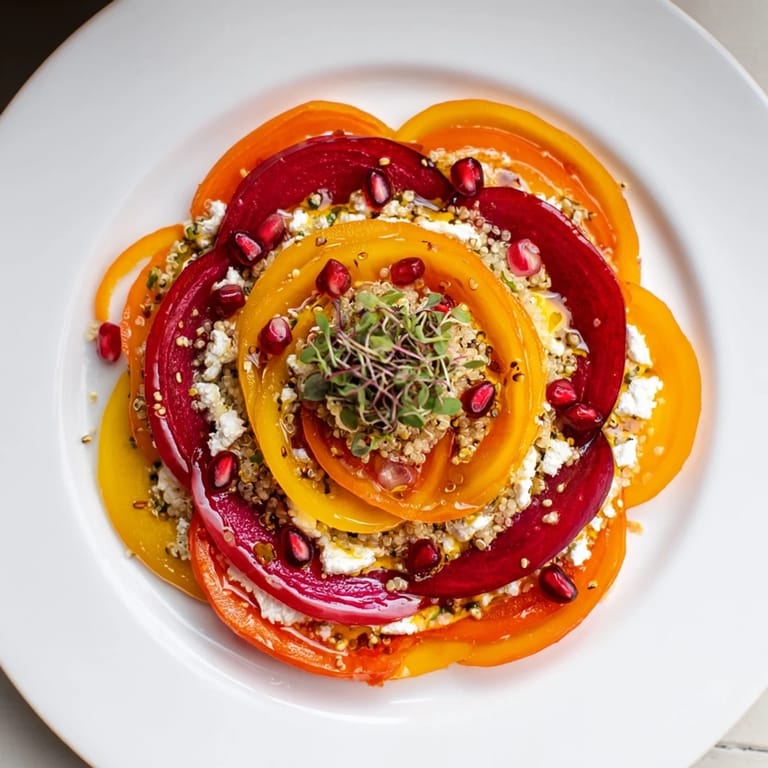
The first time you plate something like this, it might feel fussy or overthought. But here's the secret: this dish teaches you that presentation and flavor aren't separate conversations. When you take time to arrange ingredients deliberately, you're thinking about balance, texture, color, and sequence. That mindfulness transfers to the taste. Your guests notice not just how it looks but how intentional it feels. Start by practicing the assembly on a couple of test plates if it helps you build confidence. Use a ring mold or even a teacup as a guide for where each ring should go. After the first time, it becomes meditative and natural.
- If you make a mistake during assembly, you can gently rearrange—these aren't precious sculptures, they're vegetables.
- White or neutral plates make the colors sing; avoid busy or colored plates that compete for attention.
- Serve these plates individually rather than family-style; there's something special about each person receiving their own carefully composed plate.
 Save
Save This dish has taught me that simple ingredients, when arranged with intention and respect, become something that tastes more complex than the sum of their parts. Make it for someone you want to impress—or better yet, make it for someone you want to cook for thoughtfully.
Recipe FAQs
- → How do I ensure the beet slices are uniform?
Use a mandoline or a sharp knife to slice the golden beet into thin, even rounds about 1-2 mm thick to ensure uniform marination and neat rings.
- → What prevents the quinoa and feta mixture from clumping?
Mix the cooled quinoa with olive oil, feta, thyme, and seasoning gently but thoroughly. If it clumps, break it apart carefully using a fork without making it wet.
- → How long should the peppers marinate for optimal texture?
Let the peppers marinate for about 10 minutes in the pickling liquid to soften slightly without losing their crunch or becoming limp.
- → Can I substitute any ingredients to accommodate dietary preferences?
Yes, maple syrup can replace honey for vegan needs, and vegan feta can substitute dairy feta. All main ingredients are naturally gluten-free.
- → What is the best way to assemble the rings evenly?
Mark three concentric circles on the plate using a ring mold or spoon backs to guide placement and keep rings distinct without overlap.
- → How should the garnishes be prepared for best flavor?
Toast sesame seeds in a dry skillet until golden and aromatic, rinse microgreens gently, and optionally prepare pomegranate seeds to add brightness and crunch.