 Save
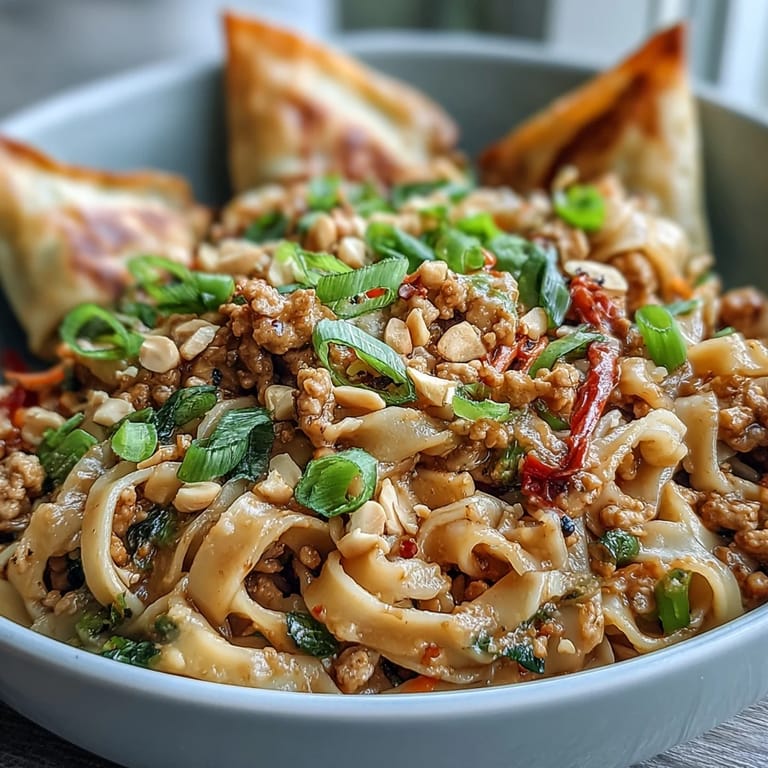
Save I discovered the magic of this dish on a Tuesday night when I had ground chicken, a jar of peanut butter, and absolutely no appetite for another predictable stir-fry. Something clicked when I pressed those noodles into the hot pan and they developed those golden, crispy edges, like they'd been transformed into something completely different. That textural contrast—crispy bottom, soft noodles, creamy sauce—suddenly made everything feel intentional and exciting again.
My roommate wandered into the kitchen mid-cooking, sniffed the air, and just stayed to watch. By the time I was dividing it into bowls, she was already grabbing an extra one without asking. That's when I knew this wasn't just another recipe—it was the kind of food that makes people want to stick around your kitchen.
Ingredients
- Ground chicken: One pound gives you enough protein to keep everyone satisfied while staying lean enough that the sauce clings beautifully rather than pooling with grease.
- Wide rice noodles or lo mein: The width matters here because thin noodles get lost in the sauce, but these sturdy ones hold up to tossing and develop those crucial crispy edges.
- Red bell pepper, carrots, snap peas: This trio isn't just colorful—each one brings different sweetness levels and cooking times, so you get something tender yet still with personality.
- Green onions: Reserve some for garnish so you get that fresh, sharp bite at the end, which cuts through the richness perfectly.
- Creamy peanut butter: I learned the hard way that natural peanut butter separates and makes the sauce grainy, so stick with the creamy conventional kind.
- Soy sauce: This is your umami anchor—don't skip it or use less thinking you'll reduce sodium, because the depth it provides is non-negotiable.
- Rice vinegar: The acidity balances the peanut butter's heaviness and keeps the sauce from tasting one-note.
- Honey or maple syrup: This smooths out sharp edges and adds a subtle complexity that plain sweetness never achieves.
- Toasted sesame oil: Use the toasted version, not the refined kind, because the nuttiness amplifies everything happening in that bowl.
- Sriracha or chili garlic sauce: Start conservatively and build heat—you can always add more, but you can't take it back.
- Water: This dilutes the sauce to silky consistency without diluting flavor, so don't be shy about splashing in more if needed.
- Roasted peanuts, cilantro, lime wedges: These final three elements transform the bowl from good to memorable by adding crunch, freshness, and brightness.
Tired of Takeout? 🥡
Get 10 meals you can make faster than delivery arrives. Seriously.
One email. No spam. Unsubscribe anytime.
Instructions
- Whisk the peanut sauce together:
- Combine peanut butter, soy sauce, rice vinegar, honey, sesame oil, sriracha, and water in a bowl, whisking until you reach a smooth, pourable consistency. This is your moment to taste and adjust—add more sriracha if you want heat, more water if it feels thick, more vinegar if it needs brightness.
- Boil and drain the noodles:
- Get a large pot of salted water rolling, cook the noodles exactly according to package instructions until they're just al dente (they'll firm up slightly when you press them in the pan later), then drain and toss gently with a touch of oil so they don't clump.
- Brown the ground chicken:
- Heat oil in a large skillet or wok over medium-high heat until it shimmers, then add chicken and break it apart with a spoon as it cooks, which should take 5 to 6 minutes until no pink remains. You want it in fine, bite-sized pieces that absorb the sauce beautifully.
- Stir-fry the vegetables:
- Without washing the pan, add bell pepper, carrots, snap peas, and half the green onions to the same skillet and cook for 2 to 3 minutes, stirring constantly, until they're bright and just barely tender but still with some snap. This is the sweet spot before they soften too much.
- Create crispy noodle edges with the potsticker technique:
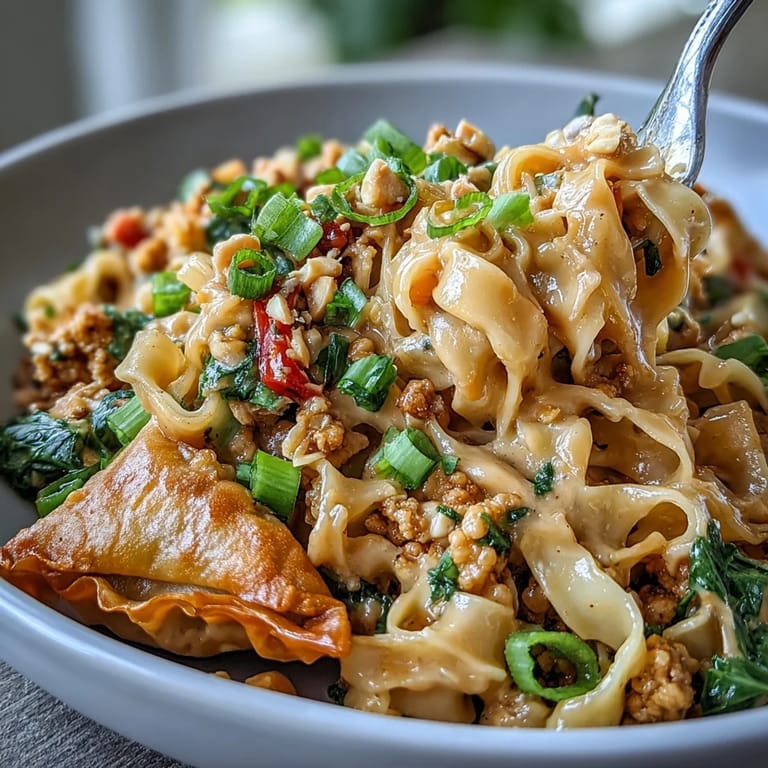
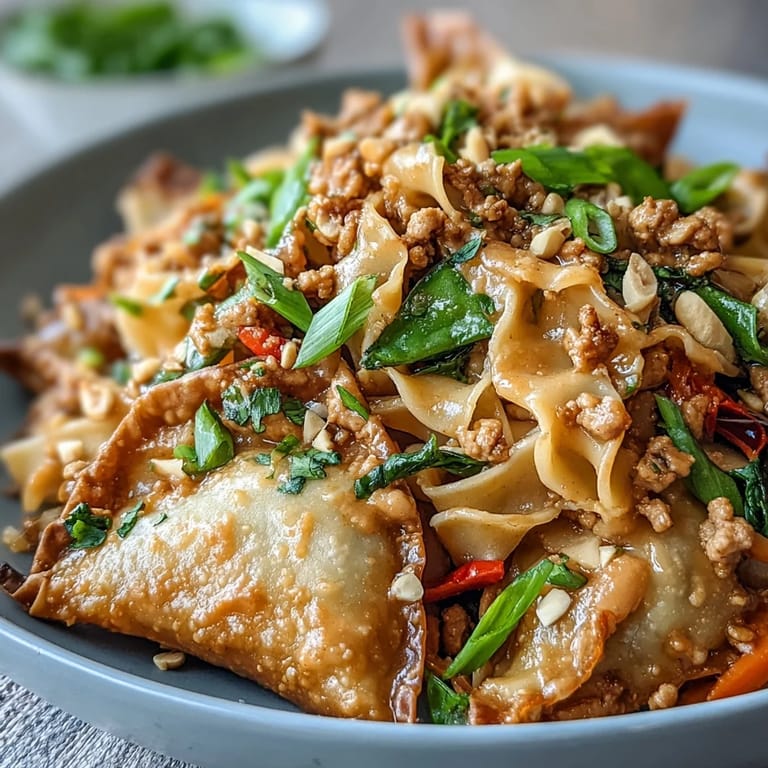
- Add your drained noodles to the pan in an even layer and press them gently down, then let them sit undisturbed for 2 to 3 minutes so the bottom develops those golden, crispy edges. You'll hear a gentle sizzle that tells you it's working.
- Bring everything together:
- Return the chicken to the pan, pour in your peanut sauce, and toss everything gently but thoroughly until combined and heated through, adding a splash of water if the sauce needs loosening. The whole pan should smell incredible at this point.
- Plate and garnish:
- Divide the noodle mixture among four bowls and top each with chopped roasted peanuts, reserved green onions, fresh cilantro, and a lime wedge for squeezing. Let people customize the lime and heat level to their preference.
 Save
Save A friend who swore she'd never like ground meat dishes came back for seconds and asked for the recipe. I watched her squeeze lime all over it and pile on extra cilantro, and I realized the magic wasn't in any single ingredient—it was in how they all collided together in one imperfect, delicious bowl.
The Potsticker Noodle Trick Explained
This technique borrowed from potsticker dumplings changes everything about how noodles feel in your mouth. Instead of boiling them and letting them stay uniformly soft, you create a crispy base layer that contrasts with the tender noodles above it and the creamy sauce coating everything. It sounds fussy but honestly requires just patience and restraint—the hardest part is not stirring when your instincts tell you to constantly move things around in the pan.
Customizing Heat and Flavor
I've made this dish for everyone from sriracha-loving friends to people who go pale at the sight of red pepper flakes, and the beautiful part is you can dial it in without losing the soul of the recipe. Start with half the sriracha and chili garlic sauce listed, taste, then add more if you want actual heat versus just flavor. The lime wedges at the end also cool things down beautifully, and cilantro adds freshness that makes spice feel less aggressive.
Variations and Substitutions
This bowl is endlessly flexible depending on what you have and who you're feeding, which is why it's become my go-to weeknight formula. For vegetarians, crumbled firm tofu or plant-based ground meat work seamlessly, and you barely lose anything in the texture department. I've added shredded cabbage for extra crunch, swapped carrots for cucumber (add it raw at the end), and used different vegetables entirely depending on the season—winter squash, broccoli, whatever felt right.
- For gluten-free, use rice noodles and tamari instead of regular soy sauce to keep everything aligned with dietary needs.
- If you want extra richness, a splash of coconut milk mixed into the peanut sauce creates an even creamier texture.
- Pair with crisp white wine like Riesling or even a light lager beer if you want something cold against the warmth of the sauce.
 Save
Save These bowls taught me that satisfaction doesn't require complexity or fancy ingredients, just thoughtfulness about texture and balance. Make this when you need comfort, when someone's coming over and you want them to feel cared for, or simply when Tuesday night needs turning into something worth remembering.
Recipe FAQs
- → Can I make these peanut noodles vegetarian?
Yes, simply substitute ground chicken with firm tofu cubes or plant-based ground meat alternative. Press and drain the tofu first for better texture, then crumble or cube before cooking.
- → What type of noodles work best for this dish?
Wide rice noodles or lo mein noodles are ideal. Rice noodles keep the dish gluten-free while lo mein offers a satisfying chew. Both varieties absorb the creamy peanut sauce beautifully and develop crispy edges with the potsticker technique.
- → How spicy are these noodle bowls?
The spice level is easily adjustable. Start with one tablespoon of sriracha for moderate heat, then add more to taste. You can also omit the chili sauce entirely for a mild version that still delivers incredible flavor from the peanut butter, soy sauce, and sesame oil.
- → Can I prepare the peanut sauce ahead of time?
Absolutely. The sauce keeps well in the refrigerator for up to a week. Store it in an airtight container and whisk before using—you may need to add a splash of water to reach the desired consistency since it thickens when chilled.
- → What other vegetables can I add?
Shredded cabbage, bean sprouts, broccoli florets, or baby corn all work wonderfully. Feel free to use whatever fresh vegetables you have on hand. The key is cutting them into similar sizes so they cook evenly in the quick stir-fry.
- → Is the potsticker technique necessary?
While not essential, it's worth the extra few minutes. Letting the noodles undisturbed in the hot pan creates crispy, golden-bottomed edges that add wonderful texture contrast to the tender noodles and soft vegetables. It mimics the beloved crispiness of pan-fried potstickers.