 Save
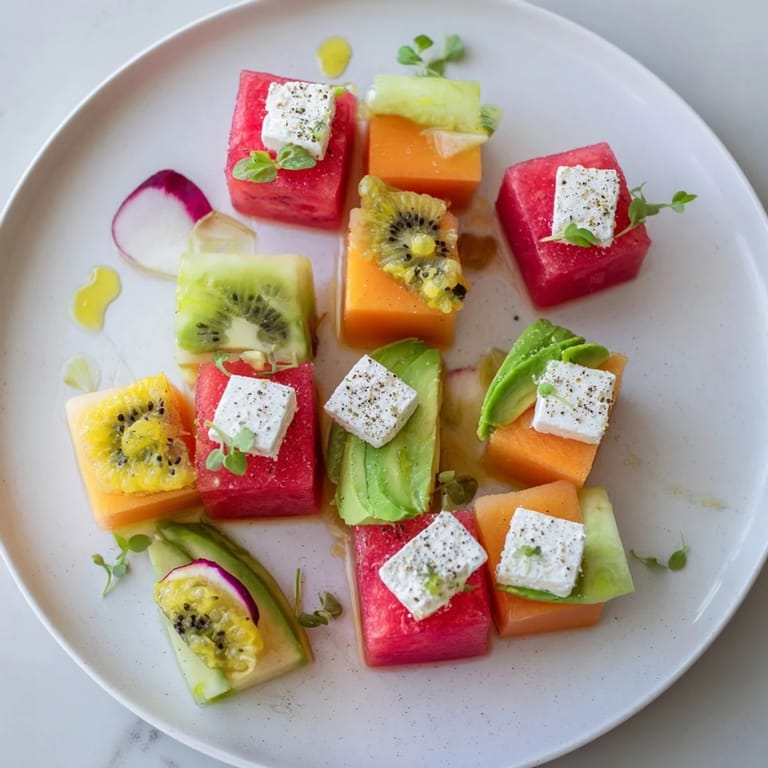
Save I remember the first time I saw a perfectly arranged grid of colorful cubes on a minimalist white plate at a small modern restaurant in the city. I was captivated by how something so simple—just fresh ingredients cut with precision—could feel like edible art. That night sparked an obsession with learning to recreate that moment in my own kitchen. After countless practice sessions and a few wobbling cubes that taught me humility, I finally understood the magic: it's not just about the ingredients, it's about patience, sharp knives, and the meditative joy of creating order from nature's bounty.
I made this for my sister's dinner party when she was feeling overwhelmed by her new minimalist apartment. We spent the afternoon in her kitchen, and as we arranged each cube with tweezers, talking about her big life changes, something shifted. By the time we finished, she was laughing, the grid was perfect, and she said it was the most beautiful thing she'd ever made. That dish became a memory we still talk about—not because it was fancy, but because we built something together that looked impossible but wasn't.
Ingredients
- Watermelon: Buy a seedless variety and chill it hard before cutting—the cold helps the cubes hold their shape and the sweetness becomes almost crisp
- English cucumber: Peel and seed it generously; wet cubes will make your grid slide around and break the spell
- Ripe mango: Choose one that's soft enough to smell fragrant but firm enough to slice cleanly; this is the golden jewel of the arrangement
- Feta cheese: Keep it refrigerated right up until plating—cold feta has clean edges that warm feta simply cannot achieve
- Cooked beetroot: Use vacuum-packed if you can; it's drier and cuts more crisply than fresh boiled root
- Avocado: This is your wildcard—ripe enough to taste buttery, but firm enough to hold a cube shape; lemon juice is non-negotiable to prevent browning
- Golden kiwi: The sunshine fruit that bridges sweet and tart; peel away every bit of white pith for a polished look
- Extra virgin olive oil: Use one you actually like drinking—it's the only dressing this dish gets, so quality matters
- Flaky sea salt: Those crystals catch the light and add the final touch of sophistication
Tired of Takeout? 🥡
Get 10 meals you can make faster than delivery arrives. Seriously.
One email. No spam. Unsubscribe anytime.
Instructions
- Clear your mind and your workspace:
- This is a dish that demands focus. Find a large, flat surface where you won't be interrupted, lay down a damp kitchen towel to anchor your cutting board, and gather everything you need. Have a small bowl of water nearby and a clean cloth—you'll be rinsing your knife between every single ingredient to keep colors pure and flavors separate. This isn't overcomplicated; it's respectful.
- Become a precision cutting machine:
- Start with the firmest ingredients first—the beetroot and feta. Use a ruler if you need to (and honestly, I do). Trim each ingredient into a rectangular block, then slice it into strips exactly 1.5 cm wide, then turn those strips into perfect cubes. The knife should be so sharp it feels almost illegal. If a cube crumbles or gets ragged edges, it failed the test—set it aside and try the next piece. You're looking for cubes with sharp corners and flat faces, almost like tiny building blocks.
- Dry and protect the delicate ones:
- Pat the beetroot cubes and cucumber cubes with paper towels until they're completely dry—any moisture will bleed color into the others and make the grid look muddy. Brush the avocado cubes with fresh lemon juice, turning each one gently until it's coated. Take the feta out of the fridge just two minutes before you're ready to arrange; it should still be so cold it feels hard.
- Arrange your grid like you're solving a puzzle:
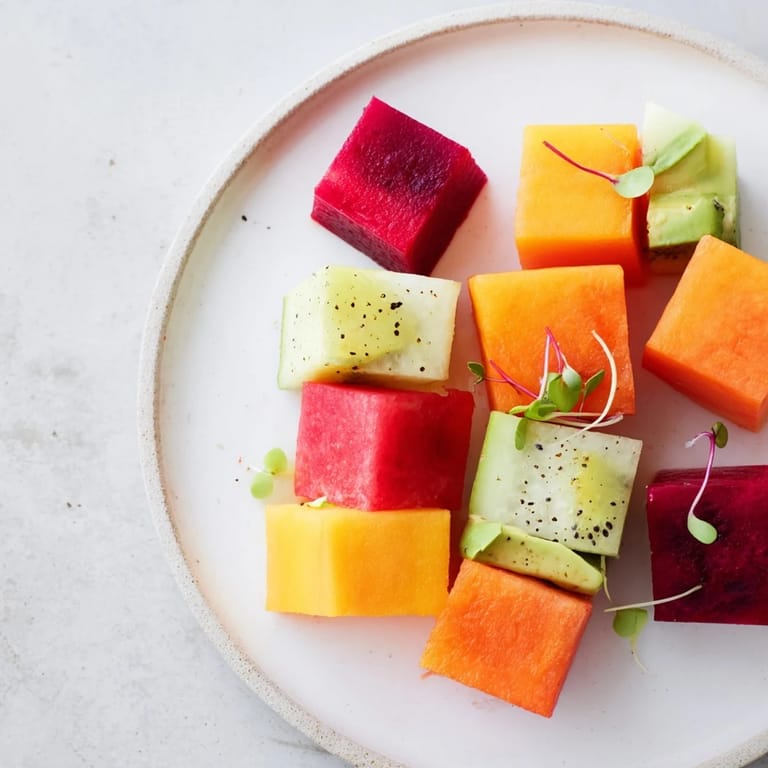
- On a large white plate or platter, start building your pattern. I like to work in rows, alternating colors and textures so your eye travels around the grid. Use tweezers if you have them, or wear clean gloves and use your fingertips. Place each cube gently, making sure every edge aligns perfectly. Step back frequently and look at the whole thing—symmetry doesn't mean boring, it means intentional. If something feels off, adjust it. This step is where the dish becomes art.
- Season and garnish with intention:
- Drizzle the olive oil with a steady hand, letting it coat the cubes with a light sheen. You're not trying to make a puddle; you want a subtle glow. Sprinkle sea salt and pepper evenly across the grid. If you're using microgreens or edible flowers, place them last, strategically, as if each one has been invited to the party.
- Serve it while it's perfect:
- Don't wait. The moment this grid is complete, it should go to the table. The colors will stay vibrant, the cubes will stay firm, and your guests will see exactly what you created. Offer small forks or toothpicks so people can pick individual cubes and taste the purity of each ingredient.
 Save
Save The first time a guest picked up a single golden kiwi cube with a tiny fork and closed their eyes while tasting it, I understood what I'd been working toward. It wasn't about impressing people with complexity; it was about creating a moment where they could taste the exact flavor of something they thought they already knew. That's when food becomes memory.
Choosing Your Color Story
Think of this dish as edible abstract art, and you get to decide the palette. In spring, I lean toward pastels—pale green cucumber, soft pink watermelon, white feta, sunny kiwi. In summer, when the colors are more intense, I sometimes replace the kiwi with dragon fruit for a shocking pink, or add roasted beets for earthiness. The point is to create a visual rhythm that feels intentional. Walk through your farmer's market and ask yourself: what colors do I want to see on this plate? What combinations make my eyes happy? The best grid is one that reflects what moves you.
The Geometry of Flavor Pairing
Even though this dish is about visual perfection, every ingredient has been chosen because it makes sense with its neighbors. The sweetness of watermelon plays off the saltiness of feta. The bright acid of kiwi cuts through the richness of avocado. The earthiness of beetroot grounds all the bright, fresh elements. When you're arranging your grid, you're not just creating a beautiful pattern—you're orchestrating a flavor journey. Every cube, when tasted in sequence or in combination, tells a different story. This is modernist cooking at its heart: using precision and intentionality to help people taste more deeply.
Making It Your Own
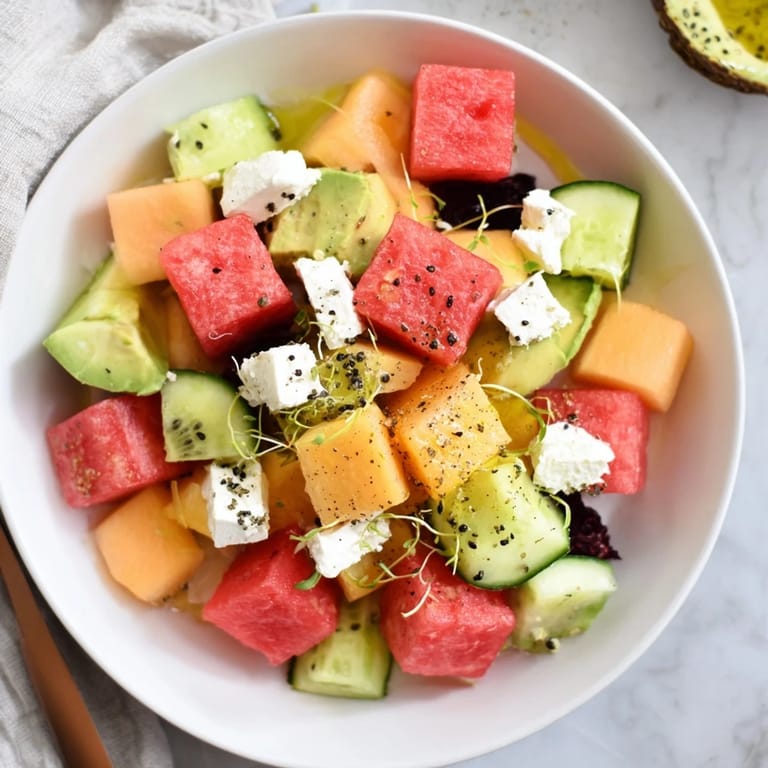
Once you've mastered the basic grid, you'll start seeing possibilities everywhere. I've made winter versions with roasted sweet potato cubes and pomegranate arils. I've done vegan versions with firm tofu instead of feta, and added a micro-herb dusting for extra elegance. The structure stays the same—the 1.5 cm cubes, the careful arrangement, the clean lines—but the ingredients become a conversation with the season and whoever you're cooking for. There's no rules, only the one golden principle: every cube must be perfectly cut and thoughtfully placed.
- Substitute ingredients based on what you find at the market or what you're craving—dragon fruit, persimmon, roasted beets, crispy tofu
- Try different oils: hazelnut oil adds nuttiness, basil-infused oil adds freshness, or stick with classic olive for purity
- Remember that the white plate is your canvas, so keep your grid tight and let negative space be part of the design
 Save
Save This dish taught me that sometimes the most sophisticated thing you can do in a kitchen is to step back and let the ingredients be themselves. There's no fancy technique, no long cooking time, just respect for what's in front of you and the patience to get it right.
Recipe FAQs
- → How do I achieve perfectly uniform cubes?
Use a sharp chef’s knife and a ruler to trim and slice ingredients into consistent 1.5 cm strips before dicing. Keep the knife clean between cuts to avoid color mixing.
- → What is the best way to prevent avocado cubes from browning?
Lightly brush avocado cubes with lemon juice immediately after cutting to slow oxidation and maintain a fresh appearance.
- → How should the cubes be arranged for optimal presentation?
Arrange the cubes in a precise, alternating color and texture grid on a flat white plate, using tweezers or gloved hands for accuracy and clean edges.
- → Can I substitute any ingredients while keeping the dish balanced?
Yes, seasonal and textural substitutions like dragon fruit or firm tofu can be used, but aim to maintain contrasting colors and firm textures for the grid effect.
- → How should the dish be seasoned without overpowering natural flavors?
Gently drizzle high-quality extra virgin olive oil and sprinkle flaky sea salt and freshly ground black pepper evenly to enhance, not mask, the inherent tastes.
- → What tools are essential for preparing this dish?
A sharp chef’s knife, ruler, cutting board, paper towels, and optionally tweezers are key for precision cutting and arranging the cubes.