 Save
Save I'll never forget the moment I first saw a fractal tree arrangement at a dinner party—someone had transformed simple ingredients into this breathtaking edible sculpture that made everyone pause before reaching in. It was part art installation, part appetizer, and completely unforgettable. I became obsessed with recreating that magic in my own kitchen, learning that sometimes the most impressive dishes aren't about complicated techniques, but about seeing ordinary ingredients with fresh eyes and arranging them with intention.
The first time I made this for my sister's book club, I was terrified it would collapse mid-party. But as people gathered around, pointing out the clever fractal pattern and reaching for their favorite pieces, I realized the real beauty wasn't perfection—it was how something handmade and thoughtful brought everyone together before anyone said a word.
Ingredients
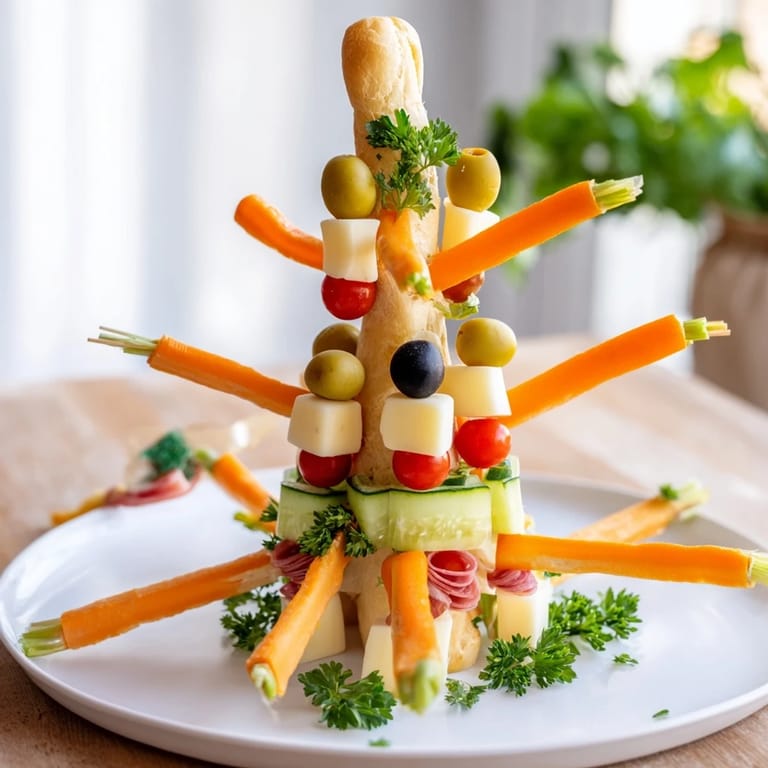
- 1 large breadstick (about 30 cm/12 inches): This is your anchor, your trunk. I learned to choose the sturdiest one I could find—a bendy breadstick means your whole structure wobbles. Look for something substantial, whether homemade or from a quality bakery.
- 8 thin grissini breadsticks (about 20 cm/8 inches): These become your main branches reaching outward. They're delicate enough to look elegant but sturdy enough to support the weight of vegetables and cheese.
- 12 baby carrots, peeled and trimmed: Their natural orange is irreplaceable for color contrast. Always trim the pointy ends flat so they sit securely on skewers.
- 12 mini cucumbers or cucumber spears: Slice lengthwise if using full cucumbers. They add crisp green and that fresh bite that makes everything taste brighter.
- 12 cherry tomatoes: Pick ones that are firm, not soft. They're your pops of warm color and a reminder that vegetables are naturally beautiful.
- 50 g hard cheese (aged gouda or cheddar), cut into small cubes: Hard cheese is your structural glue and your decorative element. It holds pieces together and tastes wonderful. Cut into uniform pieces so the arrangement looks intentional.
- 50 g mild cheese (mozzarella pearls): These stay soft and creamy, creating textural contrast against the crisp vegetables. They're easier to skewer than you'd think.
- 50 g cured meats (thinly sliced salami or prosciutto), rolled: Roll them tightly before skewering so they don't unravel. The salty, savory notes are what make people come back for more bites.
- 12 green olives and 12 black olives, pitted: The color contrast tells the fractal story—lighter and darker elements create visual depth. Pit them yourself for the freshest taste.
- 1 small bunch fresh herbs (parsley, dill, or microgreens): These are your 'leaves.' Add them last, right before serving, so they stay perky and green. They're what transform it from appetizer to art.
Tired of Takeout? 🥡
Get 10 meals you can make faster than delivery arrives. Seriously.
One email. No spam. Unsubscribe anytime.
Instructions
- Clear your canvas:
- Find your largest, sturdiest platter or wooden board. This is where the magic happens. Wash all your vegetables under cold water and pat them completely dry with a kitchen towel—moisture is the enemy of a stable structure. Trim carrot and cucumber ends flat so they don't roll. You want everything feeling dry and cool to the touch, vibrant and ready for assembly.
- Plant your trunk:
- Stand the largest breadstick vertically or at a gentle angle in the center of your platter. Press it down firmly. If it rolls even slightly, wedge a small cheese cube or bread piece underneath until it's absolutely stable. This trunk is everything—if it wiggles, your whole structure will too. Take a moment to feel that it's solid before moving forward.
- Angle your main branches:
- Take your thin grissini breadsticks and arrange them around the trunk like branches reaching outward and slightly upward. Evenly space them—four on each side works beautifully. Gently tuck the ends underneath or alongside the trunk. If they feel loose, slip a tiny smear of soft cheese or a folded herb leaf underneath as edible glue. Gently touch each one—it should feel secure, not wobbly. Leave breathing room between branches for the next layer.
- Build the secondary structure:
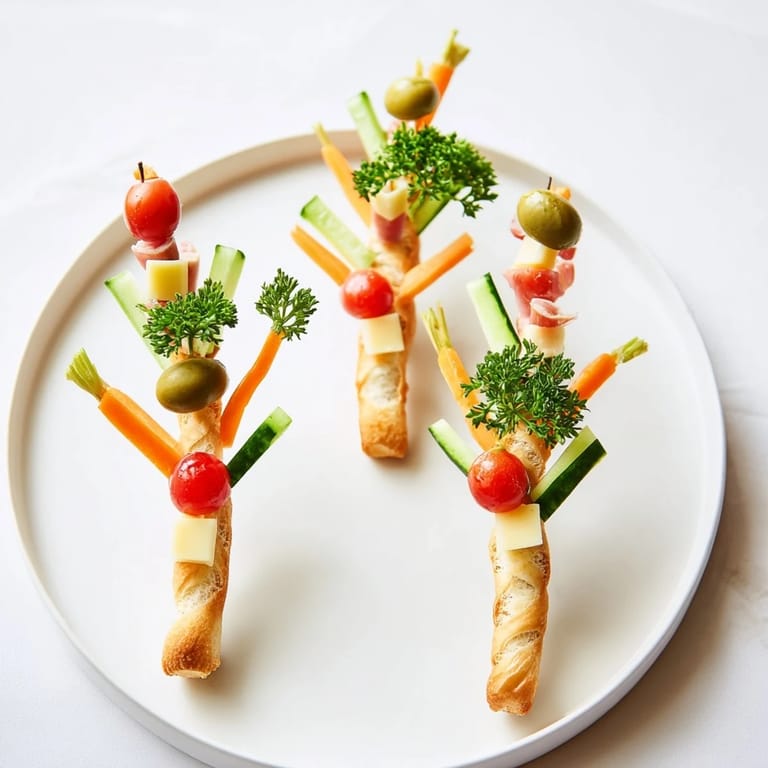
- Thread vegetables onto cocktail sticks—a carrot here, a cucumber spear there, a cherry tomato somewhere else. Use your intuition about color placement. Attach these shorter skewers to the main branches at different heights and angles, mimicking how real trees branch. Secure them with cheese cubes if needed. Step back frequently and look at your creation from all sides. The branches should taper outward like nature intended.
- Add the delicate details:
- Skewer your cheese cubes, olives, and rolled cured meats onto tiny picks. Place these at the outermost tips and empty spaces between branches, creating fullness and color contrast. You're filling in the silhouette now, making it lush. This is where it starts to look less like an ingredient collection and more like a tree. Tuck small sprigs of fresh herbs throughout, tucking them in and around the other elements so they look like tender leaves.
- Inspect and serve:
- Walk around your creation. Look at it from above, from the sides, from across the room. Adjust anything that feels off-balance or loose. If any branch wobbles, reinforce it with extra cheese or an herb wedge. Then serve it immediately, with dipping sauce or good olive oil on the side for guests who want it. Watch their faces when they first see it.
 Save
Save I still think about the moment my friend's five-year-old asked if we were 'eating the tree' and everyone at the table laughed so hard. That's when I realized this wasn't just about the vegetables and bread—it was about creating something that made people feel wonder before they even tasted it.
The Art of Fractal Thinking
A fractal is a pattern that repeats at different scales—and that's exactly what you're creating here. The big branches are like the main limbs of a tree, the middle-sized skewers are secondary branches, and the tiny picks with cheese and olives are like the twigs and buds. When you arrange things this way, your brain recognizes it as 'tree-like' even though it's completely abstract. It's mathematics and beauty colliding on a platter. Understanding this helps you place things intuitively—you're not following a rigid pattern, you're creating something that feels organic because you understand how nature actually grows.
Color and Texture as Your Guides
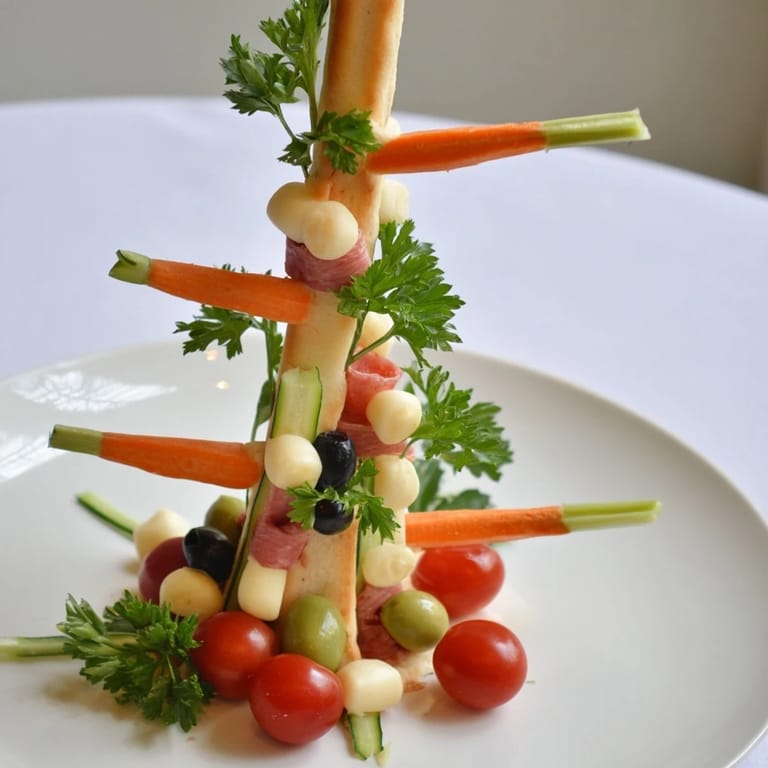
Don't overthink which vegetable goes where—let color and texture be your guide. The warm orange of carrots needs to be balanced against the cool green of cucumbers. The glossy red of tomatoes catches light differently than the matte finish of cheese cubes. The smooth texture of cheese plays against the slight crunch-look of cured meat rolls. When you're placing each piece, think about what came before it and what contrast you need. This is how you create depth and visual interest without any complicated technique.
Building for Stability and Grace
Every element you add either strengthens or weakens the structure. This is why placement matters. Heavier pieces (like vegetables) should sit lower and closer to the trunk. Lighter, decorative pieces (cheese cubes, herbs) can go higher and toward the tips. Distribute weight evenly on both sides so it doesn't tip. The beautiful part is that when you understand this, you naturally create something that looks balanced and feels solid. It's not just pretty—it's engineered to last through a party.
- Always wedge your trunk firmly at the base so nothing shifts once guests start taking pieces
- Reinforce any wobbling branch immediately with an extra cheese cube or herb—don't wait until something falls
- Assemble as close to serving time as possible for maximum crispness and stability
 Save
Save What started as trying to recreate something I saw at a dinner party became my favorite way to show people I care—not through hours of cooking, but through thoughtfulness and attention to how things look and taste together. That's the real recipe.
Recipe FAQs
- → How do I keep the breadstick centerpiece stable?
Place the largest breadstick firmly as the central trunk on a flat surface. Use small cubes of cheese or a piece of bread at the base to prevent rolling and add stability.
- → What vegetables work best for the branches?
Choose crisp, firm vegetables like baby carrots, mini cucumbers, and cherry tomatoes for easy skewering and freshness that holds well.
- → Can this centerpiece be made vegetarian?
Yes, omit cured meats and substitute with roasted peppers or marinated mushrooms for similar savory notes and texture contrast.
- → How should I prepare the cheese and meats for assembly?
Cut cheese into small uniform cubes and roll cured meat slices tightly to facilitate easy skewering and a neat appearance.
- → Are there tips to maintain freshness before serving?
Assemble just before serving. If needed, prepare components ahead, refrigerate tightly covered, and add fresh herbs last minute to preserve vibrancy.