 Save
Save There's something about a board laden with bread and fruit that stops people mid-conversation. I discovered this while hosting a last-minute gathering on a September afternoon when my carefully planned menu fell through, and I found myself reaching for whatever bread had survived the week, a few apples from the farmers market, and half a wedge of aging cheese. What emerged wasn't a dish I'd planned but a moment of pure ease, watching guests reach across each other, mixing textures and flavors without hesitation. The Harvest Scythe became my answer to those times when you want to feed people something beautiful without the pressure of a cooked meal.
I remember my neighbor peering over the fence one July evening as I was setting this board on the porch table, and she said it looked like 'a painting of what harvest actually means.' She wasn't being poetic in the way food writing usually is—she meant it felt honest, like something gathered rather than constructed. That compliment stuck with me more than any recipe rating ever has.
Ingredients
- Baguette, sliced: The crisp exterior and open crumb provide the perfect foundation for pairing, and slicing it yourself means you control thickness and can catch any that are starting to stale.
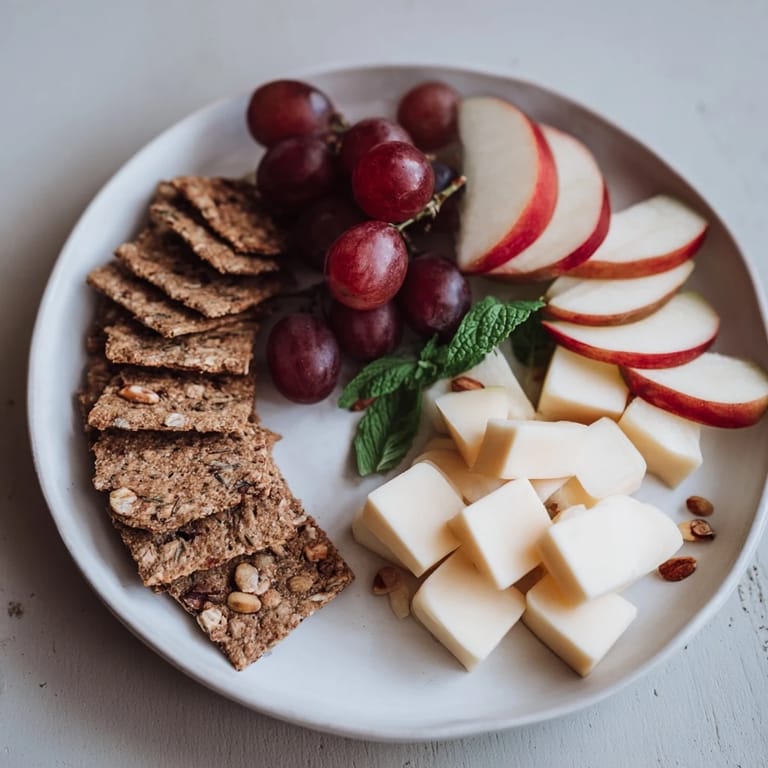
- Multi-grain crackers: These add a textural contrast and honestly hold up better to humidity than bread alone, keeping their snap even if the platter sits for a bit.
- Seeded rye bread, thinly sliced: The earthy flavor and visible seeds telegraph 'artisanal' without any extra effort, and the density means slices won't tear when people reach for them.
- Cooked and cooled farro or barley: This is your grain anchor—it adds an earthy sweetness and creates visual movement that breaks up monotony on the board.
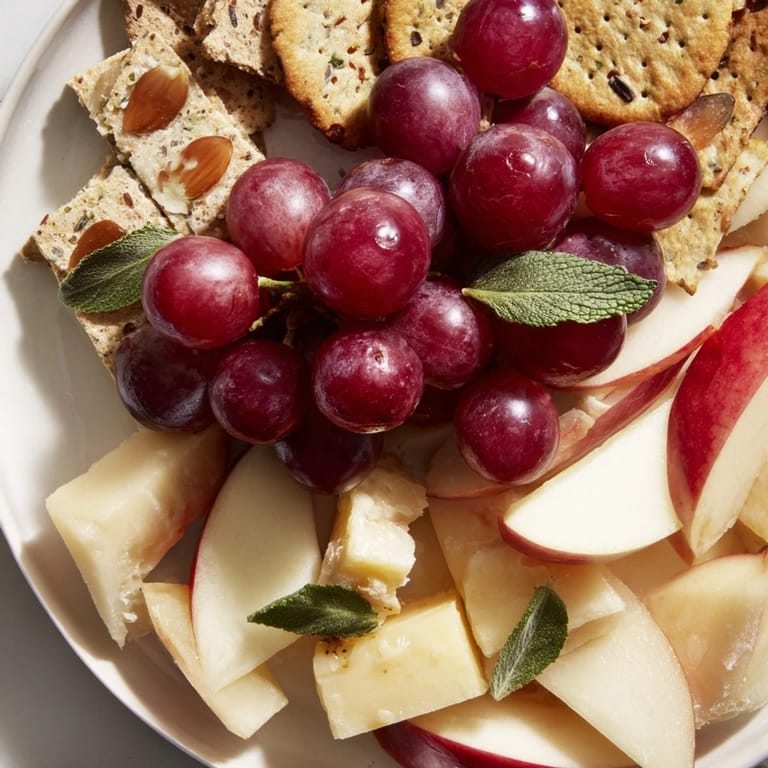
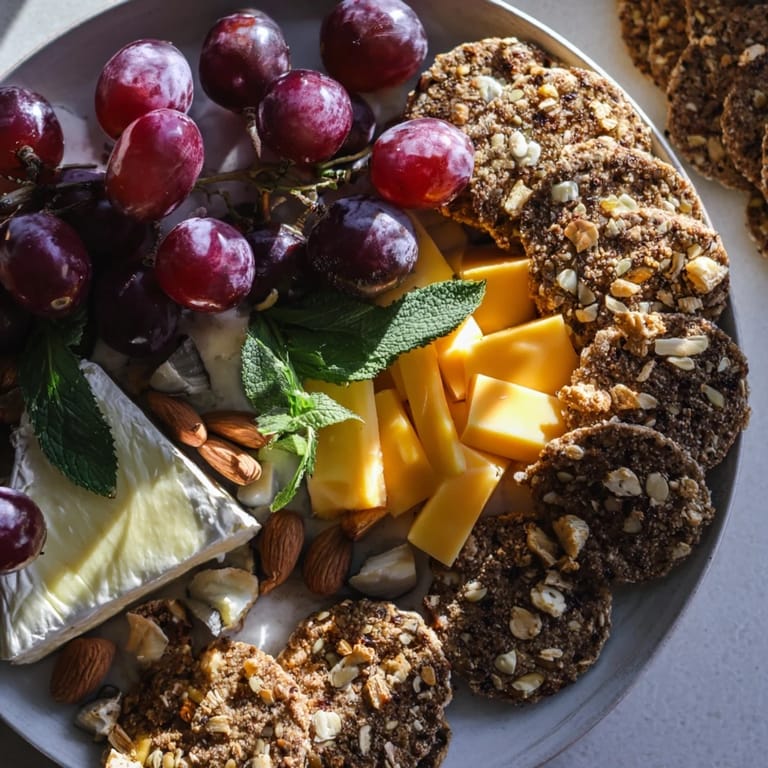
- Seedless red grapes: They're the jewels that catch light and offer a burst of natural sweetness without the mess of seeds; I usually nestle them in small clusters.
- Sliced pears and apples: Slice these just before serving and toss lightly with lemon juice to prevent browning, which also brightens the flavor slightly.
- Dried apricots: Their chewiness and concentrated sweetness provide balance to the bread, and they're foolproof since they don't brown or wilt.
- Fresh figs: When they're in season, halved fresh figs are stunning and have a subtle honey note, but dried figs work beautifully too and won't split or ooze.
- Brie and aged cheddar: These are optional, but I've learned that soft and sharp cheeses expand the range of what people will eat—brie melts gently into warm bread, while cheddar pairs almost anything.
- Honey or fig jam: Offer this on the side in a small bowl so people can control the sweetness; a drizzle on brie or spread on rye is where magic happens.
- Fresh mint and roasted nuts: Mint leaves add a cool herbal note and visual freshness, while nuts—almonds or walnuts—provide a grounding crunch that keeps the platter from feeling too soft.
Tired of Takeout? 🥡
Get 10 meals you can make faster than delivery arrives. Seriously.
One email. No spam. Unsubscribe anytime.
Instructions
- Set your stage:
- Place your largest wooden board or platter in front of you and take a breath—this is less about perfection and more about creating a sweeping gesture. Imagine you're drawing a scythe blade across the board in a smooth, curved line, and that's where your breads and crackers will go.
- Create the scythe:
- Arrange sliced baguette, rye bread, and crackers along that curved path, letting them overlap slightly and lean at natural angles. The goal is a sense of movement, not a rigid line, so don't worry if some pieces face different directions.
- Fill the field:
- Scatter your cooled farro or barley along the inner curve of the scythe shape, spreading it into a loose, uneven layer that suggests a field of grain. You want to see some of the board beneath—this isn't about coverage but about evoking the idea of grain.
- Weave in the fruits:
- Nestle your fresh grapes, pears, and apples into and around the breads, letting colors and textures talk to each other. Cluster the dried apricots and figs in small groups rather than scattering them; this creates visual weight and makes them feel intentional.
- Add cheese moments:
- If you're using cheese, place slices of brie and cubes of cheddar in two or three small clusters near the bread where they naturally pair. Think of these as conversation starters rather than formal components.
- Pour and garnish:
- Pour honey or jam into a small bowl and nestle it somewhere prominent where people will see it. Scatter fresh mint leaves and roasted nuts over the entire board, trusting that their aromas and visual interest will draw people in.
- Serve fresh:
- Bring this to the table immediately so fruits are crisp and everything has maximum presence. If you need to make it more than an hour ahead, cover it loosely with plastic wrap and refrigerate, but let it sit out for 10 minutes before serving to take the chill off.
 Save
Save One evening while setting out this board, a friend who usually picks at cheese and crackers ended up eating more fresh fruit than I'd ever seen from her, and she said it felt different when everything was arranged like it mattered. There's something generous about a board that says 'choose what speaks to you,' and I think that's when food becomes more than sustenance.
The Poetry of Pairing
The scythe shape isn't just visual theater—it actually guides how people eat. Breads form the handle, grains the cut field, and fruits scatter like the bounty that falls after the harvest. When I first tried this arrangement, I was mimicking a painting I'd seen, but after watching how people navigate it, I realized the shape creates natural eating rhythms. Someone reaches for bread, then finds themselves pairing it with cheese, then discovers a grape nearby, and suddenly they're tasting combinations they wouldn't have chosen if everything was scattered randomly.
Seasonal Flexibility
This board breathes with the seasons in ways that feel less like substitution and more like discovery. In autumn, I lean into dried fruits and add roasted squash seeds; in spring, fresh berries replace some of the dried apricots and I add edible flowers for color. The core structure stays the same, but what you source shifts with what's abundant, which means you're never making the same board twice even if you're using the same recipe.
Making It Your Own
What I've learned is that people remember how a board made them feel more than what was on it. One friend swapped the dairy cheeses for cultured nut cheeses and said it was even better, while another added roasted chickpeas for protein and texture. The frame stays constant—breads, grains, fruits, garnish—but your personal touches make it sing.
- If you're hosting someone with dietary restrictions, plan your swaps around their needs first and let the board organize itself around what remains rather than forcing substitutions.
- Serve this with wine, sparkling cider, or cold tea—the beverage choice matters less than having something to sip between bites that cleanse the palate.
- There's no cleanup drama here, just wash your board afterward and know that you fed people something beautiful that took almost no real effort.
 Save
Save This board has become my answer to that question of what to bring when you want to contribute something meaningful but don't want to spend the afternoon in your kitchen. It's honest food arranged with intention, and there's real grace in that.
Recipe FAQs
- → What types of breads work best for this platter?
Small baguettes, multi-grain crackers, and seeded rye bread sliced thinly offer a variety of textures and flavors that complement the fruits and cheeses beautifully.
- → Can the grains be substituted?
Yes, farro or barley work well, but you can also use cooked rice, quinoa, or other cooked grains to add a nutty texture and earthy flavor.
- → How do I keep the fruits fresh before serving?
Arrange the fruits just before serving and keep them refrigerated until ready. Adding fresh mint leaves also helps maintain a refreshing aroma.
- → Are the cheeses necessary?
Cheeses like brie and aged cheddar add richness and balance, but they are optional and can be replaced with plant-based alternatives or omitted as desired.
- → What garnishes enhance the platter’s flavor?
Fresh mint leaves provide a bright note, and roasted nuts such as almonds or walnuts add crunch and depth to the overall texture.
- → How should the platter be arranged for best presentation?
Arrange breads and crackers in a sweeping curved line to mimic a scythe blade, layering grains within the sweep, then fan fruits between the breads for a colorful, natural flow.