 Save
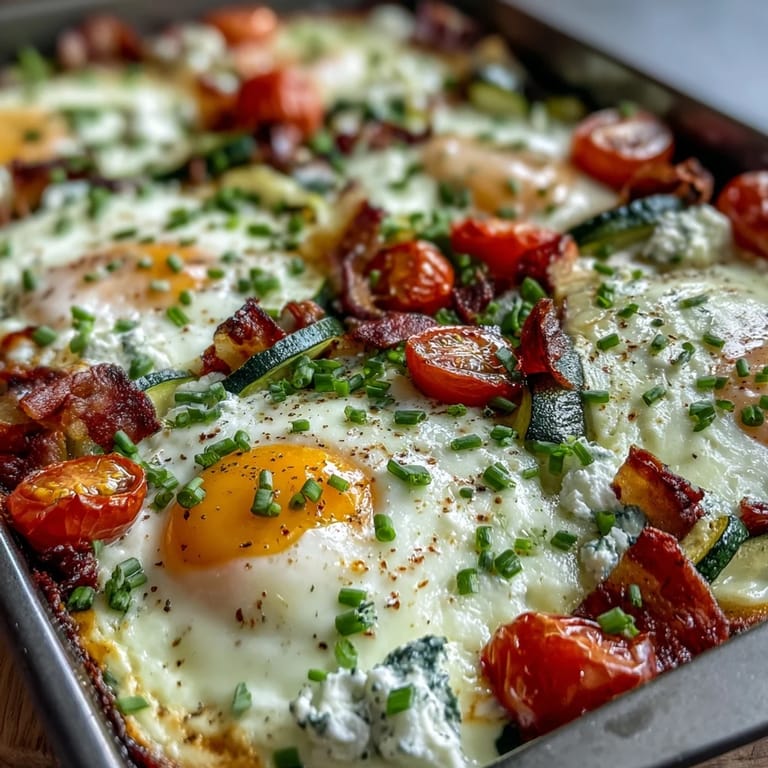
Save There's something wonderfully honest about sheet pan eggs—no fussy plating, no pretense, just honest protein and vegetables baked until they're set and golden. I discovered this approach on a Monday morning when I had exactly ten minutes before work and a fridge full of half-used vegetables staring me down. What emerged from the oven was so satisfying that I've been making it on repeat ever since, tweaking vegetables with the seasons and honestly impressing myself with how effortless it feels.
My neighbor came over for breakfast last week, skeptical about cottage cheese in eggs, and ate three squares before asking for the recipe. That moment when someone's preconceived notion dissolves with the first bite—that's when you know you've found something special that deserves to be shared.
Ingredients
- Eggs: Ten large eggs form the structural backbone here, whisked until they're light and slightly frothy, which introduces tiny air pockets that make the final texture tender rather than dense.
- Cottage cheese: At one and a half cups, this is the secret to exceptional protein content and a creamy crumb that contrasts beautifully with the vegetables; low-fat varieties work perfectly without compromising richness.
- Milk: Just a quarter cup, this thins the mixture slightly so it spreads evenly across the pan and bakes with that custardy set rather than becoming rubbery.
- Cherry tomatoes: Halved and scattered throughout, these burst slightly during baking and leave pockets of brightness and subtle acid that balance the eggs.
- Baby spinach: Roughly chopped so it doesn't feel like you're eating something medicinal, it wilts down considerably and adds earthiness without overwhelming the dish.
- Red bell pepper: Diced small so pieces cook through evenly, contributing sweetness and a pleasant crunch if your oven doesn't dry it completely.
- Zucchini: Diced to match the bell pepper in size, it keeps the moisture level interesting without making anything soggy if you don't overload it.
- Red onion: Finely chopped, this adds a gentle sharpness that wakes up the palate, though it mellows considerably as it bakes.
- Salt, pepper, and dried oregano: These seasonings are your foundation; the oregano in particular echoes Mediterranean flavors without requiring fresh herbs you might not have on hand.
- Fresh chives or parsley: A final garnish that adds color and a whisper of freshness right before serving, reminding everyone that this is still a vegetable-forward dish.
Tired of Takeout? 🥡
Get 10 meals you can make faster than delivery arrives. Seriously.
One email. No spam. Unsubscribe anytime.
Instructions
- Prepare your stage:
- Preheat your oven to 375°F and grease a rimmed baking sheet—I prefer parchment paper because it peels away cleanly without sticking to the edges. This temperature is your sweet spot; much hotter and the edges brown before the center sets, much cooler and you're waiting around indefinitely.
- Build the base:
- Whisk eggs, cottage cheese, and milk together until the cottage cheese breaks down into the eggs and everything looks nearly uniform with just a hint of frothiness. This whisking step matters because it distributes the protein evenly and traps air that makes the final bake light rather than solid.
- Season with intention:
- Stir in salt, pepper, and your dried herbs, tasting mentally as you go—remembering that the vegetables will add subtle flavor as they bake. If you want heat, a pinch of chili flakes goes here, distributing evenly before you add anything else.
- Fold in vegetables gently:
- Add all your chopped vegetables at once and mix carefully so nothing gets bruised; you're looking for even distribution without aggressive stirring. The vegetables should feel suspended throughout rather than settled at the bottom.
- Pour and settle:
- Pour everything onto your prepared sheet and give the pan a gentle tap or two on the counter to help the mixture settle into an even layer. Don't overthink this; you're not looking for perfect uniformity, just reasonably flat.
- Bake until set:
- Slide into the oven for 22 to 25 minutes, watching for the moment when the edges look lightly golden and the center barely jiggles when you give the pan a gentle shake. The carryover cooking that happens during resting will finish setting the very center.
- Cool and slice:
- Let it rest for five minutes out of the oven—this prevents the squares from falling apart and allows the structure to set completely. Slice into generous squares right on the pan, garnish with your fresh herbs, and serve warm or at room temperature depending on your mood.
 Save
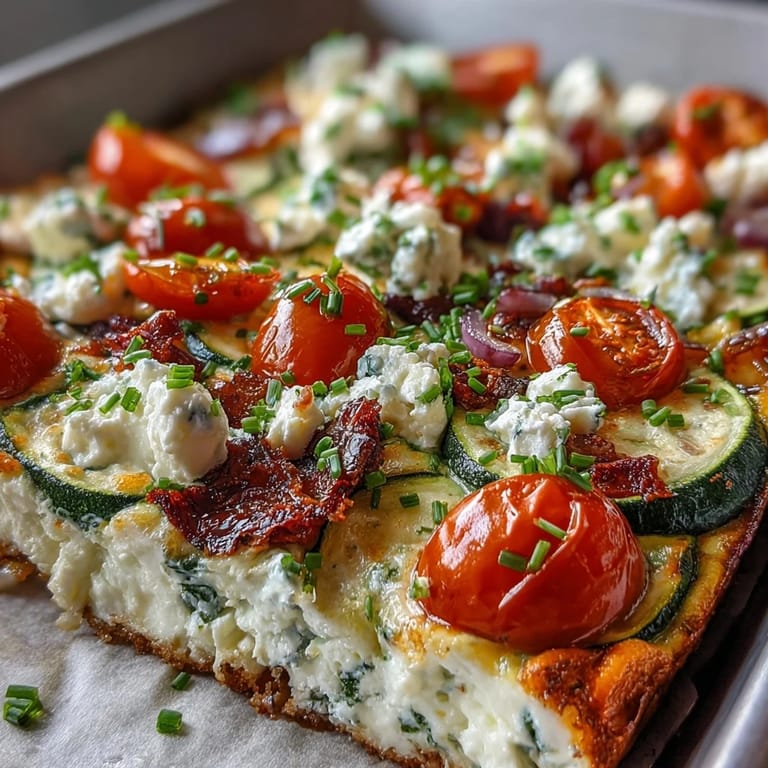
Save There's a quiet satisfaction that comes from pulling a sheet pan of vegetables and eggs from the oven, knowing that breakfast or lunch for the next several days is already handled. That small bit of planning ahead has a way of making the whole week feel more manageable.
Customizing Your Vegetables
This recipe thrives on flexibility, which is partly why I keep coming back to it. Mushrooms, asparagus, broccoli florets, sun-dried tomatoes, or even thinly sliced carrots all work beautifully—the only rule is to keep your pieces roughly the same size so everything bakes at roughly the same pace. I've made this with whatever was on sale at the market, with whatever looked tired in my crisper drawer, with seasonal vegetables that happened to be at their peak, and it has never once disappointed.
Flavor Upgrades Worth Trying
Once you master the basic formula, you can push the flavor profile in different directions without changing the fundamental structure. A handful of grated cheddar cheese stirred into the egg mixture adds richness; fresh dill instead of oregano takes the whole thing in a Scandinavian direction; a splash of hot sauce in the base brings assertive heat. I've even crumbled crispy bacon on top after baking, though that shifts it away from the vegetarian category.
Making This Work for Your Life
The real magic of sheet pan eggs is how they fit into real life, whether that means meal prep for the week ahead or a quick breakfast before rushing out the door. This is the kind of dish that tastes just as good cold from the refrigerator as it does warm, making it remarkably forgiving for busy mornings or unexpected schedule changes. Reheat slices in the microwave for about 60 seconds, or eat them straight from a container if you're that kind of person, which I absolutely am on Fridays.
- Store leftover squares in an airtight container for up to four days, and they'll hold their texture remarkably well.
- Pair each square with whole grain toast, a piece of fruit, or even a small handful of fresh greens if you want something extra substantial.
- Cut them into smaller pieces and pack them in containers with different vegetables or sauces on the side for variety throughout the week.
 Save
Save This recipe has become my answer to the question that hits every Sunday evening—what am I actually going to eat this week? It's nourishing without feeling like a chore, flexible without being vague, and impressive enough to serve to guests while remaining completely uncomplicated to make.
Recipe FAQs
- → Can I use different vegetables?
Absolutely. Swap in mushrooms, broccoli, asparagus, or any vegetables you have on hand. Just keep the total amount roughly the same for proper cooking time.
- → How long do leftovers last?
Store cooled slices in an airtight container in the refrigerator for up to 4 days. Reheat individual portions in the microwave for 1-2 minutes.
- → Can I freeze these?
Yes. Wrap individual slices tightly in plastic wrap and freeze for up to 2 months. Thaw overnight in the refrigerator before reheating.
- → What size pan should I use?
A 13x9 inch rimmed baking sheet works perfectly. The edges prevent the egg mixture from spilling while allowing even cooking.
- → Can I make this dairy-free?
Substitute the cottage cheese with a dairy-free alternative and use unsweetened plant-based milk. The texture may vary slightly but will still be delicious.
- → How do I know when it's done?
The eggs are done when the center is just set—no longer liquid—and the edges are lightly golden. A knife inserted in the center should come out clean.