 Save
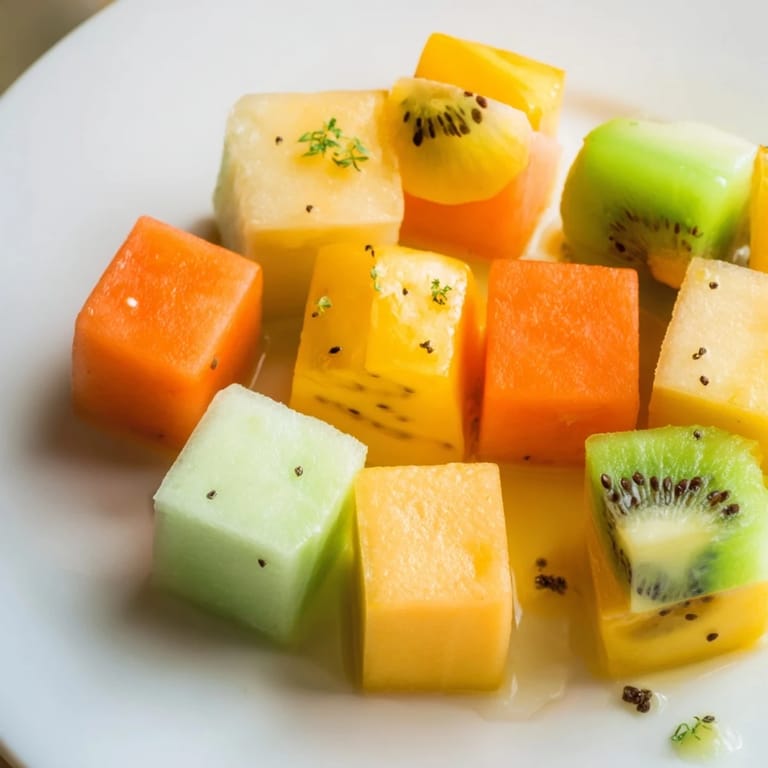
Save I remember the first time I saw a perfectly cubed arrangement of vegetables on a modernist chef's plate—it stopped me cold. There was something almost meditative about it, the way each tiny cube caught the light, the colors arranged like a edible mosaic. I became obsessed with recreating that moment at home, spending an entire afternoon with a ruler and my sharpest knife, discovering that precision in the kitchen isn't just about technique, it's about intention. This Cube Geometry Study is that journey translated into a dish that transforms simple, fresh ingredients into something that feels like edible art.
I made this for my partner on a warm summer evening, right before sunset, and we sat outside with small forks, picking individual cubes and tasting the way the olive oil brought out the feta's tang against the watermelon's coolness. It became less about the dish itself and more about the ritual—how slowing down to really see your food changes the whole experience.
Ingredients
- Watermelon cubes (60 g): The foundation of freshness; keep it chilled and seedless so every bite is pure sweetness without interruption, and those crisp edges matter more than you'd think when everything else is geometric precision
- English cucumber (60 g): Peeled and seeded so it's clean water and gentle flavor; this is your textural contrast and the ingredient that taught me that dryness is your friend in precise plating
- Ripe mango (60 g): Choose one that yields slightly to pressure but isn't mushy; the golden color is half the visual appeal, and the flavor bridges the gap between fruit and vegetable beautifully
- Feta cheese (60 g): Keep it refrigerated right until the last moment; cold feta cuts clean and sharp, while room temperature feta crumbles and ruins the whole geometric dream
- Cooked beetroot (60 g): Pat it completely dry or it bleeds into everything around it, which I learned the hard way the first time I tried this; the earthiness grounds all that bright fruit
- Avocado (60 g): Ripe but still firm, and brush immediately with lemon juice—this one ingredient will teach you the value of timing in cooking
- Golden kiwi (60 g): The surprise element; most people expect green kiwi, and this variety is sweeter and more delicate, adding an unexpected sophistication
- Extra virgin olive oil (1 tbsp): This isn't just finishing oil; it's what makes each cube shine and brings all the flavors into conversation with each other
- Flaky sea salt: The texture of flaky salt matters—it doesn't dissolve immediately, so you get little bursts of brightness with each bite
- Freshly ground black pepper (1/4 tsp): Grind it just before serving so it's aromatic and alive
- Microgreens or edible flowers: Optional, but these add that final whisper of sophistication that says you've really thought about every detail
Tired of Takeout? 🥡
Get 10 meals you can make faster than delivery arrives. Seriously.
One email. No spam. Unsubscribe anytime.
Instructions
- Prepare your kingdom:
- Clear your counter like you're about to perform surgery—and honestly, precision plating is a lot like that. Lay down a damp kitchen towel so your cutting board doesn't slip, fill a small bowl with water, and position your ruler where you can see it. Have paper towels within arm's reach. This isn't overthinking; this is creating the conditions where precision becomes almost inevitable.
- Cut with intention:
- Use your sharpest chef's knife—dull knives crush instead of slice, and crushed cubes can't hold a grid. For each ingredient, first trim it into a rectangular block, then slice it into 1.5 cm strips, then into perfect cubes. This takes patience. Wipe your knife clean between each ingredient so the beet doesn't stain the mango, and the colors stay true. You'll notice your hand learns the rhythm; there's something almost meditative about this step once you surrender to the precision required.
- Dry and protect:
- Gently pat the beetroot and cucumber with paper towels—wet vegetables weep into their neighbors and ruin the clean lines. Brush the avocado with lemon juice the moment it's cut; this is your insurance policy against browning. Keep the feta chilled right up until plating; cold cheese holds its shape like a little architecture.
- Build your grid:
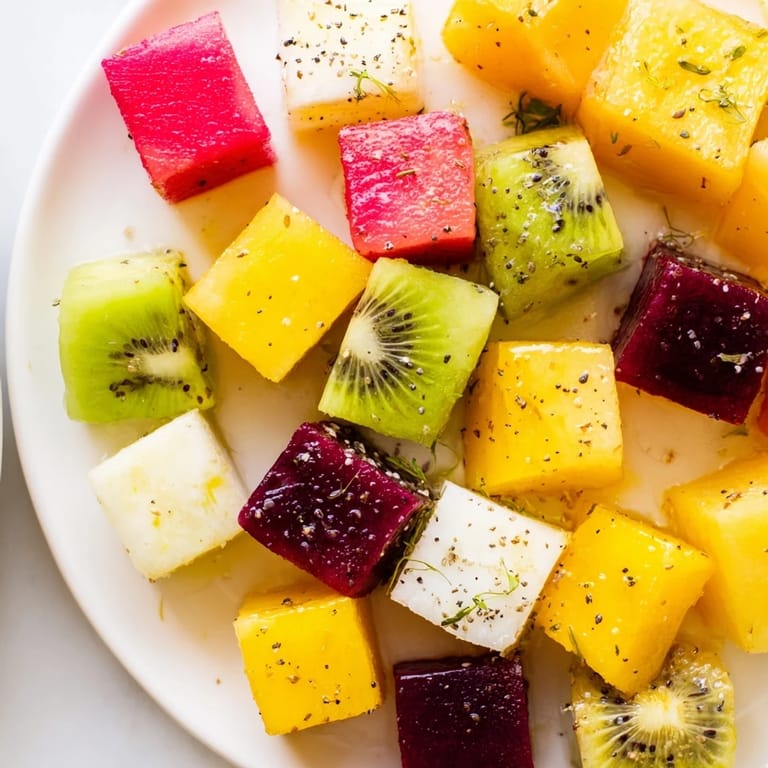
- On a white plate or platter, start arranging cubes in an alternating pattern. Use tweezers or gloved hands so you don't warm the cheese or smudge anything. Place each cube like it matters, because it does. Stand back and look at it from above, from the side, checking for gaps and symmetry. Adjust until the grid feels tight and intentional. This step is where the whole dish comes alive—sloppiness here means the whole effect collapses.
- Finish with grace:
- Drizzle the olive oil with a steady hand, letting it coat the cubes without pooling in the corners. Sprinkle sea salt and black pepper evenly. Add microgreens or edible flowers if you're using them, placing them strategically so they enhance rather than disrupt the geometry. Step back. This is the moment where simple ingredients become something that looks like it came from a restaurant kitchen.
- Serve without delay:
- Bring it to the table immediately while the colors are vibrant and the lines are sharp. The beauty of this dish fades as the oils settle and the cubes begin to soften; it's meant to be fleeting, like the moment itself.
 Save
Save There's a moment right after you finish arranging, when you step back and see what your hands have made—this perfect, improbable grid of pure colors and flavors—and it hits you that cooking doesn't have to be about ease or speed or tradition. Sometimes it's about slowing down so much that you see each ingredient like you're meeting it for the first time.
The Art of Perfect Cubes
Cutting vegetables into uniform cubes is a skill that transforms over time. The first time, your cubes will be slightly irregular, and that's perfect—you're learning. By the third or fourth time, something shifts; your hand remembers the motion, and your eye becomes calibrated to what 1.5 cm actually looks like. This dish teaches you that precision in cooking isn't about perfectionism or control; it's about respect for the ingredient and the person eating it. When someone sees that you've taken the time to make every cube exactly the same size, they understand that you've invested care in the experience, and suddenly, a simple arrangement of vegetables becomes memorable.
Playing With Color and Seasonality
The beauty of this dish is that it's endlessly adaptable to what's in season. In spring, swap the watermelon for pink grapefruit segments and add pale green cucumber and fresh peas. In autumn, try roasted sweet potato for warmth and earthiness, add apple for crispness, and use red cabbage for that jewel-toned richness. You can even play with proteins—firm tofu for vegans, smoked salmon for richness, even burrata for luxury. Each substitution shifts the flavor story while the geometric presentation stays strong and elegant. The grid format actually makes experimentation easier because the structure is so clear; you're just swapping colors and flavors while keeping the format intact.
Plating Like You Mean It
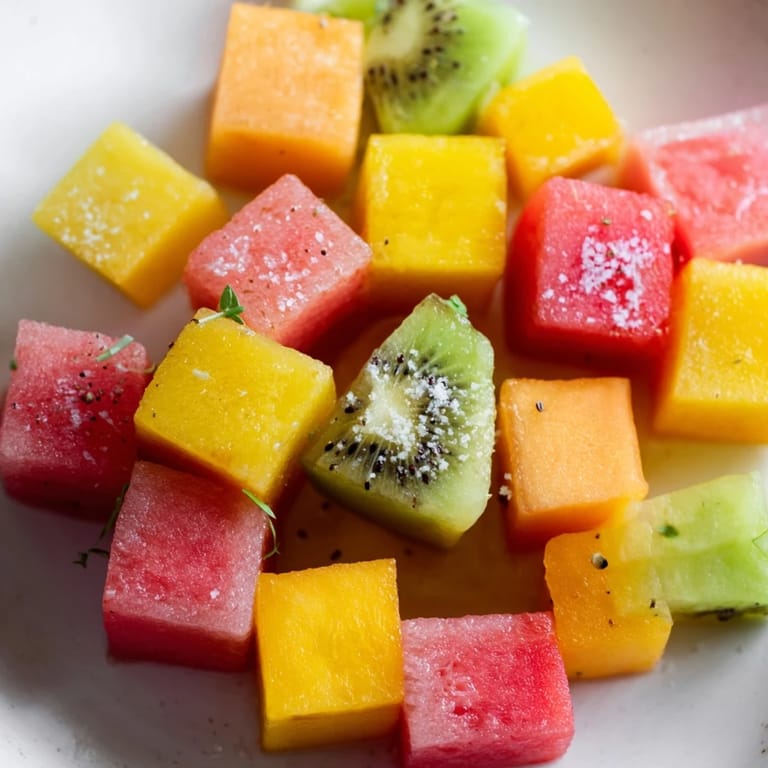
There's a difference between randomly placing cubes and intentionally building a grid. Think about it like creating a chessboard where each square matters. Alternate colors so adjacent cubes create visual contrast—watermelon next to cucumber next to feta. Step back frequently and look at it from the angle your guests will see it from. Use a white or neutral plate because colors pop against simplicity. The olive oil should catch the light without pooling, the salt should sparkle, and the whole arrangement should feel like it was created with precision and care. This is the moment where your ingredient prep pays off—because if your cubes aren't uniform, no amount of good plating can fix that.
- Use tweezers for the final placement if you're nervous; they give you control and keep your fingers from warming the cheese
- Arrange in lines or a grid pattern; randomness undermines the whole concept
- Save the garnish for the absolute last second right before serving so microgreens stay vibrant
 Save
Save This dish taught me that cooking can be as much about the process as the outcome—about taking time to see your ingredients clearly and arranging them with intention. Serve it with presence, and let your guests experience the care you put into every single cube.
Recipe FAQs
- → How do I achieve perfect uniform cubes?
Use a sharp chef's knife and a ruler to trim ingredients into rectangular blocks before slicing into 1.5 cm strips and then cubes. Wiping the knife between different ingredients prevents color transfer.
- → What ingredients prevent cubes from crumbling or losing shape?
Firm, chilled produce such as seedless watermelon, cucumber, ripe mango, and beetroot work best for maintaining sharp edges and clean faces.
- → How can I keep avocado cubes fresh and green?
Lightly brush avocado cubes with lemon juice before arranging to slow browning and retain a vibrant appearance.
- → What is the best way to arrange the cubes for presentation?
Place cubes gently in a precise, alternating color and texture grid on a flat white plate, using tweezers or gloved hands to maintain symmetry and balance.
- → How do finishing touches enhance the dish?
Drizzle extra virgin olive oil evenly, then sprinkle flaky sea salt and freshly ground black pepper to enhance natural flavors. Garnish tastefully with microgreens or edible flowers for added sophistication.
- → Can I prepare cubes in advance?
Store unassembled cubes separately in airtight containers in the fridge for up to 6 hours and assemble just before serving to retain freshness and crispness.