 Save
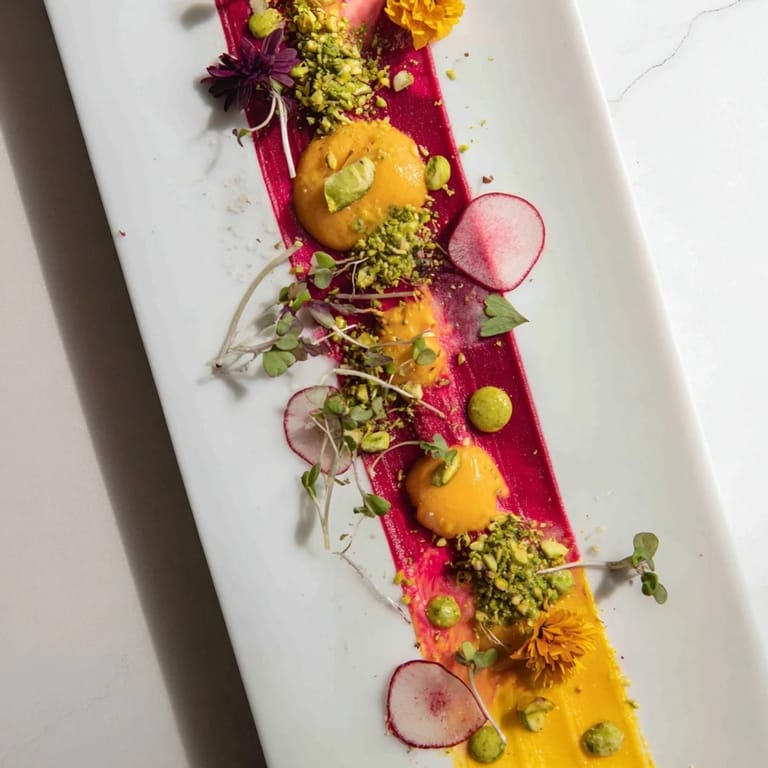
Save I discovered the power of a single stripe quite by accident one evening when I was plating a dinner party and knocked over three separate bowls of purée. Instead of starting over, I grabbed my offset spatula and drew one bold, confident line of beet down the center of the plate, then layered the others on top. My guests fell silent the moment the plates arrived—not because the food was fancy, but because it was so strikingly honest. That night taught me that sometimes less really is more, and that a single, deliberate gesture can say more than a cluttered plate ever could.
I remember serving this to a chef friend who usually intimidates me in the kitchen, and watching her lean over her plate with genuine curiosity about how I'd layered the colors so cleanly. She spent ten minutes just looking at it before eating, and I realized that moment—that pause—was exactly what modernist cooking is supposed to give you.
Ingredients
- Beets (2 medium, peeled and diced): Sweet, earthy, and the star of your stripe—roasting concentrates their flavor and gives you that deep magenta color that stops people mid-conversation.
- Carrots (3 large, peeled and sliced): They soften into a silky purée and bring gentle sweetness to balance the beet's earthiness.
- Avocado (1 ripe): The secret to a cloud-soft finishing layer; choose one that yields gently to thumb pressure but isn't mushy.
- Ginger (1 tsp fresh, grated): Just enough warmth and brightness to wake up the carrot layer without overwhelming it.
- Greek yogurt or coconut yogurt (2 tbsp): This transforms mashed avocado from heavy to ethereal, adding tang and airiness.
- Olive oil (1 tbsp for beets, plus extra): Use good olive oil here—you'll taste it.
- Unsalted butter (1 tbsp for carrots, or olive oil if vegan): Butter gives the carrot purée a richness that oil alone can't quite match.
- Lemon juice and lime juice: These two acids are your secret weapons, each cutting through richness in its own way.
- Microgreens, edible flowers, crushed pistachios, and flaky sea salt: These garnishes aren't decoration—they're the final flavor and texture notes that make the dish complete.
Tired of Takeout? 🥡
Get 10 meals you can make faster than delivery arrives. Seriously.
One email. No spam. Unsubscribe anytime.
Instructions
- Roast the beets first:
- Heat your oven to 400°F, toss your beets with olive oil and sea salt, and spread them on a tray. They'll take 30 to 35 minutes, and you'll know they're ready when a fork slides through without resistance. The smell alone is worth it.
- Cook the carrots while beets roast:
- Steam or boil your carrot slices until they're so soft they break apart with just a spoon—about 15 to 20 minutes. Don't rush this; undercooked carrots won't purée smoothly.
- Blend the beet purée:
- Once the beets cool enough to handle, add them to a blender with lemon juice and blend until completely smooth. If it's too thick, add just a splash of water—the consistency should be thick enough to hold its shape on the plate.
- Blend the carrot purée:
- Combine your cooked carrots with grated ginger, butter, and salt, then blend until silky. Taste as you go; you might want a touch more ginger or salt depending on your carrots.
- Make the avocado cream:
- In a small bowl, mash your ripe avocado with Greek yogurt and lime juice until it's cloud-soft and completely lump-free. Season with just a pinch of salt—you'll add flaky salt on top anyway.
- Create your stripe:
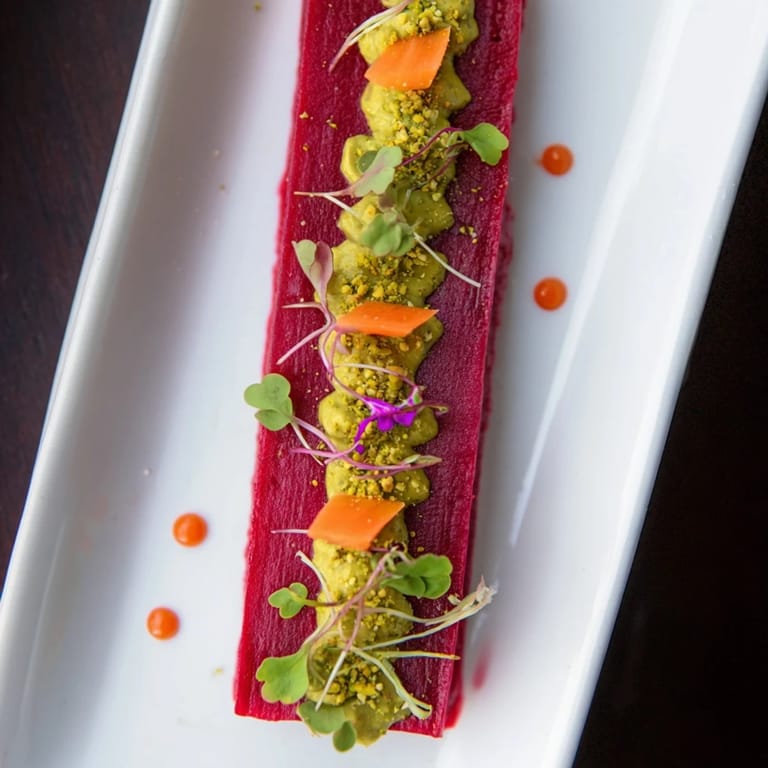
- On a clean serving board or plate, use an offset spatula or the back of a large spoon to spread the beet purée in one thick, confident stripe down the center—about 3 inches wide. Make it bold; this is your foundation.
- Layer with intention:
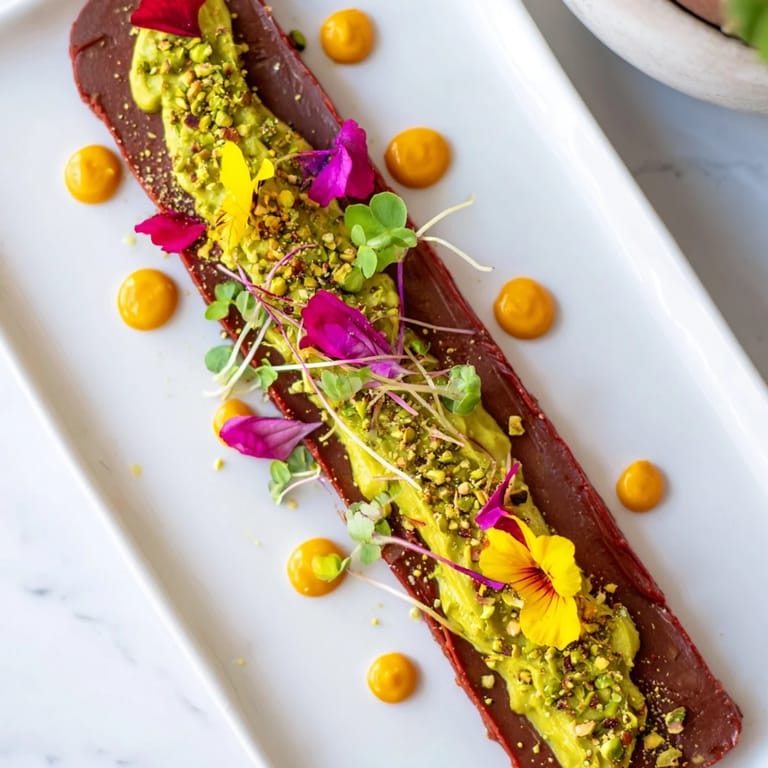
- Pipe or spoon the carrot purée along the top of your beet stripe in artistic strokes or small dots. Then add the avocado cream, either piping it into precise lines or letting it pool in organic shapes. There's no wrong way here; just make sure each element is visible.
- Finish with flourish:
- Scatter your microgreens, edible flowers, and crushed pistachios across the stripe in a way that feels natural to you. Finish with a light sprinkle of flaky sea salt and serve immediately, while all three layers are still cool and at their best.
 Save
Save The first time I plated this for my family, my seven-year-old daughter looked at it and said, 'Can I eat that?' in the tone you'd use for a painting in a museum. When she did, she bit into all three purées at once and her whole face lit up—not just because it tasted good, but because she understood something about the care that went into it. That's when food stops being sustenance and becomes memory.
Why Modernist Plating Matters
Modernist cooking isn't about complication for its own sake; it's about intention. Every element on this plate—the stripe shape, the separation of colors, the minimal garnish—serves a purpose. It slows down how you eat, makes you notice flavors you might otherwise rush through, and turns a simple appetizer into a moment of pause. There's something deeply generous about taking the time to plate something this deliberately for the people you're feeding.
Playing with Color and Texture
The beauty of this dish is that it's a template waiting for your own variations. The beet-carrot-avocado combination works because of the color contrast and the progression from earthy to bright, but you could absolutely swap in roasted sweet potato for a warmer palette, or green pea purée for something completely different. I've even made a purple stripe using red cabbage, and it was just as striking. The real skill isn't in following the recipe—it's in choosing colors and flavors that complement each other and understanding why they work together.
Serving and Pairing Thoughts
Serve this immediately, while the purées are still cool and the microgreens are crisp. The stripe is meant to be scooped—encourage your guests to use the back of a spoon or a piece of bread to gather all three layers at once, so each bite has the full flavor story. A crisp white wine like Sauvignon Blanc cuts beautifully through the richness of the avocado and butter.
- You can prepare all three purées an hour or two ahead and store them separately in the fridge, then assemble just before serving.
- If you're feeding a crowd, consider plating these on individual wooden boards or large flat plates for a more intimate presentation.
- Add roasted chickpeas or quick-pickled onions to your garnish for extra crunch and a pop of acid.
 Save
Save This dish is proof that you don't need complicated techniques or rare ingredients to create something that feels special. All you need is attention, good vegetables, and the willingness to slow down and make something deliberately beautiful.
Recipe FAQs
- → What vegetables are used in the striped purée?
Roasted beet, carrot with fresh ginger, and ripe avocado are the key vegetables used to create distinct purées layered in this dish.
- → How is texture added to the dish?
Textures come from smooth purées layered in thick stripes along with crunchy garnishes like crushed pistachios and delicate microgreens.
- → Can this dish accommodate dietary restrictions?
Yes, it is naturally gluten-free and vegetarian. Using plant-based yogurt and replacing butter with oil can make it vegan-friendly.
- → What is the best way to plate the purées?
Use an offset spatula or large spoon to spread a bold stripe of beet purée on a clean board, then layer or pipe the carrot and avocado purées on top in artistic strokes.
- → Are there suggested pairings for this dish?
This vibrant and fresh appetizer pairs beautifully with a crisp white wine like Sauvignon Blanc for a balanced experience.
- → How long does preparation and cooking take?
Preparation takes about 30 minutes, with cooking time around 45 minutes, totaling roughly 1 hour and 15 minutes for the full process.