 Save
Save There's something almost meditative about the ritual of instant ramen, but it wasn't until I discovered the magic of tossing in a handful of frozen peas that the whole experience shifted. I was rushing through dinner one weeknight, everything felt routine, when I remembered my grandmother's insistence that color on the plate meant nutrition in the bowl. A minute later, watching those bright green peas bloom in the steaming broth, I realized I'd accidentally stumbled onto something that felt both elevated and comforting, like I'd finally unlocked a secret that was hiding in plain sight.
I made this for my roommate on a particularly rough day, when she came home looking completely defeated by work. She took one spoonful and just paused, then looked up at me with this small smile that said everything. Something about the warmth, the careful layering of flavors, the unexpected vegetables—it mattered more than it should have. That bowl somehow became proof that showing up for someone doesn't require complicated effort, just intention.
Ingredients
- Instant ramen noodles (2 packs): Choose ones you actually enjoy eating—the seasoning packets are optional, but I keep them around for days when I want full control over the flavor profile.
- Frozen peas (1 cup): Never thaw them; they release their color and sweetness perfectly once they hit the hot broth, and they add a gentle pop of natural sweetness that balances the saltiness beautifully.
- Frozen mixed vegetables (1 cup, optional): Carrots, corn, and green beans stay firmer than fresh ones would, giving each bite unexpected texture.
- Green onions (2, sliced): Split them in half—some go into the broth to cook down and soften, the rest finish on top for that fresh, sharp bite.
- Garlic (2 cloves, minced): This is where the magic starts; toasting it in oil for just thirty seconds fills your kitchen with a smell that makes everything taste more intentional.
- Low-sodium vegetable broth (4 cups): Water works, but broth gives you flavor for free, and the low-sodium version lets you control the saltiness yourself.
- Soy sauce (2 tablespoons): Use tamari if gluten matters to you, but taste as you go—you might want less or more depending on your broth choice.
- Sesame oil (1 teaspoon): A small amount goes a long way; it's the bridge that connects all the other flavors and makes the whole bowl taste like it came from somewhere with intention.
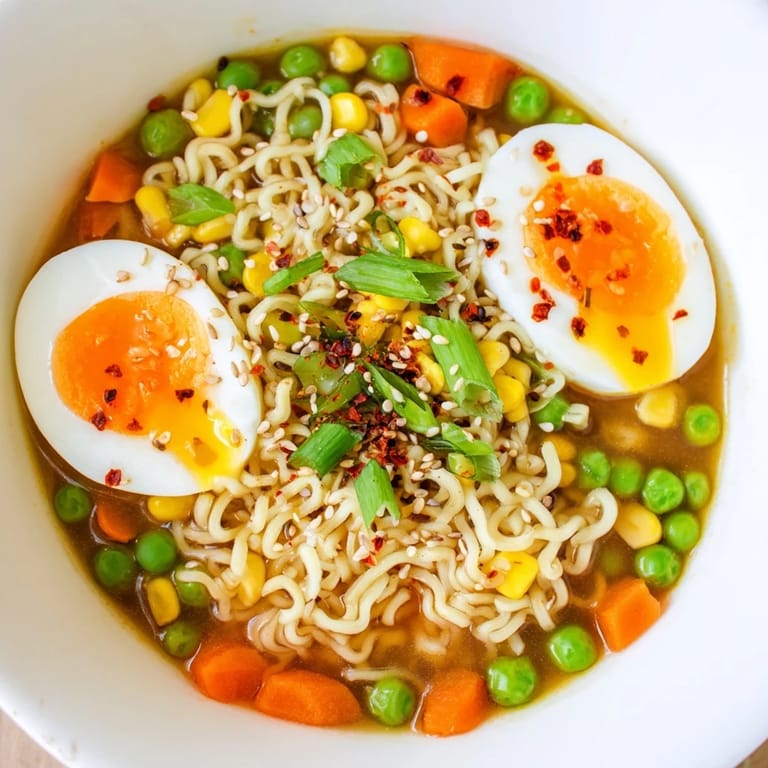
- Soft-boiled eggs (2, optional): If you add them, the runny yolk becomes a sauce that coats every noodle—this detail changes everything.
- Toasted sesame seeds (1 tablespoon): They add crunch and a nutty depth that punches above their weight.
- Chili flakes or sriracha (to taste): This is your personal heat level; add it gradually and taste, because some days you want gentle warmth and other days you want to wake yourself up.
Tired of Takeout? 🥡
Get 10 meals you can make faster than delivery arrives. Seriously.
One email. No spam. Unsubscribe anytime.
Instructions
- Toast the garlic in oil:
- Heat the sesame oil in your saucepan over medium heat until it shimmers, then add your minced garlic and let it sit for about thirty seconds until the smell gets intense and almost sweet. This tiny moment is the foundation for everything that follows.
- Build your broth base:
- Pour in the vegetable broth and soy sauce, stirring gently to combine, then bring it to a gentle boil—not a rolling aggressive one, but a quiet simmer with occasional bubbles. The gentleness here matters because it gives flavors time to meld rather than just mix.
- Add your vegetables:
- Scatter in your frozen peas and any mixed vegetables, then let them simmer for two to three minutes until they're heated through and the broth turns a warmer color. You'll notice the peas float up when they're ready, like a tiny signal that things are progressing perfectly.
- Cook the noodles:
- Drop in your ramen noodles and follow the package instructions, usually two to three minutes, stirring occasionally so they don't clump together. Watch how they soften from rigid to tender, and fish out one strand to taste—the moment they bend without snapping is the moment you're done.
- Finish and season:
- Stir in half of your green onions and take a spoonful of broth to taste; this is your chance to adjust, adding more soy sauce if it needs depth or a pinch more salt if it tastes flat. Trust your instincts here because every broth and palate is slightly different.
- Serve and top:
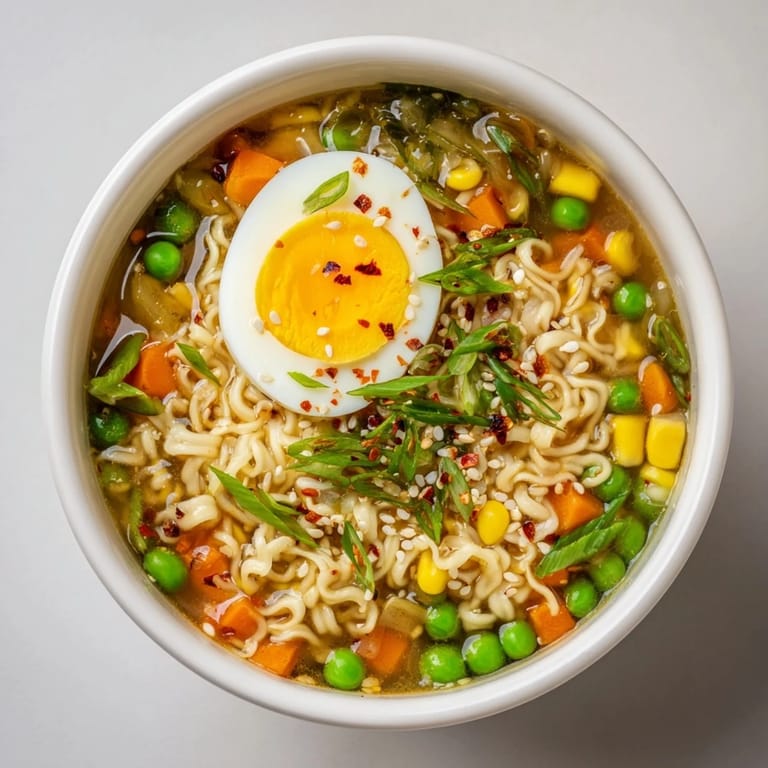
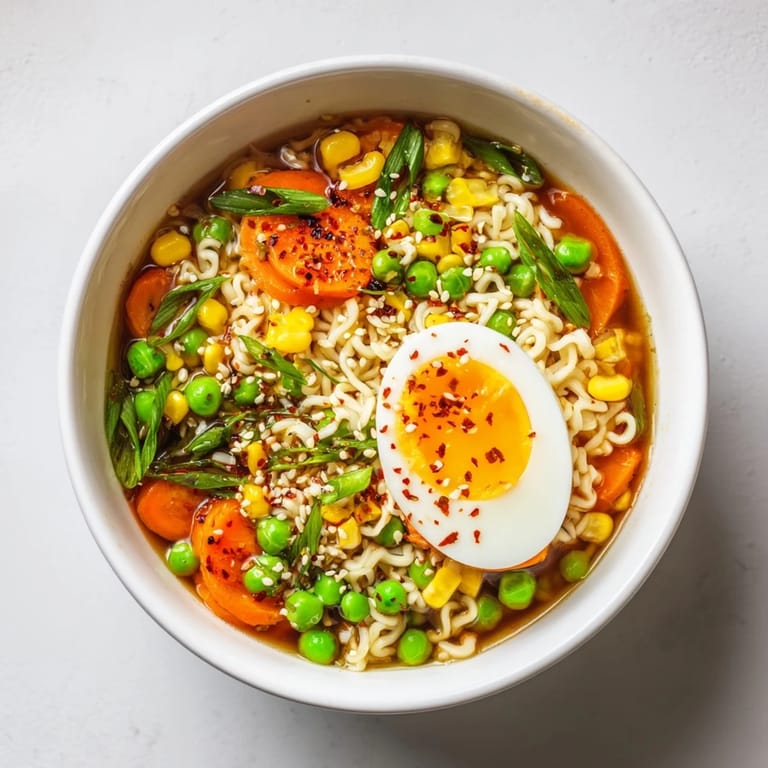
- Divide everything between two bowls, making sure each one gets equal noodles and vegetables, then top with a soft-boiled egg if you're using one, the remaining green onions, sesame seeds, and a sprinkle of chili flakes. The toppings aren't just garnish—they're the final layer that transforms a bowl of noodles into something memorable.
 Save
Save My favorite version of this bowl happened on a quiet Sunday morning when I made it for myself with nowhere to be and nothing to prove. I added a soft-boiled egg, watched the yolk turn the broth golden, and realized that sometimes the most nourishing things in life are the simplest ones, made with just enough care to feel like love. That bowl tasted like permission to take care of myself in small ways.
Why Frozen Peas Are Actually the Secret
I used to think frozen vegetables were shortcuts, something to feel a little guilty about, until I actually started paying attention to what they do. Peas in particular have this remarkable ability to stay bright and slightly sweet even after freezing; they don't leach all their color and flavor into the broth the way fresh ones sometimes do. Now I keep them in my freezer like I'm stocking a small pharmacy of quick nutrition, because they've taught me that convenience and quality aren't actually enemies.
The Egg Game Changer
Adding a soft-boiled egg transforms this from a quick meal into something that feels almost restaurant-quality, but only if the yolk is actually soft. I learned this after accidentally hard-boiling several eggs and wondering why my bowl felt incomplete; now I time them with an alarm and plunge them straight into cold water. The moment that golden yolk breaks and spreads through the broth is the moment someone eating this realizes you actually cared about the details.
How to Make This Feel Like Your Own
The beauty of this recipe is that it's really a framework, a starting point for whatever you have on hand and whatever you're hungry for. I've made versions with spinach instead of peas, added leftover rotisserie chicken, topped it with crispy fried onions, and each one felt like a completely different meal. The core technique stays the same—toast your aromatics, build your broth, cook your noodles—but everything else is permission to play.
- Swap the peas for edamame, spinach, bok choy, or even thinly sliced mushrooms depending on what's in your freezer and what you're craving that day.
- Protein is flexible too; soft tofu, shredded chicken, leftover cooked shrimp, or even a handful of cashews all work beautifully and make this stretch into heartier territory.
- The toppings are where your personality gets to shine, so sprinkle whatever sounds good—crispy fried garlic, a drizzle of chili oil, cilantro, lime juice, or even a spoonful of peanut butter if you're feeling adventurous.
 Save
Save This recipe taught me that taking care of yourself doesn't require hours in the kitchen or fancy ingredients; sometimes it just requires showing up with a little attention and intention. A bowl like this, made with presence, tastes like a small act of kindness directed at yourself.
Recipe FAQs
- → Can I use fresh vegetables instead of frozen peas?
Yes, fresh peas or other seasonal vegetables work well and can enhance the freshness of the dish, though cooking times may vary slightly.
- → How can I make this dish vegan?
Simply omit the soft-boiled egg topping and use vegetable broth along with vegan-friendly noodles for a fully plant-based meal.
- → What type of soy sauce is recommended for this dish?
Low-sodium soy sauce or tamari works best to balance flavor without overpowering the natural tastes.
- → Can I prepare this dish gluten-free?
Yes, substitute regular noodles with gluten-free ramen noodles and use tamari instead of soy sauce to accommodate gluten sensitivities.
- → How do I add protein for a heartier meal?
Consider adding tofu, shredded chicken, or an extra egg to increase protein content and make it more filling.