 Save
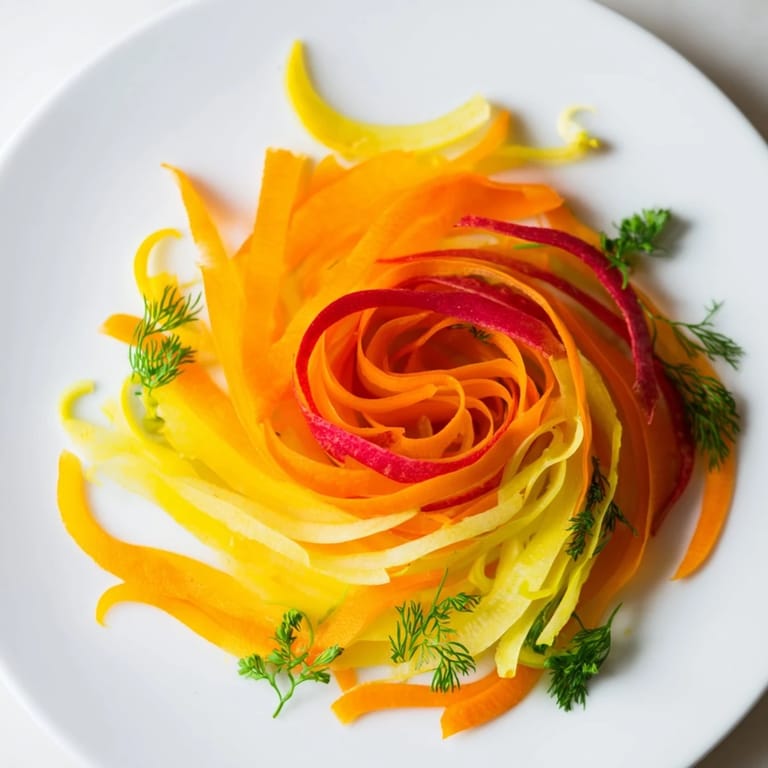
Save I first made this salad on a whim after watching the blade of my mandoline catch the afternoon light, and I thought: what if I could make the plate itself move? The vegetables started as thin ribbons, almost translucent, and as I arranged them in circles, something clicked—this wasn't just food anymore, it was a moment frozen in spin. My guests barely touched their wine before asking for seconds.
There was this one dinner party where I served this to people who'd been talking too much and eating too little—stressed, distracted. Someone took a bite, paused, and said nothing for a full minute. That quiet moment, the way they slowed down and actually tasted things, that's when I knew this salad was doing something real.
Ingredients
- Fennel bulb: Its delicate anise notes become sweeter and more subtle when shaved thin and chilled, playing beautifully against acidic citrus.
- Rainbow carrots: Different colors mean different subtle flavors, and sliced paper-thin they curl naturally, adding texture without effort.
- Golden beet: Earthier and less assertive than red beets, it won't bleed color all over your plate and keeps the visual impact clean.
- Red onion: Use just half and soak it well; this tames the bite and turns it almost sweet and crispy.
- Fresh dill and chervil: These feathery herbs are essential—they move with the plate and catch the light the way the vegetables do.
- Microgreens: A final layer of peppery freshness and visual texture that ties the whole spin together.
- Extra-virgin olive oil: Pour it last, just before serving, so it doesn't wilt the delicate ribbons.
- Lemon juice, honey, and Dijon mustard: This simple trio creates a dressing that's bright and cohesive without overwhelming the raw vegetables.
Tired of Takeout? 🥡
Get 10 meals you can make faster than delivery arrives. Seriously.
One email. No spam. Unsubscribe anytime.
Instructions
- Shave everything razor-thin:
- Use a mandoline with confidence, or a vegetable peeler if you prefer more control. The thinner these ribbons, the better they'll curl and the more elegant the plate becomes.
- Shock them in ice water:
- This step is non-negotiable—it crispens the edges and makes them curl into soft waves. Five to ten minutes is your window.
- Whisk the dressing smooth:
- The honey helps emulsify everything together and adds a subtle sweetness that balances the mustard's sharpness.
- Spiral them outward:
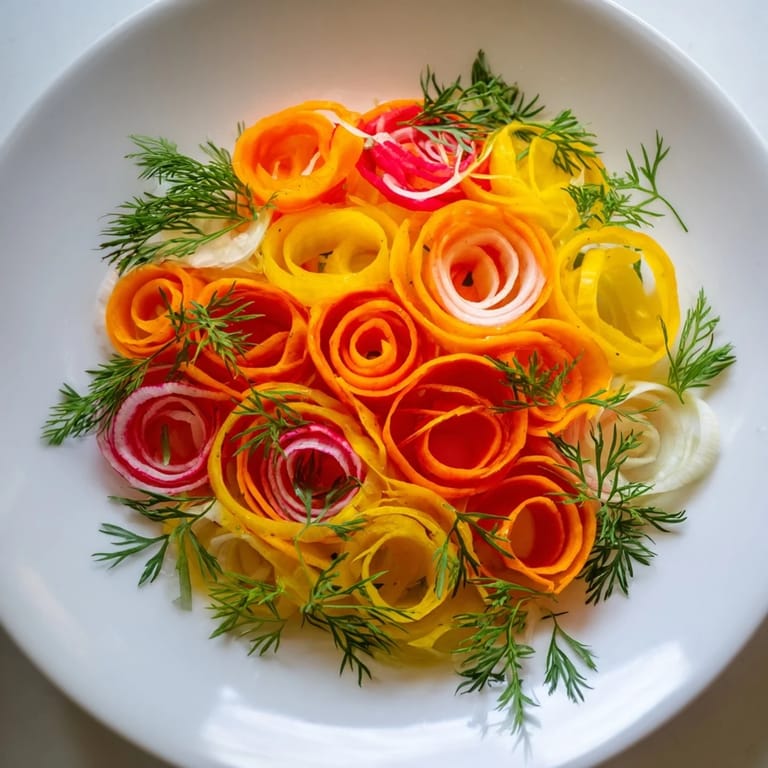
- Start in the center of your plate and work outward in overlapping circles, letting the outer ribbons blur slightly off the edge. This is where the magic happens visually.
- Scatter herbs with intention:
- Don't just sprinkle them randomly—focus the dill and chervil toward the edges so they enhance the spinning illusion and add movement.
- Dress and serve immediately:
- The moment oil touches these vegetables, they start to soften, so plate everything first, then drizzle just before it reaches the table.
 Save
Save I remember plating this for someone who usually rushed through meals, and watching them slow down, actually look at their food, put the fork down while they talked. Food that makes people present—that's the real recipe here.
The Mandoline Moment
That first pass with the mandoline is everything. The blade catches the vegetable at just the right angle and out comes this perfect, translucent ribbon—it's almost meditative once you find your rhythm. If you've never used one before, start with the carrot; it's forgiving and gives you confidence before you move to the fennel's delicate layers. The sound it makes, that soft whisper of vegetable hitting blade, becomes oddly satisfying.
Building the Spiral
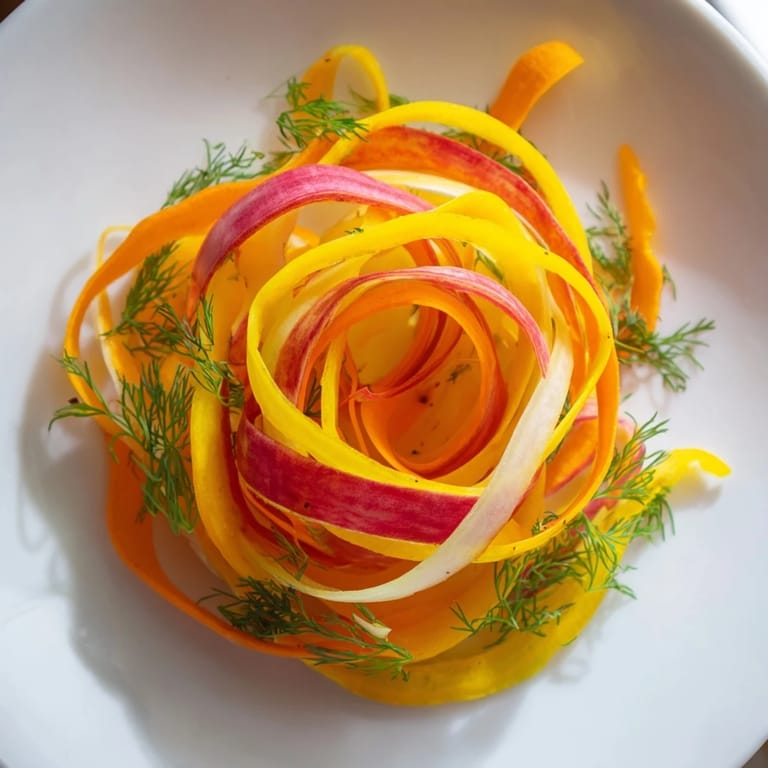
This is where patience becomes part of the recipe. Start at the center of your plate with one vegetable—I usually begin with fennel because its pale, delicate ribbons establish the softest foundation. Overlap each new ribbon slightly as you move outward, letting them lean and cascade toward the edge. You're not looking for perfection; you're looking for controlled abandon. The edges should blur slightly, as if the plate itself is spinning while you plate.
Color, Balance, and Timing
The vegetables must be arranged and dressed at the last possible moment, or you'll watch them wilt into disappointment. This isn't a salad you can make an hour ahead and hope for the best. But that constraint is part of what makes it special—it demands attention, presence, and respect for the ingredient. Rainbow carrots aren't just prettier; they taste subtly different from one another, which is the whole point of seeing them dance across the plate.
- If you can't find rainbow carrots, use regular ones mixed with the golden beet for color variation.
- Some plates call for shaved radishes or cucumber ribbons layered between the vegetables for extra crunch.
- Serve on a white or neutral plate so the vegetables and their colors become the entire focal point.
 Save
Save This salad isn't about being fancy—it's about slowing down, seeing what's in front of you, and letting vegetables speak for themselves. Make it when you want to remind yourself why you cook.
Recipe FAQs
- → How do you achieve the thin vegetable ribbons?
Use a mandoline slicer or a sharp vegetable peeler to shave the vegetables into delicate, almost translucent ribbons.
- → Why soak the shaved vegetables in ice water?
Soaking the ribbons in ice water helps them crisp up and curl, enhancing both texture and visual appeal.
- → Can other herbs be used besides dill and parsley?
Yes, fresh chervil or microgreens can be added to complement the flavors and contribute to the salad's lightness.
- → What is the purpose of the blurred edges effect?
Arranging the vegetable ribbons with overlapping edges creates a dynamic spinning effect that enhances the dish's visual impact.
- → How should the dressing be prepared?
Whisk extra-virgin olive oil, lemon juice, honey, Dijon mustard, salt, and pepper together until well combined for a balanced, bright dressing.