 Save
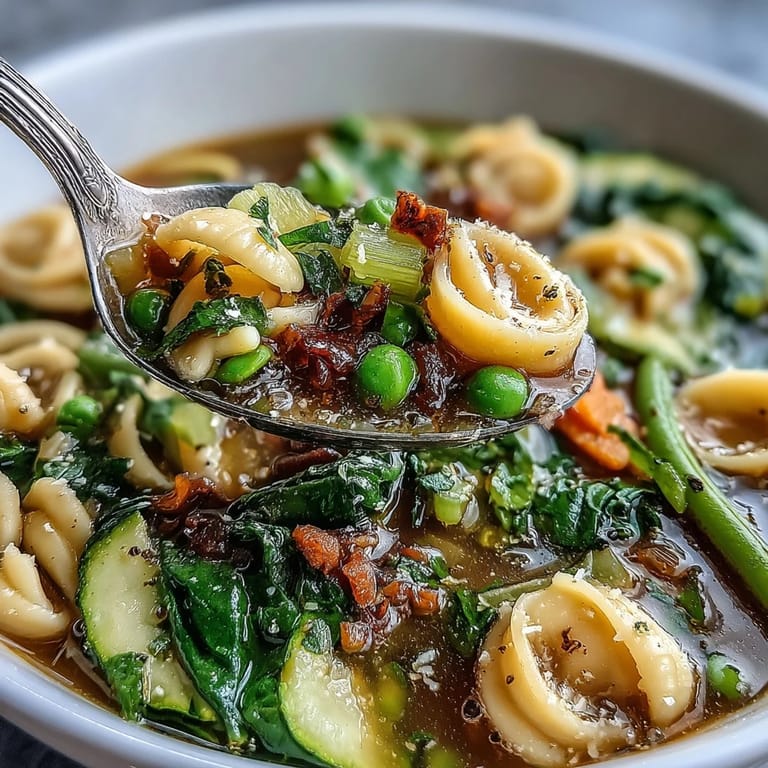
Save The first time I made this Spring Minestrone, my kitchen smelled like a cross between an herb garden and the inside of a bakery at noon. It wasn’t a dish I’d grown up with, but that day, with the window cracked open letting in a cool breeze, I was suddenly in the mood for something that tasted bright and full of green life. I remember hearing the gentle sizzle of onion and garlic as I chopped vegetables, unsure if my timing would line up. The soup drew me in with its cheerful colors and quick-cooking promise. By the end, I was hooked—Spring had walked right into my kitchen.
One evening, I made this minestrone on a whim when my best friend dropped by unexpectedly, clutching a loaf of crusty bread from a corner bakery. We tucked the soup together, reminisced over the peeling garlic and slicing carrots, and agreed that spring days sometimes need just this: a pot of goodness bubbling on the stove and the sound of laughter floating above it all.
Ingredients
- Olive oil: Helps the vegetables shine; I've learned warming it gently keeps the garlic from browning too quickly.
- Onion: Chop finely for an even sweetness that anchors the whole soup.
- Garlic: Mince with care—pungent but mellow when cooked just right.
- Carrots & Celery: The duo makes the broth fragrant and comforting; dice evenly so every spoonful is balanced.
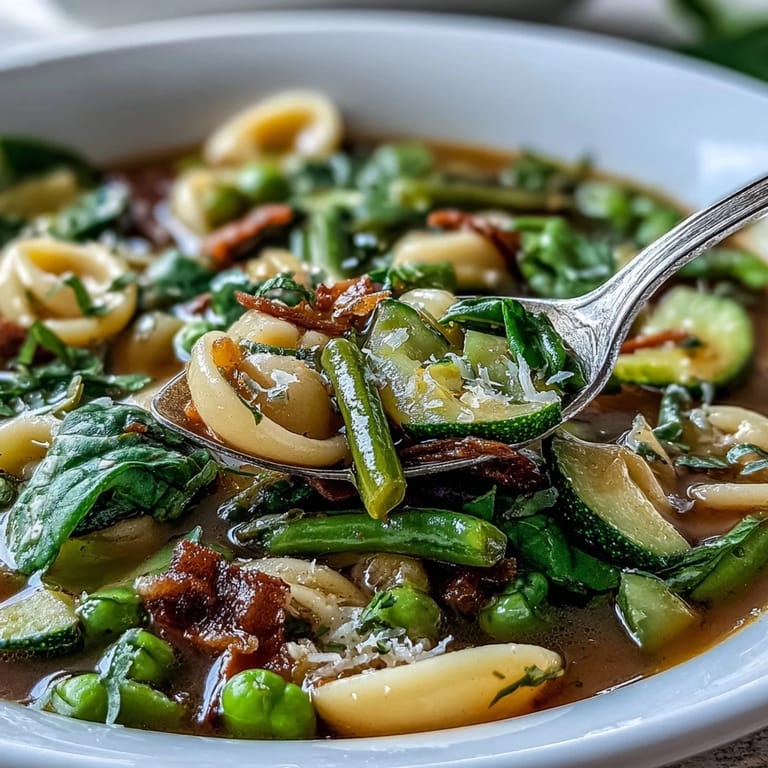
- Zucchini: Adds soft texture and a subtle earthy flavor that’s perfect in spring.
- Green beans & Peas: For pops of color and gentle crunch—I’ve found frozen peas work great if you’re in a pinch.
- Baby spinach: Stir in at the end, letting it wilt into velvet ribbons that taste like pure green.
- Vegetable broth: Low-sodium lets you control salt; I always check labels to avoid unwanted additives.
- Bay leaf: Quietly infuses the soup with warmth, so don’t skip it.
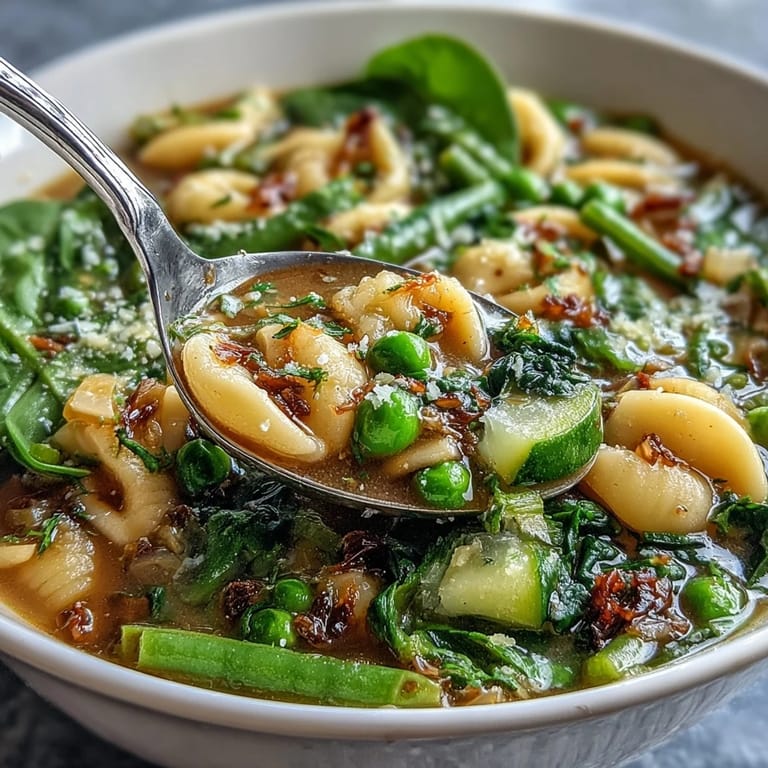
- Small pasta shapes: I love how ditalini slips onto the spoon, but any small pasta will do—just watch the cooking time.
- Fresh parsley: Chopped at the last minute to preserve its bright, grassy kick.
- Salt & Black pepper: Season in layers as you go for the best flavor.
- Parmesan, basil & extra olive oil (for garnish): The final finish—each bite can be tailored to your tastes. If you’re vegan, use your favorite cheese alternative or skip altogether.
Tired of Takeout? 🥡
Get 10 meals you can make faster than delivery arrives. Seriously.
One email. No spam. Unsubscribe anytime.
Instructions
- Start the base:
- Pour olive oil into your biggest soup pot and listen for that first soft sizzle as the onion hits the heat; cook until the pieces go translucent and coax out their sweetness.
- Layer in flavor:
- Add garlic, carrots, and celery and let them mingle for a few minutes, stirring so nothing sticks, until their colors deepen and the smell turns savory and sweet.
- Add green goodness:
- Toss in zucchinis, green beans, and peas, letting the pot become a kaleidoscope for just a couple of minutes—don’t worry if it looks crowded, it will settle.
- Simmer the soup:
- Pour in the broth and slide in the bay leaf. Once it all comes to a gentle boil, turn down the heat and let the soup breathe as it simmers, flavor building quietly.
- Cook the pasta:
- Tip in your favorite small pasta and stir; cook until just al dente—taste a piece to make sure it still has a bite.
- Greens at the end:
- In the last minute or two, add the spinach and parsley, stirring until the spinach wilts into silky ribbons.
- Final seasoning:
- Season generously with salt and pepper, then fish out the bay leaf and give one last stir—you’ll know it’s ready when the steam smells like a vegetable garden after rain.
- Serve and garnish:
- Ladle into bowls, then let everyone add Parmesan, basil, or a swirl of olive oil for that finishing touch.
 Save
Save The kitchen felt transformed the night everyone circled around with steaming mugs of this minestrone in hand, chatting over soup slurps and clinks as the sun lingered outside—it was more than dinner, it was pure togetherness in a bowl.
Making The Most Of Fresh Veggies
Spring doesn’t last forever, so when markets are bursting, I grab whatever looks brightest—sometimes even a handful of asparagus tips or fava beans sneaks in. The key is to chop everything on the small side so each ingredient cooks at the same pace. I tend to eyeball amounts, letting the produce guide the proportions rather than following a rigid rule. Flexibility is what makes every pot unique. Trust your senses—if it smells and looks vibrant, you’re on the right track.
How To Serve For Maximum Comfort
There’s something oddly perfect about pairing this soup with a torn hunk of bread, slightly warm from the oven. The broth soaks in, the bits of pasta and veg cling to the crumb, and suddenly a light supper becomes utterly satisfying. I always put out extra herbs and a wedge of Parmesan, so everyone can make their bowl their own. Cold nights make this an ideal meal, but I’ve served it chilled on a hot day and it still sparkles. Adjust to the mood and the moment—you can’t really go wrong.
More Ways To Make It Yours
The best thing about minestrone is how forgiving it is: swap out ingredients, toss in leftovers, or use beans for extra heft. Cooking for someone with gluten or dairy restrictions? Swap to gluten-free pasta and use a vegan cheese. Leftovers taste even better the next day, the flavors getting cozier and more harmonious. Let curiosity guide you with ingredients and toppings—a drizzle of chili oil, lemon zest, or a sprinkle of seeds is lovely, too.
- Keep an eye on the pasta so it doesn’t soak up all the broth if stored overnight.
- Any leafy green—chard, kale, or arugula—can stand in for spinach for a seasonal shift.
- Taste before serving and adjust salt or lemon to brighten everything up.
 Save
Save May this soup bring you the same joy and gathering it’s brought to my table—simple, bright, and always just right for the season. Don’t be afraid to make it your own with whatever’s fresh at hand.
Recipe FAQs
- → Which pasta shapes work best?
Small shapes like ditalini, orzo or small shells are ideal because they tuck into the broth and cook evenly. If using larger shapes, reduce their size or add them later to avoid overcooking.
- → How can I keep the vegetables bright and tender?
Sauté root vegetables first, then add quicker-cooking items later. Add peas and spinach in the final minutes to preserve color and texture, and avoid prolonged boiling which can dull flavors.
- → Can I make a vegan version?
Yes. Use a robust vegetable broth and omit the Parmesan or swap in a plant-based alternative. A splash of nutritional yeast can add savory depth if desired.
- → Is this suitable for freezing?
Broth-based minestrone freezes well, but pasta may become soft after thawing. To freeze, undercook the pasta and finish cooking after reheating, or freeze without pasta and add freshly cooked pasta when serving.
- → How do I make the dish more filling?
Add cooked beans (such as cannellini or chickpeas) or increase the pasta, and serve with crusty bread. Stirring in a spoonful of pesto or a splash of olive oil before serving adds richness.
- → What garnishes complement the soup?
Fresh basil, chopped parsley, a drizzle of extra virgin olive oil and freshly grated Parmesan (or vegan alternative) brighten the bowl. A squeeze of lemon can also lift the flavors.