 Save
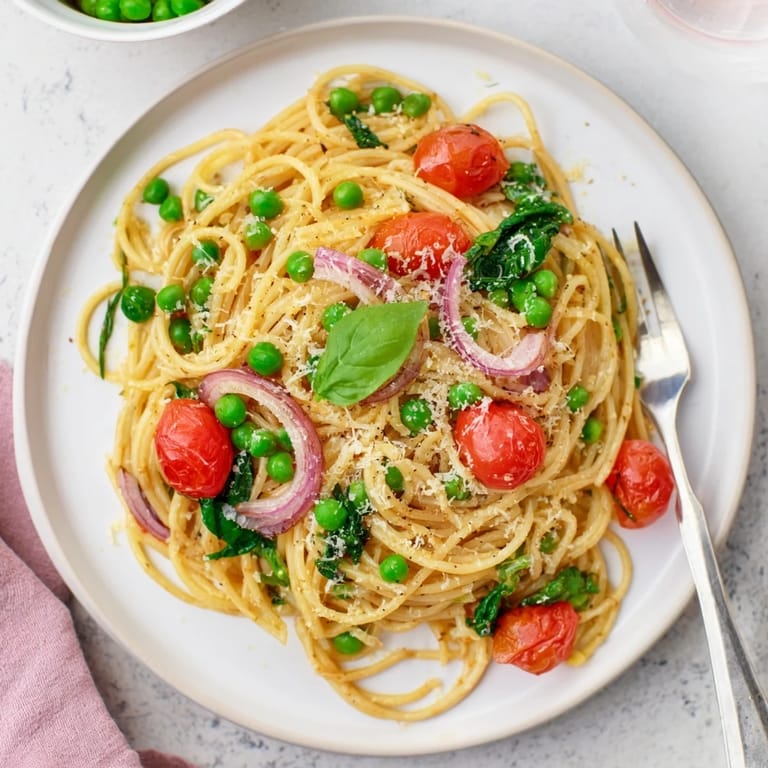
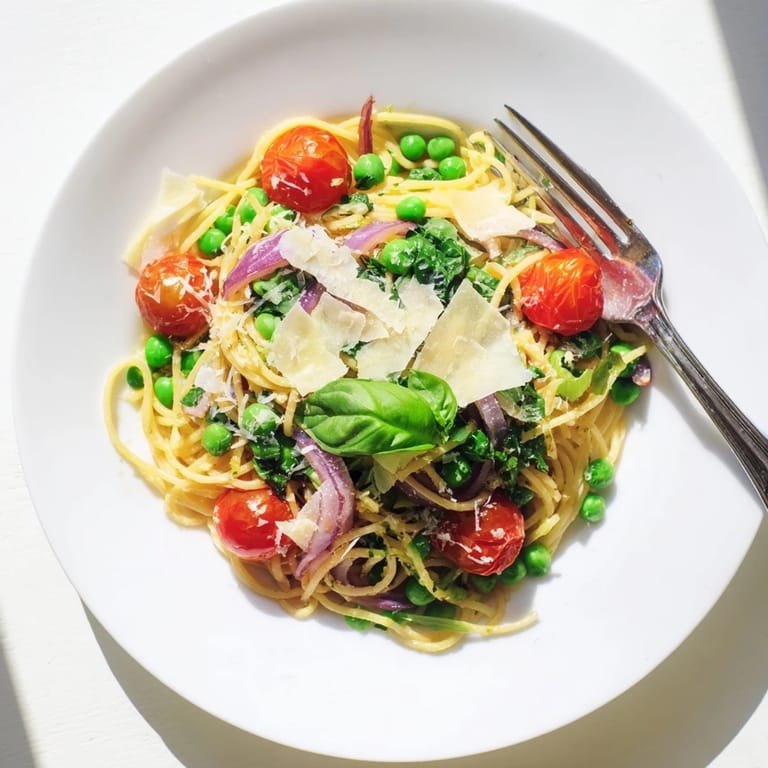
Save There was a Tuesday evening last April when I stood in front of my fridge, staring at a bag of wilting spinach and a half-empty container of cherry tomatoes. I had promised myself I'd cook something fresh, but the thought of multiple pans and a sink full of dishes nearly sent me toward takeout menus. Then I remembered a one-pot method I'd seen somewhere, tossed everything into my largest pot with dry pasta and broth, and twenty minutes later I was twirling fork after fork of the brightest, most satisfying spaghetti I'd made in months. The pasta had absorbed all the vegetable flavors, the kitchen smelled like garlic and lemon, and there was exactly one pot to wash.
I made this for my neighbor who had just moved in and didn't have her kitchen fully unpacked yet. She came over with a bottle of wine and we ate it straight from the pot, standing at the counter, talking about how much easier cooking would be if everything worked like this. She kept saying she didn't know pasta could taste this bright, and I realized it was the lemon zest that did it, that little spark of citrus against the sweet tomatoes and earthy spinach. We finished the whole pot between the two of us and she asked for the recipe before she even left.
Ingredients
- Dried spaghetti: Use regular or whole wheat, but make sure it's a shape that can cook evenly in broth without clumping, and break it in half if your pot isn't wide enough.
- Frozen or fresh peas: Frozen peas are secretly better here because they stay sweet and pop in your mouth, while fresh ones can get mealy if overcooked.
- Baby spinach: It wilts down to almost nothing, so don't be shy with the handful, and it adds that silky green contrast to the tomatoes.
- Cherry tomatoes: Halve them so they burst open and release their juices into the broth, creating little pockets of sweetness.
- Garlic: Slice it thin instead of mincing so you get delicate pieces that turn golden and sweet instead of burning.
- Red onion: The slight sharpness mellows as it simmers and adds a beautiful pink tint to the broth.
- Vegetable broth: This is your pasta water and your sauce base, so use one that actually tastes good on its own.
- Olive oil: Just enough to soften the aromatics and coat everything with a little richness.
- Lemon zest: The secret ingredient that makes the whole dish wake up, added at the very end so it stays fragrant and sharp.
- Parmesan cheese: Adds salty, nutty depth, but you can skip it or swap in nutritional yeast if you need to keep it vegan.
- Fresh basil: Torn over the top just before serving, it smells like summer even if it's barely spring outside.
Tired of Takeout? 🥡
Get 10 meals you can make faster than delivery arrives. Seriously.
One email. No spam. Unsubscribe anytime.
Instructions
- Soften the aromatics:
- Heat the olive oil in your largest pot over medium heat, then add the garlic and red onion. Let them sizzle gently for 2 to 3 minutes until the kitchen smells sweet and the onion turns translucent.
- Add everything at once:
- This is the magic moment: drop in the dry spaghetti, peas, spinach, and halved cherry tomatoes, then pour the vegetable broth over the top. It looks like chaos but trust the process.
- Season and bring to a boil:
- Sprinkle in the salt, black pepper, and red pepper flakes if you like a little heat. Stir everything gently and turn the heat up until the pot comes to a rolling boil.
- Simmer until tender:
- Let it cook uncovered for 10 to 12 minutes, stirring every few minutes to keep the pasta from sticking. The liquid will reduce and the pasta will drink up all that flavor.
- Finish with lemon zest:
- When the spaghetti is al dente and most of the broth has been absorbed, turn off the heat and stir in the lemon zest. Serve immediately with Parmesan and torn basil on top.
 Save
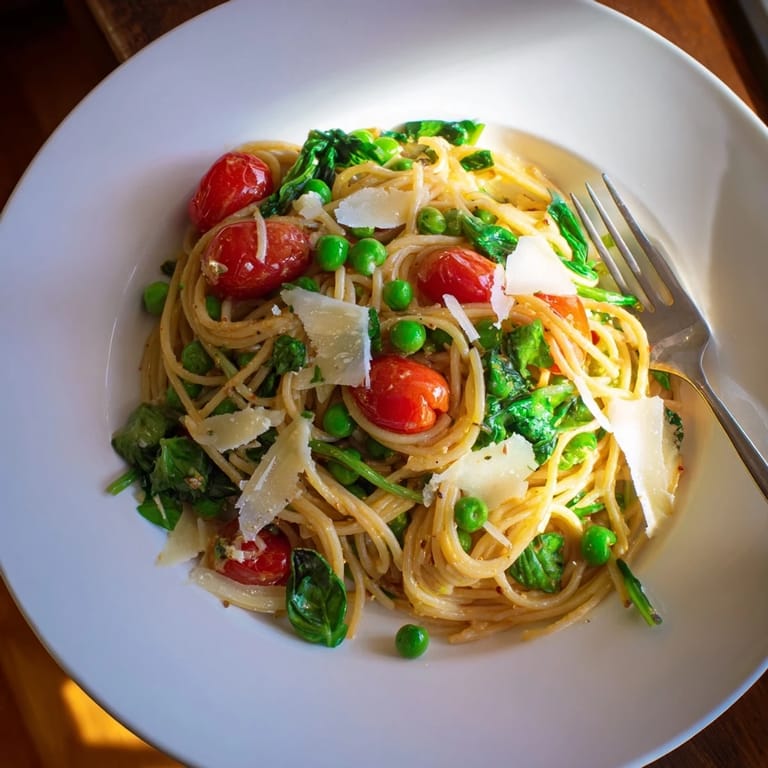
Save The first time I served this to my family, my brother looked skeptical when I told him everything cooked together in one pot. He's the kind of person who thinks pasta water should be separate and sacred. But after his second helping, he admitted it tasted better than the way he'd been doing it for years, and now he texts me every few weeks asking if I used chicken broth or vegetable because he can never remember. It became our easy Sunday night dinner, the one we make when we just want to sit around the table and talk without spending an hour in the kitchen first.
Making It Your Own
Once you get the method down, this dish becomes a template for whatever's in season or sitting in your fridge. I've made it with asparagus tips in early spring, zucchini ribbons in summer, and even roasted butternut squash in the fall. You can stir in a can of drained chickpeas for extra protein, swap the spaghetti for whole wheat or gluten-free, or leave out the Parmesan entirely and finish it with a drizzle of good olive oil and a squeeze of lemon juice. The key is keeping the liquid-to-pasta ratio roughly the same and adjusting the cooking time if you use a thicker noodle.
What to Serve Alongside
This spaghetti is hearty enough to stand alone, but I love serving it with a simple arugula salad dressed in lemon and olive oil, or a slice of crusty bread to mop up any remaining broth at the bottom of the bowl. If you want to make it feel more like a dinner party, pour a crisp Sauvignon Blanc or a light Pinot Grigio, something that echoes the brightness of the lemon and complements the sweetness of the peas and tomatoes. I've also served it with a side of roasted garlic bread, which is probably overkill but nobody has ever complained.
Storing and Reheating
Leftovers keep in the fridge for up to three days, though the pasta will continue to absorb liquid and soften as it sits. When I reheat it, I add a splash of vegetable broth or water to loosen everything up, then warm it gently in a pot over low heat, stirring frequently. You can also reheat individual portions in the microwave, covered, with a damp paper towel on top to keep it from drying out.
- If you're meal prepping, store the pasta and any extra vegetables separately so you can control the texture when you reheat.
- The lemon zest flavor fades a bit over time, so I sometimes add a tiny bit more fresh zest when reheating.
- Don't freeze this dish, the spinach and tomatoes turn mushy and the pasta gets waterlogged when thawed.
 Save
Save This recipe taught me that cooking doesn't have to be complicated to be deeply satisfying, and that sometimes the best meals are the ones that leave you with energy left over to enjoy them. I hope it becomes one of those dishes you turn to on nights when you need something nourishing, quick, and just a little bit joyful.
Recipe FAQs
- → Can I use fresh vegetables instead of frozen peas?
Yes, fresh peas work wonderfully and will cook in the same time. If using larger fresh peas, you may want to add them slightly later to prevent overcooking. Fresh vegetables will enhance the spring flavor profile.
- → What can I substitute for the vegetable broth?
You can use chicken broth, water with vegetable bouillon cubes, or even pasta water mixed with broth. The liquid choice will affect the final flavor, so choose based on your dietary preferences and available ingredients.
- → How do I prevent the pasta from sticking?
Stir occasionally throughout cooking, especially during the first few minutes after adding the broth. This prevents the pasta from clumping together and ensures even cooking and absorption of the flavorful liquid.
- → Can I make this vegan?
Absolutely. Simply omit the Parmesan cheese or use a vegan cheese alternative. All other ingredients are naturally plant-based. The dish remains hearty and satisfying with the combination of pasta and vegetables.
- → How should I store and reheat leftovers?
Store in an airtight container in the refrigerator for up to 3 days. Reheat gently on the stovetop with a splash of water or broth to restore moisture, as the pasta will continue absorbing liquid when cooled.
- → What proteins can I add to make it more filling?
Chickpeas, white beans, or lentils work beautifully. You can also add grilled chicken, shrimp, or tofu. Add proteins in step 2 with the vegetables to ensure they heat through properly before serving.