 Save
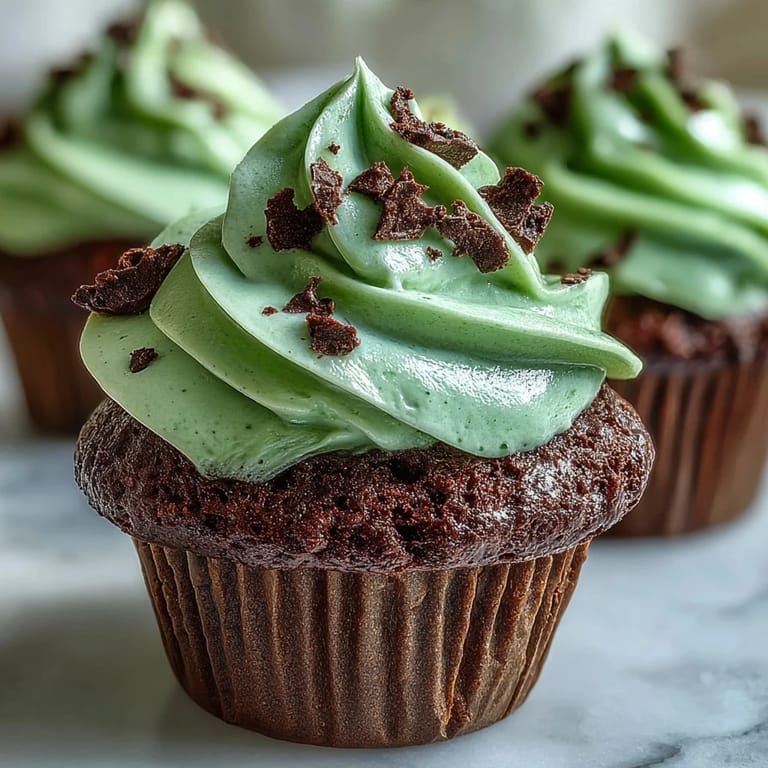
Save There's something about St. Patrick's Day that makes me want to bake something bold and unexpected. I'd been scrolling through old family photos when I found one of my grandmother's kitchen covered in green streamers, cupcakes cooling on every surface. That's when it hit me—why settle for plain green frosting when you could have actual green velvet cake, that luxurious, slightly tangy cousin of red velvet that feels like a secret? The moment I bit into my first test batch, the subtle cocoa undertone singing through all that vibrant green, I knew I'd stumbled onto something special.
I made these for my office potluck last year, and watching my coworker take that first bite—the surprise that it wasn't just food coloring and frosting, but actual depth of flavor—that's the moment I realized this recipe was a keeper. Someone actually asked for the recipe before they'd finished eating, which basically never happens at work.
Ingredients
- All-purpose flour (1¼ cups): The foundation of your tender crumb; don't sift unless you love dense cupcakes.
- Granulated sugar (¾ cup): The sweetness that balances the vinegar's tang beautifully.
- Unsweetened cocoa powder (¼ cup): This is the secret—just enough to add richness and complexity without overpowering the green.
- Baking soda and baking powder (½ tsp each): The dynamic duo that gives you that feather-light crumb.
- Salt (¼ tsp): A pinch that amplifies every other flavor hiding in the batter.
- Buttermilk (½ cup): Room temperature is non-negotiable; cold buttermilk seizes up the emulsion and ruins everything.
- Vegetable oil (½ cup): Keeps these cupcakes moist for days—butter would make them drier by day two.
- Large eggs (2): Also room temperature, because cold eggs create lumps that no amount of stirring fixes.
- Vanilla extract (1 tsp): The thread that ties all the flavors together.
- White vinegar (1 tsp): Trust this—it reacts with the baking soda to create lift and tang that makes the flavor pop.
- Green gel food coloring (1–2 tsp): Gel beats liquid every single time; liquid turns your batter watery and dilutes everything.
- Cream cheese (8 oz): Must be softened to room temperature or your frosting will be grainy and sad.
- Unsalted butter (¼ cup): Softened means you can press your finger through it without resistance.
- Powdered sugar (2 cups, sifted): Sifting matters here because one tiny lump will ruin your frosting's silky texture.
Tired of Takeout? 🥡
Get 10 meals you can make faster than delivery arrives. Seriously.
One email. No spam. Unsubscribe anytime.
Instructions
- Prepare your stage:
- Preheat your oven to 350°F and line your muffin tin with cupcake liners—this is the moment to pull everything to room temperature and exhale. No rushing from here.
- Build the dry base:
- Whisk together flour, sugar, cocoa powder, baking soda, baking powder, and salt in your largest bowl. This isn't just mixing; you're aerating and distributing the leaveners evenly so every cupcake rises the same way.
- Mix the wet magic:
- In another bowl, combine buttermilk, oil, eggs, vanilla, vinegar, and green food coloring, stirring until the color is vibrant and uniform. The vinegar will react with the baking soda immediately, so don't let this sit.
- Marry wet and dry:
- Pour the wet mixture into the dry ingredients and fold gently with a spatula until just combined—stop as soon as you don't see flour streaks. Overmixing develops gluten and turns your cupcakes tough and dense.
- Fill and bake:
- Divide the batter evenly among liners, filling each about two-thirds full, then slide into the oven. Bake for 18–20 minutes until a toothpick comes out clean with no wet batter clinging to it.
- Cool completely:
- Let cupcakes cool in the pan for 5 minutes, then transfer to a wire rack and wait until they're completely cold before frosting. Frosting warm cupcakes is how you end up with melted, runny frosting that slides right off.
- Make the frosting:
- Beat softened cream cheese and butter together until smooth and combined, then gradually add sifted powdered sugar, beating after each addition to avoid lumps. Finish with vanilla and salt, mixing until the frosting is silky and spreadable.
- Frost with confidence:
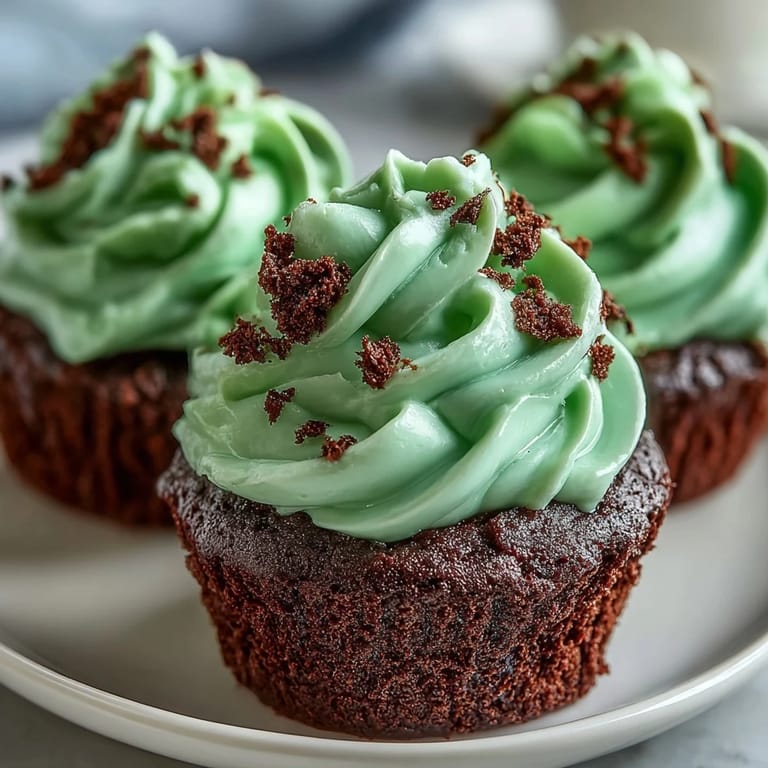
- Using a piping bag fitted with a round tip or an offset spatula, apply frosting generously to each cooled cupcake. Top with green sprinkles or a shamrock if you want the full festive effect.
 Save
Save There was this moment during St. Patrick's week when my neighbor knocked on the door with her daughter, both looking skeptical about 'green cake' until they tasted one. The little girl's face lit up—she'd expected artificial green, but instead got this sophisticated, velvety bite with just enough cocoa to make it feel grown-up. That's when I realized these cupcakes bridge the gap between silly holiday novelty and genuinely delicious dessert.
Room Temperature Matters More Than You Think
I learned this the hard way after pulling eggs and buttermilk straight from the fridge one morning. The batter broke, looked curdled, and the cupcakes came out dense and weirdly textured. Now I pull everything out 30 minutes before I start mixing, and the difference is night and day—your crumb will be tender, your rise will be reliable, and your life will be easier.
The Vinegar Reaction is Your Secret Weapon
That white vinegar isn't just sitting there being acidic; it's reacting with the baking soda to create gentle lift and a subtle tang that makes people wonder what makes these cupcakes so interesting. I used to skip it thinking it wasn't necessary, but skipping it made the cupcakes taste flat and one-dimensional. Once I started using it, it became the move that people always ask about.
Storage, Timing, and Those Little Last-Minute Moments
Unfrosted cupcakes will keep for a day in an airtight container, which is perfect if you want to bake ahead and frost fresh on party day. The frosting will hold for several hours once applied, though if your kitchen is warm, these are best eaten within a few hours of frosting. If you're feeling fancy, add a tiny bit of orange or lemon zest to the frosting—it cuts through the richness in a way that feels unexpectedly perfect.
- Serve these alongside Irish coffee or hot chocolate for maximum festive impact.
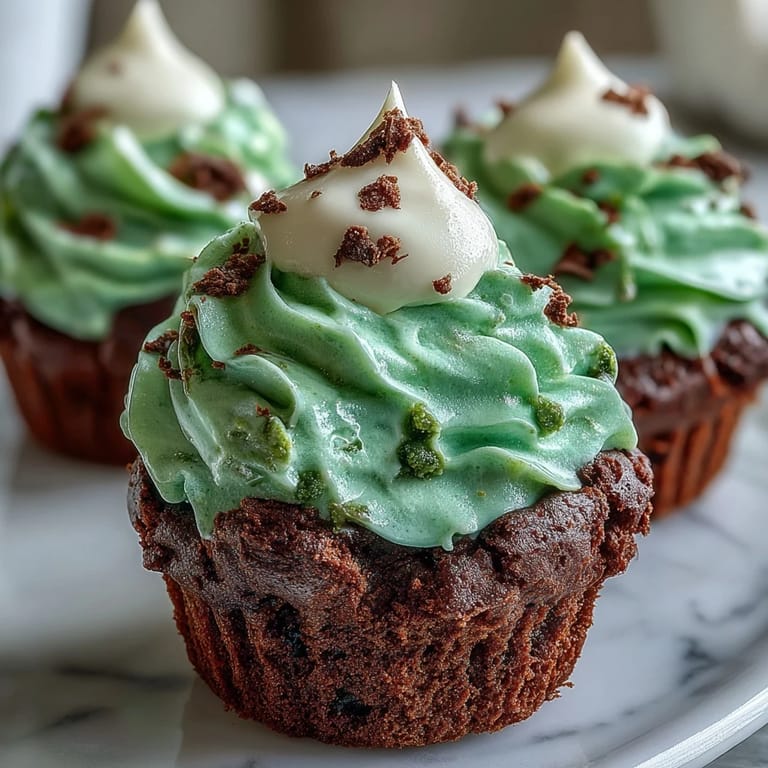
- A fresh mint leaf pressed into the frosting right before serving looks beautiful and tastes bright.
- Leftovers taste even better the next day as the flavors meld, so don't feel rushed.
 Save
Save These cupcakes have become my St. Patrick's Day tradition, the thing people actually look forward to instead of just tolerating green food for the sake of the holiday. They're proof that a little creativity and respect for the fundamentals can turn a seasonal novelty into something genuinely worth celebrating.
Recipe FAQs
- → How do I achieve the vibrant green color?
Use green gel food coloring instead of liquid to ensure a rich, bright hue without altering batter consistency.
- → Can I prepare the batter in advance?
Yes, batter can be prepared and baked within a few hours, but for best freshness, avoid refrigerating before baking.
- → What is the best way to frost these cupcakes?
Beat cream cheese and butter until smooth, then gradually add powdered sugar and vanilla to create a creamy, spreadable frosting.
- → Are there alternative toppings for decoration?
Green sprinkles, shamrock toppers, or a light dusting of cocoa powder complement the cupcakes beautifully.
- → How should leftover cupcakes be stored?
Store unfrosted cupcakes in an airtight container to maintain moisture; frost just before serving for optimal texture.