 Save
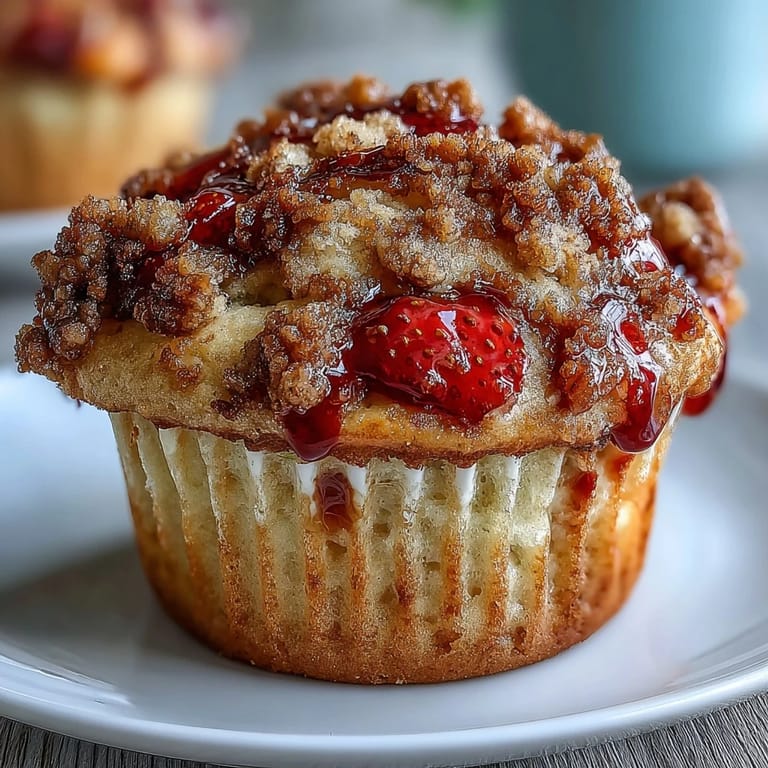
Save There's something magical about the moment you crack open a warm sourdough muffin and that tangy, slightly fermented aroma hits you—it's nothing like the box mixes I grew up with. I discovered these by accident one Saturday morning when I had too much sourdough starter sitting in my fridge and a pint of strawberries that were about to turn. The combination seemed crazy at first, but that subtle sourness playing against the bright fruit and buttery crumb topping? It changed everything about how I think about breakfast.
I made these for my neighbor last summer when she brought her new baby home from the hospital, and I watched her eat one straight from the cooling rack with her eyes closed. She didn't say anything for a full minute—just that quiet, grateful eating—and honestly, that moment made me feel like I'd done something more important than just bake muffins. Now whenever I make a batch, I think about how food shows up for people in the small moments.
Ingredients
- All-purpose flour (2 cups): This is your structure—it keeps the muffins tender instead of dense, and measuring by weight (250 g) actually matters here if you want consistent results.
- Baking powder and baking soda (1 tsp and 1/2 tsp): The combination lifts the muffins without making them taste metallic, and the sourdough starter's acidity activates the soda beautifully.
- Salt (1/2 tsp): Honestly, this tiny amount is what makes people say your strawberries taste more like strawberries—it wakes up every flavor.
- Granulated sugar (1/2 cup): Use the regular stuff here; fine crystals dissolve faster and give you a more tender crumb.
- Sourdough starter (1 cup): Discard starter works best because it's a bit thinner and hasn't been fed recently, which means you get maximum flavor without density.
- Vegetable oil or melted butter (1/3 cup): Oil keeps these incredibly moist, but melted butter gives you a richer flavor—I switch depending on my mood.
- Eggs (2 large): These bind everything and create that tender crumb structure that makes people come back for seconds.
- Milk (1/2 cup): This loosens the batter just enough so you can fold in berries without crushing them.
- Vanilla extract (1 tsp): A full teaspoon isn't too much here; it rounds out the tang from the sourdough.
- Fresh strawberries (1 1/4 cups diced): Dice them small so you get strawberry in every bite, and pat them dry before folding so they don't release too much liquid into the batter.
- All-purpose flour for topping (1/2 cup): Keeps the crumb from getting soggy and greasy during baking.
- Light brown sugar (1/3 cup packed): The molasses adds a tiny bit of caramel note that makes the topping less one-dimensional.
- Cold unsalted butter diced (1/4 cup): Cold is the secret here—if your butter is room temperature, your crumbs will clump instead of staying separate and crunchy.
- Ground cinnamon (1/2 tsp): This plays so well with strawberries and sourdough; don't skip it even if you're not usually a cinnamon person.
- Salt pinch: Same reason as before—it's a flavor amplifier hiding in plain sight.
Tired of Takeout? 🥡
Get 10 meals you can make faster than delivery arrives. Seriously.
One email. No spam. Unsubscribe anytime.
Instructions
- Set your stage:
- Preheat your oven to 375°F and get your muffin tin ready—lined with paper or greased well. This matters because muffins cook fast, and you want to pop them in without hesitation.
- Build your dry base:
- Whisk together flour, baking powder, baking soda, salt, and sugar in a medium bowl. This pre-mixing ensures the leavening is evenly distributed, so you don't get dense pockets in some muffins and tunnels in others.
- Wake up the wet ingredients:
- In a separate bowl, whisk sourdough starter, oil, eggs, milk, and vanilla until everything looks smooth and emulsified. You're essentially creating an emulsion here that'll keep the muffins tender and moist.
- Bring them together gently:
- Pour wet into dry and stir just until combined—this is where most people mess up by overmixing. A few streaks of flour are your friend; lumps disappear during baking but overmixing creates dense, tough muffins.
- Fold in the strawberries:
- Use a spatula to gently fold in your diced strawberries, being careful not to crush them. Patting them dry beforehand means they won't weep too much liquid into the batter.
- Fill the cups:
- Divide batter evenly, filling each cup about 3/4 full. This gives you room for the rise without overflow, and staying consistent with portions means they all bake at the same rate.
- Make the crumb topping:
- Mix flour, brown sugar, cinnamon, and salt in a small bowl, then cut in cold butter with a fork or your fingers until it looks like coarse breadcrumbs. The cold butter creates those little pockets that stay crunchy.
- Top generously:
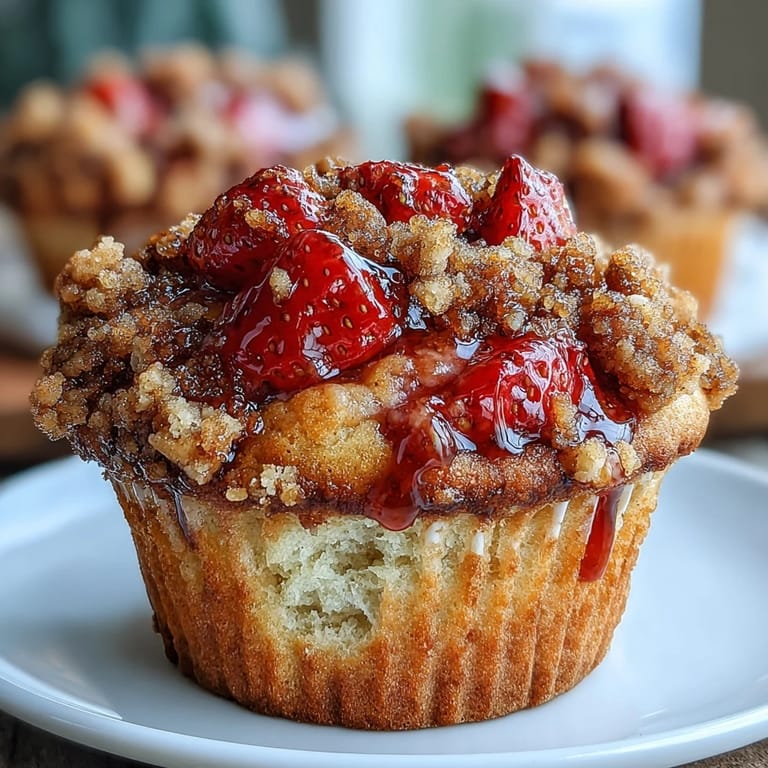
- Sprinkle crumb topping over each muffin—be generous here because it's what makes them special. Some will fall off into the pan during baking, and that's exactly what you want.
- Bake until golden:
- Bake for 22 to 25 minutes until a toothpick inserted into the center comes out clean and the tops are golden brown. You'll smell the sourdough tang mixing with caramelized topping, and that's your signal you're close.
- Cool with patience:
- Let them sit in the pan for 5 minutes—this sets them up just enough to move without falling apart. Transfer to a rack and let them cool completely so the crumbs set and the centers finish cooking gently.
 Save
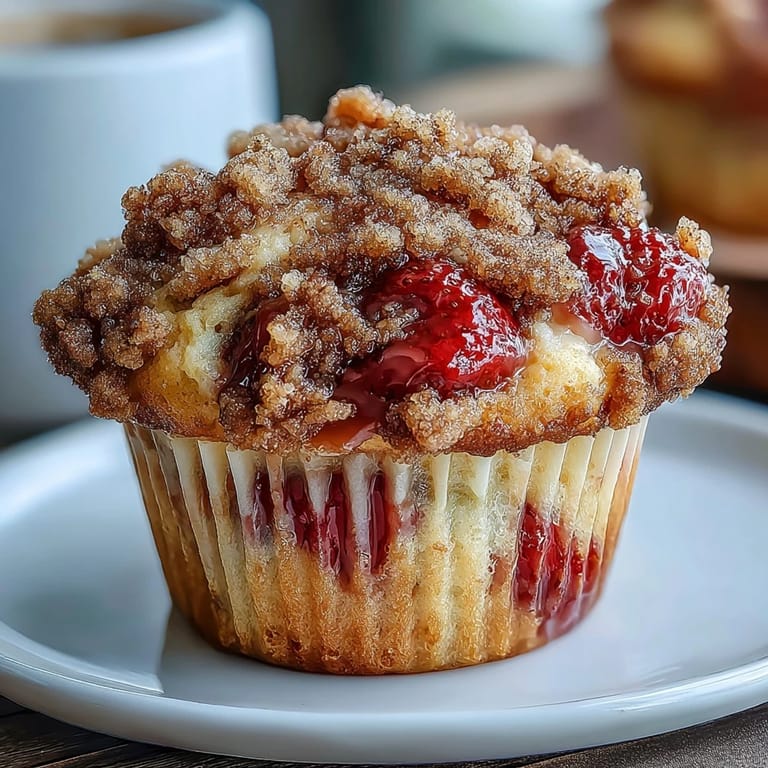
Save Last winter I made these on a gray Tuesday morning just for myself, and sitting at my kitchen table with hot muffin and coffee was the quiet moment that made me remember why I cook. There's no occasion needed for food this good—it's just about showing up for yourself sometimes.
Sourdough Starter as Your Secret Ingredient
The beauty of using sourdough starter here is that you're borrowing professional-level flavor development without any of the fussiness. That tangy, almost nutty undertone that bakers spend days cultivating? You get it instantly from discard starter, which is usually something people throw away anyway. It changes the whole texture too—the muffins stay incredibly moist even days later because the starter's acidity keeps them from drying out as fast.
Why Fresh Strawberries Matter
Frozen strawberries will work in a pinch, but fresh ones have this structural integrity that matters—they don't release all their liquid at once and turn your batter into soup. I learned this the hard way when I tried to shortcut with frozen berries in winter and ended up with a slightly greasy texture. Now I save these for peak strawberry season, and it honestly tastes like I planned that all along.
The Crumb Topping Secret
This topping is basically a simplified streusel, and the key is keeping that butter as cold as possible—straight from the fridge, diced into quarter-inch cubes. When you mix it in with a fork or your fingertips, you're creating little pockets of fat that create steam during baking, which puffs up the crumbs and keeps them crunchy instead of greasy. It's the difference between a homemade bakery muffin and something decent from a box.
- Cold butter makes crunchy crumbs; room temperature butter makes them dense and cakey.
- Mix the topping just before you're ready to bake so it doesn't have time to warm up.
- If your kitchen is hot, chill your mixing bowl and even your fork for a couple of minutes first.
 Save
Save Make these muffins when you want to feel like you've done something kind for yourself, because honestly, that's what a perfect breakfast is. They're simple enough to throw together on a weekday but taste like you spent way more effort than you actually did.
Recipe FAQs
- → Can I use other berries instead of strawberries?
Yes, blueberries or raspberries can be used as flavorful alternatives to strawberries, offering a similar burst of freshness.
- → What type of sourdough starter is best for these muffins?
Both fed and unfed sourdough starter will work, but using discard (unfed starter) is ideal for balancing tanginess and rise.
- → How do I achieve the crumb topping texture?
Cut cold butter into flour, sugar, cinnamon, and salt until the mixture resembles coarse crumbs, then sprinkle generously before baking.
- → Can I substitute oil for butter in the batter?
Yes, vegetable oil or melted unsalted butter can be used interchangeably without affecting moisture or flavor significantly.
- → How can I tell when the muffins are fully baked?
Insert a toothpick into the center; it should come out clean or with only a few moist crumbs when the muffins are done.
- → Are these muffins suitable for a vegetarian diet?
Yes, these muffins contain no meat products and fit well within a vegetarian diet.