 Save
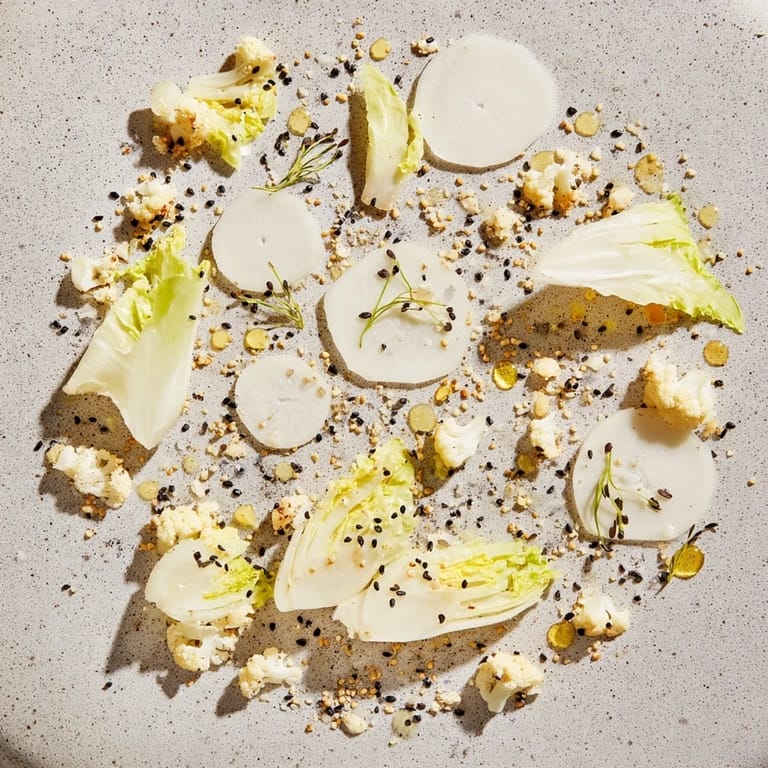
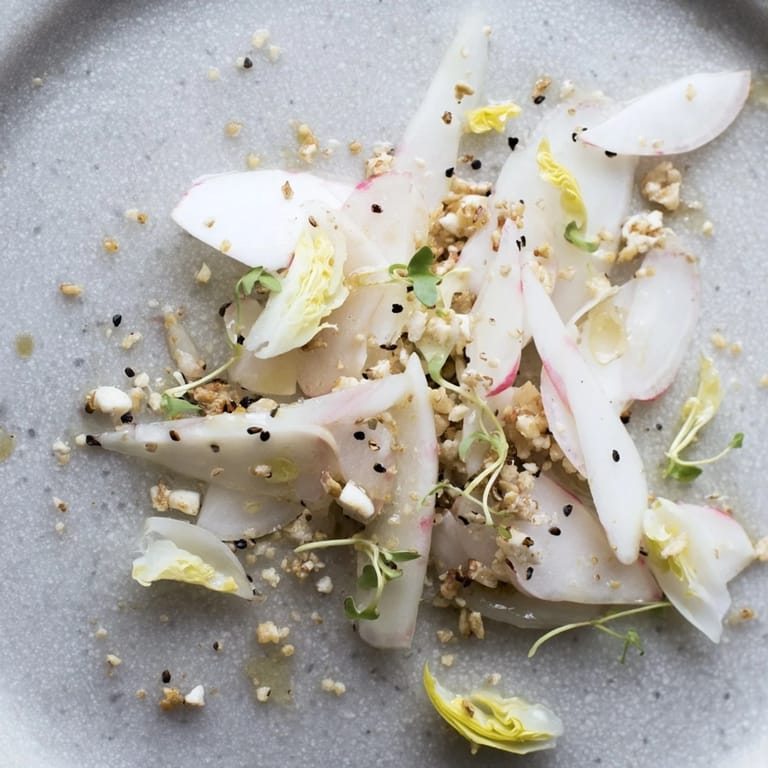
Save I discovered this dish quite by accident on a grey afternoon when I was playing with my mandoline and had far too many pale vegetables lined up on the counter. The kitchen felt cold—it was one of those days where you just want to create something that matches the season. I started arranging them on a marble tile I'd pulled from storage, and something clicked: the scattered, almost reckless placement felt right, like looking out at a real arctic landscape where nothing is perfectly ordered. That's when The Tundra Trek was born, a dish that celebrates restraint and the quiet beauty of color working within a narrow palette.
I made this for friends who were going through a phase of wanting everything minimalist and refined, and they sat there for a moment in complete silence before diving in—that's the kind of reaction this dish deserves. One guest said it tasted the way winter looks, and I've never had a better compliment in my kitchen.
Ingredients
- Daikon radish: Its pale, translucent slices are the heart of this dish, bringing a gentle peppery snap that wakes up your palate without overwhelming it.
- Kohlrabi: This vegetable has an underrated delicate sweetness and a crisp texture that holds up beautifully when sliced thin on a mandoline.
- Belgian endive: The leaves create natural little cups and add a subtle bitterness that grounds all the sweetness around it.
- Cauliflower florets: Keep them finely chopped so they read as texture rather than full pieces—think of them as edible snowdrifts scattered across the plate.
- Unsweetened coconut flakes: These bring an unexpected tropical whisper against the cool Nordic vegetables; toast them lightly if you want more depth.
- White and black sesame seeds: Toast the white seeds gently just before serving so they're warm against the cold plate, then use the black seeds raw for visual contrast.
- Microgreens: Pea shoots or radish sprouts add a living element—their tenderness against everything crisp creates a gentle tension.
- Flaky sea salt: Don't use fine salt here; the larger crystals catch light and echo the rough texture of a real tundra.
- Extra-virgin olive oil, lemon juice, white wine vinegar, and white pepper: These form a dressing so subtle it's almost invisible, letting the vegetables speak for themselves.
Tired of Takeout? 🥡
Get 10 meals you can make faster than delivery arrives. Seriously.
One email. No spam. Unsubscribe anytime.
Instructions
- Chill your canvas:
- Pop that stone or marble platter into the freezer for 15 minutes—this isn't just for show. The cold keeps everything crisp and extends the life of your vegetables on the plate, so guests can take their time admiring before eating.
- Make the whisper dressing:
- Whisk the olive oil, lemon juice, vinegar, and white pepper together in a small bowl until just combined. Don't over-work it; this dressing should feel like an afterthought, not a statement.
- Begin your landscape:
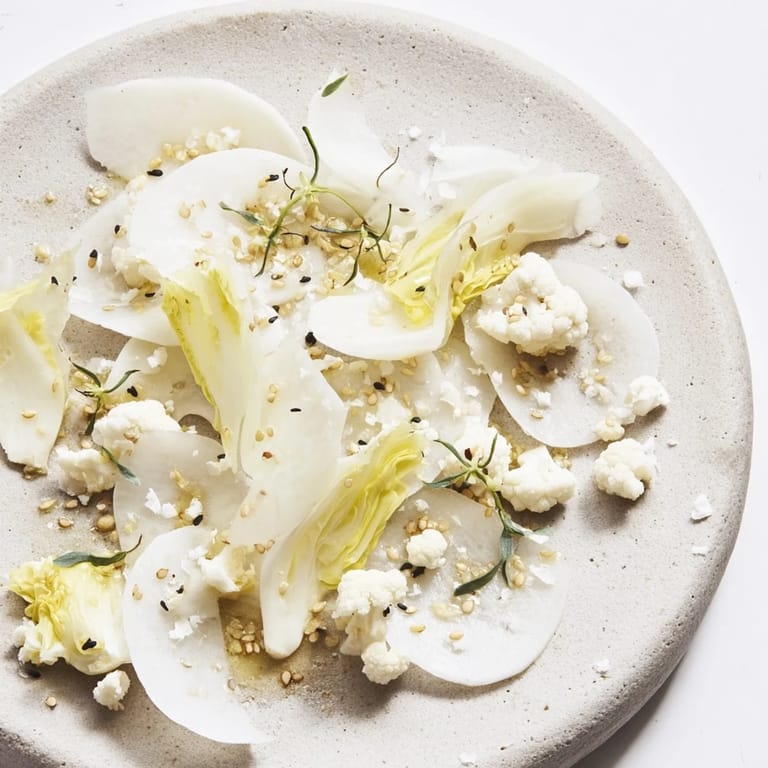
- Take the daikon, kohlrabi, and endive leaves and start laying them across the chilled stone with real intention but loose hands. Think of how wind scatters things—not random, but not symmetrical either; there should be breathing room between each piece.
- Add the scattered elements:
- Sprinkle the finely chopped cauliflower, coconut flakes, and sesame seeds across the arrangement in a windswept pattern. Step back and look; you should feel like you're gazing down at something real and natural, not like you're filling a plate.
- Dress with restraint:
- Drizzle the dressing over everything with genuine hesitation—less than you think you need. Let some vegetables remain barely touched by oil, their natural moisture their only shine.
- Final flourish:
- Scatter the microgreens and a pinch of flaky sea salt across the top just before you bring it to the table. This last moment keeps everything tasting like possibility.
- Serve in the cold moment:
- Bring the platter straight from the kitchen so guests experience the full chill and pristine crispness immediately.
 Save
Save There was a moment during one dinner party when a guest asked for seconds and looked genuinely surprised that they could still enjoy the same vegetables they see in their fridge every day. That's when I realized this dish isn't about being fancy or difficult—it's about showing respect for simple ingredients and trusting that restraint is its own kind of elegance.
The Art of Eating Nothing But Crunch
Most of us are trained to think a meal needs heat, richness, or complexity to feel complete, but this dish argues otherwise. Every element here is about sensation: the bite of raw daikon, the squeak of kohlrabi between your teeth, the yielding tenderness of endive, the toasted warmth of sesame against cold marble. It's a conversation between textures rather than flavors, and once you understand that language, you start looking at your crisper drawer differently.
When to Serve This
I've learned that this dish arrives at its best on cooler days when people are ready to slow down and pay attention. It works beautifully as the opening course of a Nordic-inspired dinner, or as a palate cleanser after something rich. In summer, it feels almost shocking in the best way—a cold, delicate interruption to heavy heat.
Finding Your Rhythm
The key to making this feel natural rather than fussy is accepting that precision lives only in the slicing—everything else should feel intuitive and spacious. Your first plating might feel uncertain, but trust that scattered is the point. Let the plate breathe, let the vegetables speak individually, and remember that imperfection is what makes this look like art rather than a diagram.
- If your mandoline intimidates you, a sharp knife works just fine; your slices might be less uniform, but that actually adds character.
- Keep the platter in the freezer until the absolute last moment, then work quickly so nothing has time to warm.
- Don't skip the toasted white sesame seeds—that warm, nutty note against the cold vegetables is the quiet magic that makes people ask for the recipe.
 Save
Save This dish taught me that there's real power in knowing when to stop arranging, when to step back and let silence speak. It's a recipe that asks you to trust your eye and your ingredients, and they'll reward you with something genuinely memorable.
Recipe FAQs
- → What vegetables are featured in the dish?
Thin slices of daikon radish, kohlrabi, Belgian endive leaves, and finely chopped cauliflower florets create a crisp and pale vegetable base.
- → How is the dish served to maintain freshness?
It is assembled on a chilled stone or marble plate to keep the components cool and preserve their crisp textures.
- → What dressing complements the vegetable arrangement?
A light dressing combining extra-virgin olive oil, fresh lemon juice, white wine vinegar, and white pepper enhances delicate flavors without overpowering.
- → Which garnishes add texture and flavor accents?
Coconut flakes, toasted white and black sesame seeds, microgreens, and a pinch of flaky sea salt provide contrast and visual interest.
- → Are there alternative acidity options for the dressing?
Yuzu juice or rice vinegar can be substituted to offer different acidity profiles and subtle flavor variations.
- → Can protein be added to this dish?
For non-vegetarian variations, smoked whitefish flakes or chilled poached shrimp can be scattered for added protein.