 Save
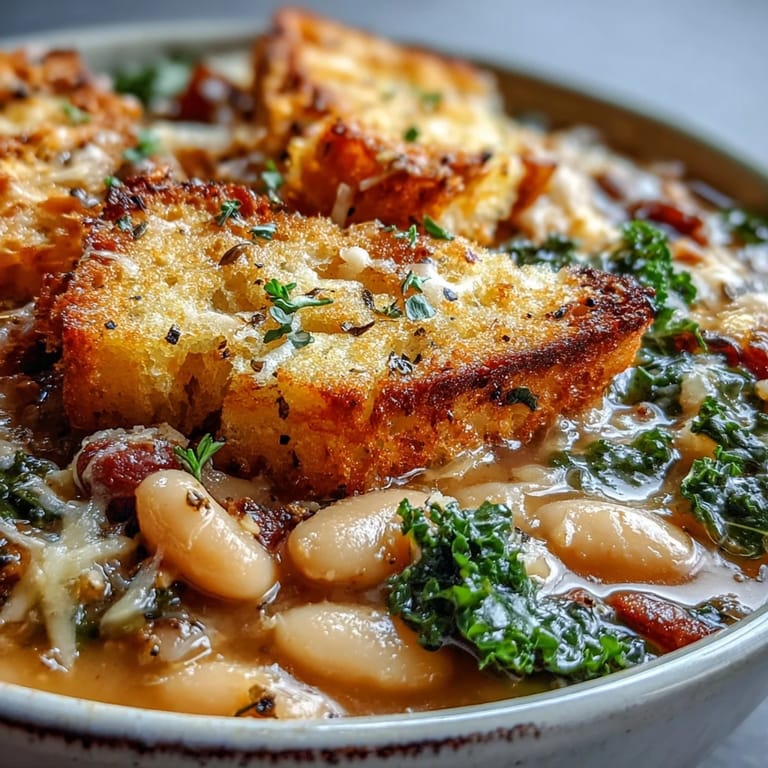
Save There's something about standing at the stove on a chilly evening, wooden spoon in hand, watching a pot of ribollita transform from separate ingredients into something warm and whole. My first attempt came from a dog-eared cookbook a friend left behind, and I was honestly intimidated by the simplicity of it. But that first spoonful—creamy beans, tender vegetables, the earthiness of kale—felt like tasting Italy in my own kitchen, and I've made it countless times since.
I made this for my partner on a gray Saturday when neither of us felt like leaving the house, and watching their face light up when they bit into those golden croutons—that's when I knew this recipe was a keeper. We ended up eating two bowls each, tearing through the bread basket, and laughing about how something so rustic could feel like a celebration.
Ingredients
- Extra-virgin olive oil (4 tablespoons total): This is your foundation, so don't skimp on quality—the soup tastes like the oil you use.
- Yellow onion, carrots, celery: This holy trinity builds everything, and dicing them roughly the same size ensures they soften evenly.
- Garlic (3 cloves plus 1 for croutons): The minced garlic blooms into something almost sweet when added after the soffritto.
- Fennel bulb (optional): It adds a subtle anise note that makes people pause and ask what that flavor is.
- Tuscan kale: The darker, crinklier cousin to curly kale, it holds up beautifully during the long simmer without turning to mush.
- Yukon gold potato: These waxy potatoes keep their shape and add body without falling apart.
- Diced tomatoes (canned is fine): The acidity and natural sweetness anchor the whole pot.
- Cannellini beans: Canned beans are a lifesaver here—cooking dried beans from scratch is lovely, but not necessary for ribollita to taste authentic.
- Vegetable broth (6 cups): Use the good stuff or even homemade; it's the liquid foundation and you'll taste every corner of it.
- Bay leaf, thyme, oregano, red pepper flakes: These dried herbs simmer for so long that they meld into an almost imperceptible warmth and depth.
- Sourdough bread (day-old): Slightly stale bread crisps better and doesn't absorb oil as quickly.
- Parmigiano-Reggiano (optional): A small shower at the end adds richness and umami that makes everything taste more like itself.
Tired of Takeout? 🥡
Get 10 meals you can make faster than delivery arrives. Seriously.
One email. No spam. Unsubscribe anytime.
Instructions
- Build the base with your vegetables:
- Heat olive oil in a large Dutch oven over medium heat and add onion, carrot, celery, and fennel if you're using it. Let them soften together for 8 to 10 minutes, stirring occasionally, until they're tender and the onion turns translucent—this is where the flavor foundation gets laid.
- Bloom the garlic:
- Stir in minced garlic and cook for just 1 minute until it's fragrant but not browned. That moment when the kitchen smells like warm garlic is your cue to move forward.
- Add the heartier vegetables:
- Toss in zucchini, potato, and kale, stirring gently for 3 to 4 minutes so everything begins to soften and release its flavors. The kale will seem like too much at first, but it wilts down beautifully.
- Build the broth and seasonings:
- Pour in the canned tomatoes with their juices, the drained beans, vegetable broth, bay leaf, thyme, oregano, and red pepper flakes if you like a gentle heat. Season generously with salt and pepper—this is your one chance to season the base properly.
- Simmer and thicken:
- Bring everything to a boil, then lower the heat and let it simmer uncovered for 35 to 40 minutes, stirring occasionally. Toward the end, use the back of your wooden spoon to partially mash some of the beans and vegetables against the pot's side—this creates a creamy texture without blending the soup smooth.
- Prepare the croutons:
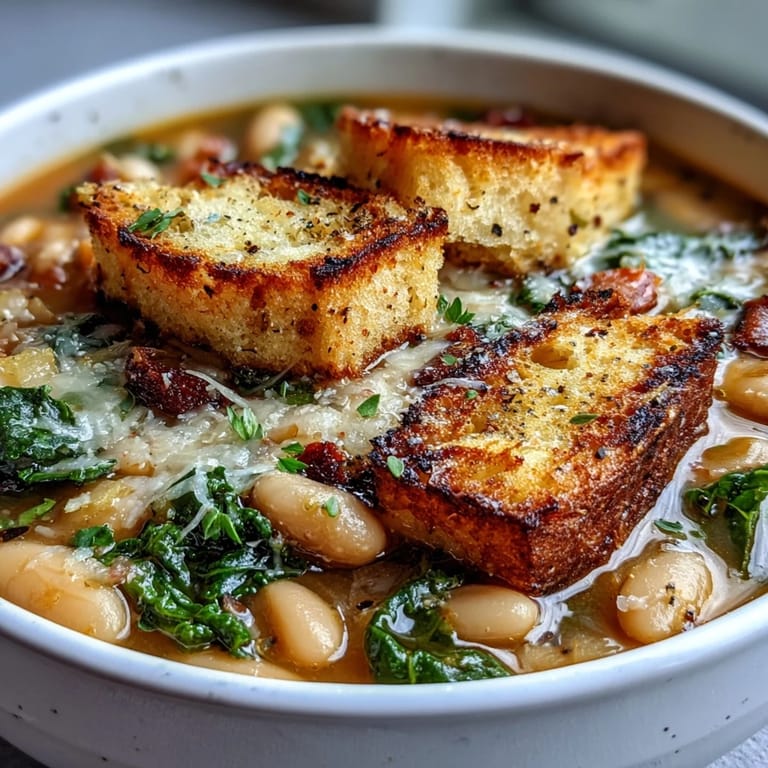
- While the soup simmers, preheat your oven to 400°F. Toss sourdough cubes with olive oil, spread them on a baking sheet, and bake for 10 to 12 minutes, turning once, until they're golden and crisp. As soon as they come out, rub them with the cut side of a raw garlic clove while they're still warm.
- Final taste and serve:
- Remove the bay leaf, taste the soup, and adjust salt and pepper as needed. Ladle into bowls and crown each one with a generous handful of warm croutons, a drizzle of fresh olive oil, and a scatter of grated Parmigiano-Reggiano if you like.
 Save
Save One of my favorite moments came when a friend who claimed not to like beans asked for thirds, and I got to watch her enjoy something she thought she'd avoid. That's what ribollita does—it quietly wins people over with its humble warmth and soulful simplicity.
The Soul of Rustic Italian Cooking
Ribollita was born from necessity, a way to use up leftover bread and whatever vegetables were on hand, and that spirit of resourcefulness is still its greatest strength. The soup teaches you that good food doesn't require complexity or exotic ingredients, just quality basics treated with care and time to meld together. There's freedom in that knowledge—it means you can adjust this recipe based on what your vegetables look like today, and it will still taste right.
Why This Soup Gets Better Tomorrow
Ribollita has a magical quality where the flavors intensify overnight as the beans continue to soften and every element gets to know the others better. I've learned to actually make this soup a day ahead when I'm expecting guests, because the rested version is silkier, deeper, and tastes less like dinner and more like comfort. When you reheat it, add a splash of fresh broth or water since the soup will thicken as it sits.
Scaling and Flexibility in the Kitchen
The beauty of ribollita is that it's forgiving with substitutions and proportions in a way that more delicate dishes aren't. Swiss chard or spinach work just as well as kale if that's what's in your crisper, and you can add a Parmigiano rind while simmering for deeper umami, removing it before serving. If you're cooking for fewer people, this recipe halves beautifully, and if you want to stretch it further, simply add more broth and beans without throwing off the balance.
- Parmesan rind while simmering adds depth that tastes like an Italian grandmother was in your kitchen.
- Leftover ribollita freezes brilliantly for up to three months, though add fresh croutons after thawing rather than before.
- A glass of dry red wine like Chianti alongside this soup feels like honoring the tradition it comes from.
 Save
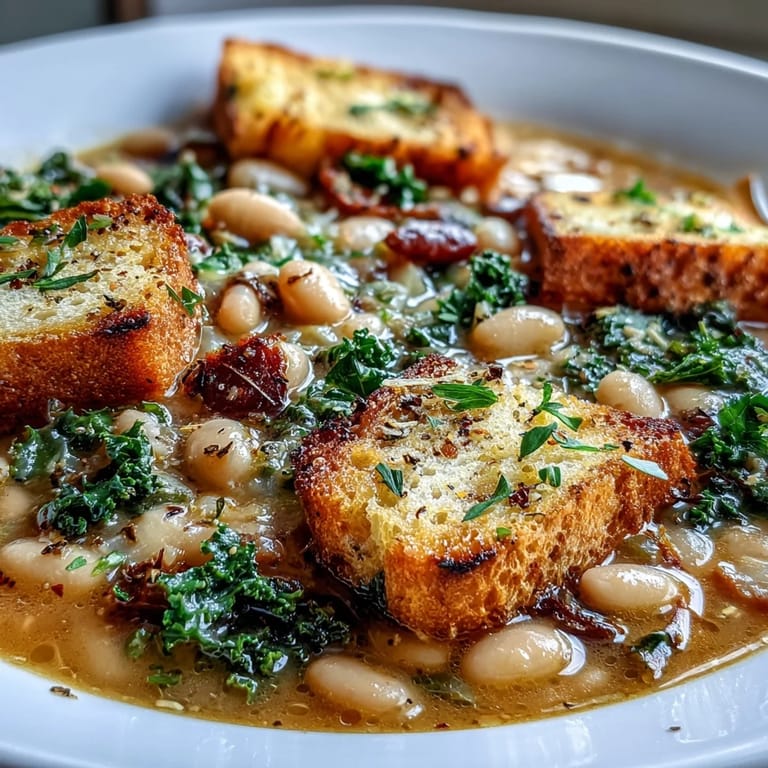
Save This soup has become my go-to when I want to feed people something nourishing and honest, the kind of dish that tastes like friendship in a bowl. Every time I make it, I'm grateful for that dog-eared cookbook and the reminder that the best meals are often the simplest ones.
Recipe FAQs
- → What vegetables are used in this Tuscan soup?
The soup features onion, carrots, celery, fennel (optional), zucchini, Yukon gold potato, and Tuscan kale for a rich vegetable base.
- → How are the sourdough croutons prepared?
Cubes of day-old sourdough bread are tossed with olive oil, baked until crisp, then rubbed with halved garlic cloves for added flavor.
- → Can I substitute the kale with other greens?
Yes, Swiss chard or spinach can be used as alternatives to kale without compromising the soup’s texture.
- → Is there a way to add depth to the broth?
Adding a parmesan rind during simmering enriches the broth with umami, removed before serving.
- → How do I achieve a thicker texture in the soup?
Partially mashing some beans and vegetables with the back of a spoon during cooking helps thicken the broth naturally.