 Save
Save There was a Tuesday evening when my kitchen smelled like charred peppers and I realized I'd been making cream sauces all wrong. A friend mentioned she'd started blending lentils into pasta sauces for protein, and something clicked—why hadn't I thought of that before? That night, I roasted red peppers until their skin blistered, threw them into a blender with cooked lentils and plant milk, and created something so silky and satisfying that my non-vegan partner asked for seconds without hesitation.
I made this for a potluck where I wasn't sure how many people would be vegan, and honestly, I was nervous about being the person bringing "diet food." By the end of the night, the pasta was completely gone, and three people asked for the recipe—including the skeptics who'd never tried nutritional yeast before. That's when I understood this dish doesn't need an asterisk or an apology.
Ingredients
- Dried penne or fusilli pasta (340 g / 12 oz): The ridges catch and hold the silky sauce beautifully, and cooking it slightly al dente gives you something to push against when you're tossing everything together.
- Roasted red bell peppers (2 large): These are the soul of the sauce, lending that sweet, smoky depth that makes you wonder if there's butter involved; if you're pressed for time, jarred roasted peppers work just as well and save you a messy step.
- Cooked brown or green lentils (120 g / 3/4 cup): They vanish into the sauce while adding protein and an earthy undertone that grounds everything; always drain them well or the sauce becomes pasty.
- Yellow onion (1 medium, chopped): Sautéed until golden, it becomes sweet and mellow, the quiet foundation that makes every other flavor sing.
- Garlic (3 cloves, minced): Don't skip the sautéing step—raw garlic would be harsh, but cooked garlic becomes buttery and warm.
- Unsweetened plant-based milk (120 ml / 1/2 cup): Oat milk creates the creamiest texture, but any milk works; the key is unsweetened, or your sauce will taste confused.
- Olive oil (2 tbsp): One tablespoon softens the aromatics, the other stirs in at the end to give the sauce a glossy, luxurious finish.
- Nutritional yeast (2 tbsp): This is what gives the sauce that savory, almost cheesy depth; don't confuse it with brewer's yeast, which tastes like you're eating a health supplement.
- Tomato paste (1 tbsp): A small amount adds umami and slight tang without making the sauce taste like pasta sauce; it's the invisible hand that ties everything together.
- Smoked paprika (1 tsp): The secret reason this tastes restaurant-quality; regular paprika is fine in a pinch, but smoked paprika is worth seeking out.
- Dried oregano (1/2 tsp): An Italian backbone that reminds your palate what dish this is.
- Salt and freshly ground black pepper (1/2 tsp salt, 1/4 tsp pepper): Start here, then taste at the end because the nutritional yeast adds its own saltiness.
Tired of Takeout? 🥡
Get 10 meals you can make faster than delivery arrives. Seriously.
One email. No spam. Unsubscribe anytime.
Instructions
- Set your pasta water aside:
- Fill a large pot with salted water and bring it to a rolling boil, then add your pasta and cook to the package instructions. Before draining, scoop out about 120 ml of starchy pasta water and set it somewhere you won't forget it—this liquid is pure magic for adjusting sauce consistency later.
- Build your flavor foundation:
- While the pasta cooks, warm 1 tablespoon of olive oil in a skillet over medium heat and add your chopped onion, letting it soften and turn golden around the edges, about 4 to 5 minutes. Add the minced garlic and let it become fragrant, just about a minute, so it loses its rawness.
- Blend into silkiness:
- Combine your sautéed onion and garlic, roasted red peppers, drained lentils, plant-based milk, nutritional yeast, tomato paste, smoked paprika, oregano, salt, and pepper into a blender. Blend until the mixture is completely smooth and creamy, with no visible pepper skin or lentil bits—this is what makes the sauce feel luxurious.
- Warm and adjust:
- Pour your sauce back into the skillet over low heat and stir in the remaining tablespoon of olive oil. Add your reserved pasta water gradually, stirring between additions, until the sauce reaches the consistency you want—silky enough to coat the back of a spoon but not so thin it slides off your fork. Taste now and adjust salt or pepper to your preference.
- Bring it all together:
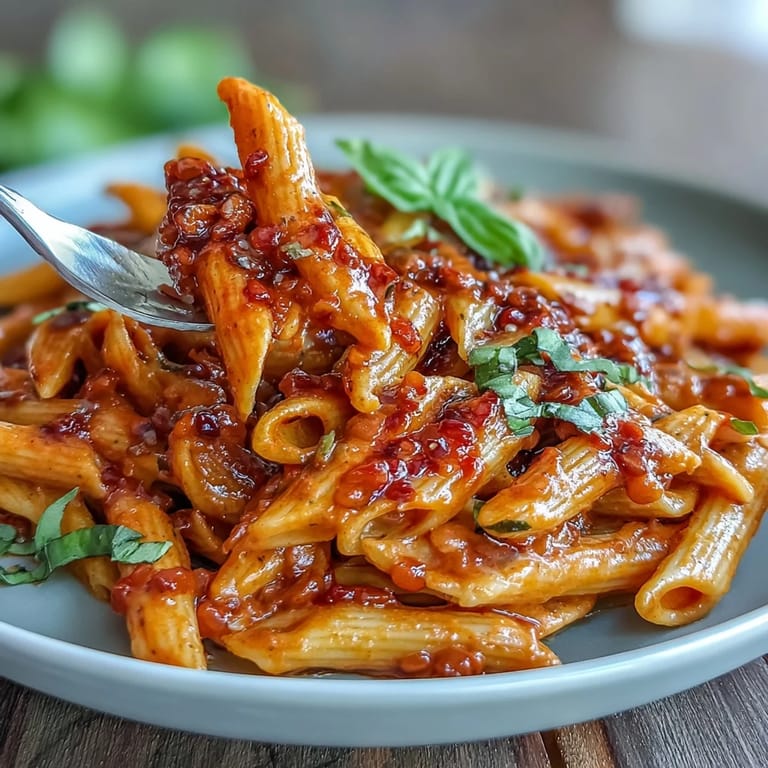
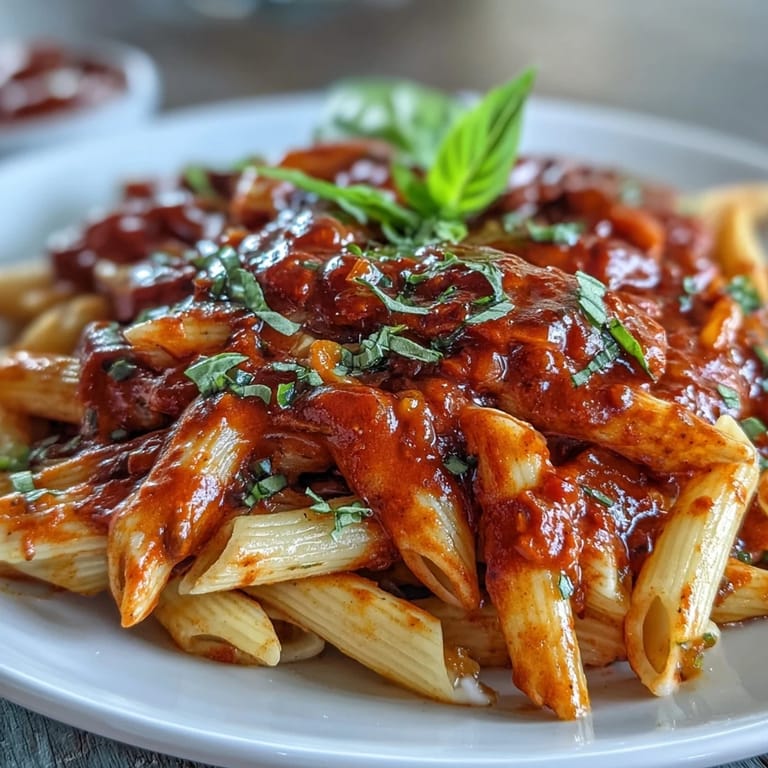
- Add your drained pasta to the sauce and toss everything for 1 to 2 minutes until the pasta is warm and every piece is coated in that gorgeous red sauce.
- Finish and serve:
- Transfer to bowls or plates immediately while everything is still warm, and scatter fresh basil, vegan parmesan, or crushed red pepper flakes on top if you want to add brightness and a little heat.
 Save
Save My partner, who grew up eating his grandmother's creamy tomato sauce, watched me make this and then asked if he could have it again the next night. That moment—when a dish transcends being vegan or plant-based and just becomes something delicious that people want to eat—that's when cooking feels like magic.
The Hidden Power of Lentils in Sauce
Before I started blending lentils into sauces, I assumed they belonged in soups or salads where you could see them. The revelation came when I realized that cooked lentils become almost transparent when blended, lending earthiness and protein without any texture you can identify. Brown lentils are sturdier than red ones, so they maintain their shape better during blending and give you a sauce with more body. This is why they work so much better than red lentils for this particular dish—red lentils almost dissolve entirely, which can make the sauce feel a bit too thin and one-dimensional.
Why Nutritional Yeast Makes the Difference
Nutritional yeast isn't a substitute for cheese; it's its own ingredient with a savory, slightly nutty flavor that deepens in a blended sauce. I spent years avoiding it because I thought it tasted like vitamins, but that was because I was using too much. Two tablespoons in this amount of sauce adds richness and umami without ever tasting supplementary. The key is that it needs to be blended in, not stirred in at the end—blending distributes the flavor evenly throughout the sauce and prevents any gritty texture.
Making This Dish Your Own
This recipe is actually more flexible than it sounds, and I've learned to see it as a template rather than a rigid formula. The roasted red peppers are the non-negotiable core, but everything else bends to what you have and what you crave on any given night. I've added sautéed spinach when I had a bunch wilting in the crisper, swapped half the lentils for white beans when that's what I found, and even increased the nutritional yeast to 3 tablespoons when I wanted extra savory depth.
- Try adding a handful of fresh spinach or sautéed zucchini to the blender for extra vegetables and color.
- If you're not a smoked paprika person, swap it for regular paprika plus a tiny pinch of cayenne for warmth instead.
- Leftover sauce keeps for three days in the fridge and reheats beautifully over low heat with a splash of plant milk to refresh the consistency.
 Save
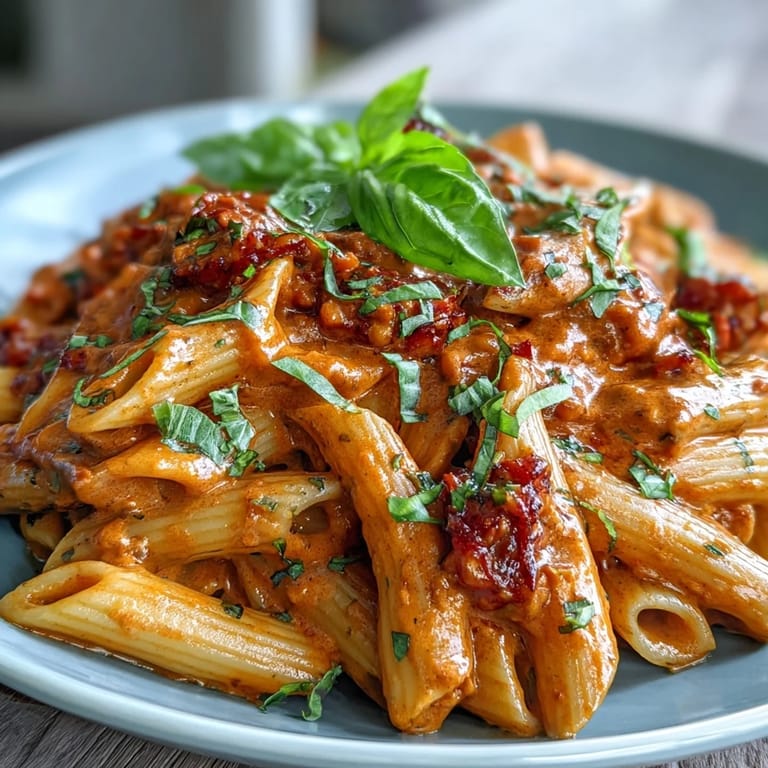
Save This pasta has become my go-to dish when I want to feel like I'm eating something decadent without any complicated feelings about it. It's the kind of meal that proves plant-based cooking isn't about restriction—it's about discovering flavors you didn't know you were missing.
Recipe FAQs
- → Can I use different pasta shapes?
Yes, penne or fusilli work well, but any short pasta shape that holds sauce can be used.
- → What can I substitute for plant-based milk?
Unsweetened almond, oat, or soy milk are great choices; choose one that complements the sauce's flavor.
- → How do I roast red peppers at home?
Char the peppers under a broiler or over a flame until skin blackens, then peel and seed before using.
- → Can I prepare the sauce ahead of time?
Yes, blend the sauce and store it refrigerated for up to 2 days, then reheat before mixing with pasta.
- → Are there ways to add more vegetables to the dish?
Adding sautéed spinach or zucchini enhances nutrition and adds vibrant color to the meal.