 Save
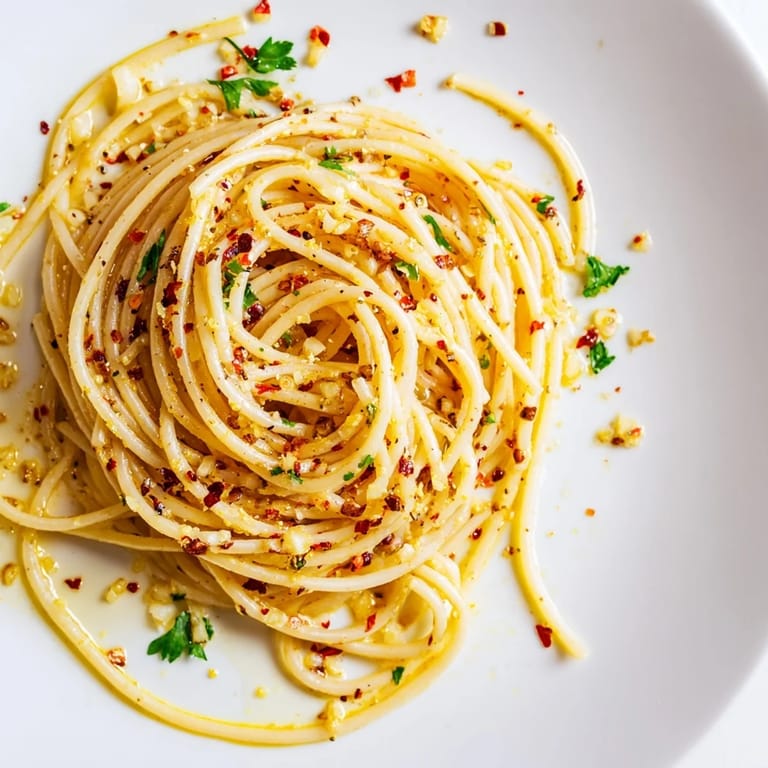
Save There's a Thursday night when I realized I'd been overthinking pasta. I had ten minutes, a nearly empty pantry, and somehow ended up with one of the most satisfying bowls I'd made in months. Aglio e olio—just garlic, oil, and heat—taught me that simplicity isn't laziness; it's clarity. The dish came together so fast that I barely had time to think, which meant I could actually taste what was happening: the whisper of garlic turning golden, the warning tingle of chili flakes, the way a little pasta water turned everything silky. It's the kind of meal that reminds you why Italian cooking is so honest.
I made this for my partner on a random weeknight when neither of us felt like real cooking, and they actually asked for seconds. That's when I knew it wasn't just fast food—it was the kind of dish people remember because of how it tasted, not because you labored over it. The smell of garlic in that much oil fills a small kitchen completely, which becomes part of the experience.
Ingredients
- Dried spaghetti, 200 g (7 oz): The thinness matters here—it lets the oil coat every strand without getting weighed down. Good quality pasta makes a noticeable difference when there's nowhere to hide.
- Extra-virgin olive oil, 4 tbsp: This is the star, so don't use the regular cooking oil hiding in the back. Fruity, peppery, fresh olive oil is what carries the whole dish.
- Garlic cloves, 4 large, thinly sliced: Thickness matters—thin enough that they cook evenly, thick enough that you can see and control them. Thinly sliced cloves cook in seconds.
- Red chili flakes, 1 tsp: Start here and adjust up next time if you like more heat. The flakes bloom in hot oil and distribute through every bite.
- Fresh parsley, 2 tbsp chopped: The brightness at the end cuts through the richness—it sounds like a small thing, but it's what makes the dish feel finished.
- Freshly ground black pepper, to taste: Add this after you taste, not before. You're seasoning, not following a formula.
- Sea salt, to taste: Use what you reserve from the pasta water first, then add more if needed.
- Parmesan cheese, 2 tbsp freshly grated (optional): If you use it, use real Parmesan and grate it fresh—the saltiness and sharpness balance the oil beautifully, but it's truly optional.
Tired of Takeout? 🥡
Get 10 meals you can make faster than delivery arrives. Seriously.
One email. No spam. Unsubscribe anytime.
Instructions
- Start your water and get organized:
- Fill a large pot with water, salt it generously so it tastes like the sea, and get it rolling at a full boil. While you wait, slice your garlic thin—this is your actual prep, and it takes two minutes.
- Cook the pasta until it has a little resistance:
- Add spaghetti to boiling water and set a timer for whatever the package says minus one minute. You want it yielding but still with a slight firmness when you bite it. Before you drain it, scoop out a coffee mug's worth of that starchy water—you'll need it later to make everything silky.
- Warm the oil and coax out the garlic:
- In a large skillet over medium-low heat, pour in your olive oil and add the sliced garlic. This is slow cooking—stir often, watch for the moment when each slice turns pale gold and smells sweeter than raw. If you rush or turn up the heat, the garlic burns and tastes bitter. About a minute and a half is usually right.
- Add the heat:
- Sprinkle the chili flakes into the warm oil and stir for a count of ten. You'll see them darken slightly and smell the pepper-spice release into the oil.
- Toss it all together:
- Pour your drained pasta straight into the skillet, then toss and turn everything until each strand is slick with that fragrant oil. If it looks tight or dry, splash in some of that reserved pasta water a little at a time—the starch in it helps the oil cling to the pasta.
- Season and finish:
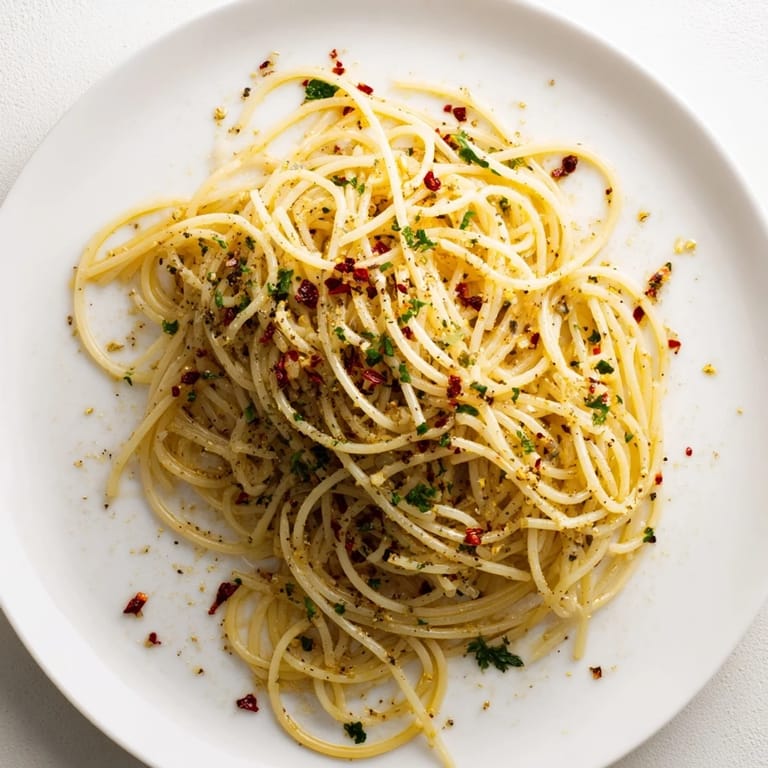
- Taste before you add salt—the pasta water already carries some. Grind in black pepper, scatter parsley over everything, and if you're using Parmesan, grate it over now. Serve while it's hot, in warm bowls.
 Save
Save This dish became important to me the night I stopped seeing it as a fallback and started seeing it as a choice. There's power in making something so elemental and having it be genuinely delicious, no apologies needed.
The Oil Temperature Game
Medium-low heat is the whole game here. The oil needs to be hot enough that the garlic sizzles gently and releases its fragrance, but not so hot that you turn away for a second and come back to something blackened. Listen for that soft, steady sizzle—it's the sound of it working. If the oil is smoking, your heat is too high and the garlic is in danger.
Variations and Mood Shifts
The basic structure is so simple that you can let your preferences lead. Some nights I want more garlic and less chili; other nights I'm chasing heat and use twice the flakes. I've added a squeeze of lemon at the end, which brightens everything and cuts through the richness in a way that feels almost virtuous. A small handful of toasted breadcrumbs stirred in at the very end adds texture and makes it feel more substantial without changing what the dish is.
Why This Works
Aglio e olio proves that you don't need cream, cheese, or complicated technique to make pasta feel luxurious. Good olive oil has enough body and flavor to carry the whole dish, and garlic—slow-cooked until it's gentle and sweet—becomes almost creamy. It's a dish that respects ingredients and doesn't ask them to pretend to be something else.
- Make sure your pot is large enough that the pasta has room to move while it cooks—crowded pasta steams instead of cooking properly.
- If you can't find good olive oil, this dish will taste obviously different, so it's worth seeking out a bottle you actually like.
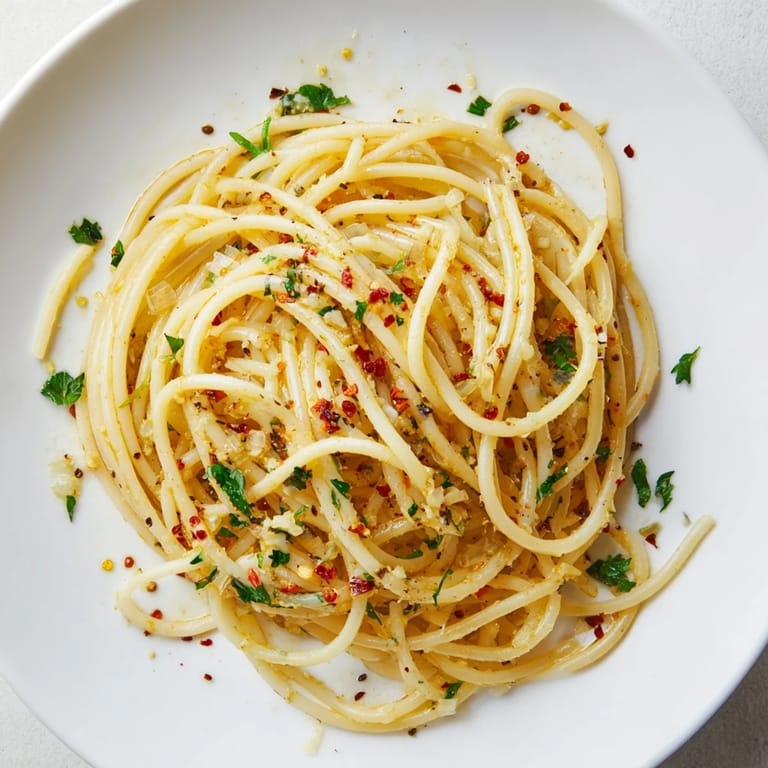
- Eat this as soon as it's plated, while the heat is still in the oil and the pasta is at its silkiest.
 Save
Save Ten minutes from empty kitchen to dinner is the promise this dish keeps, and somehow it tastes like you spent an hour thinking about it. That's the real magic.
Recipe FAQs
- → How do I prevent garlic from burning?
Sauté garlic over medium-low heat and stir often until it’s lightly golden and fragrant to avoid burning and bitterness.
- → Can I use gluten-free pasta for this dish?
Yes, gluten-free pasta works well and can be used as a substitute without altering the flavor profile.
- → What adds heat to this pasta?
Red chili flakes introduce a mild spicy kick that can be adjusted to your preferred level of heat.
- → Is Parmesan necessary for this dish?
Parmesan is optional; it adds richness but can be omitted or replaced with a vegan alternative for dietary preferences.
- → How do I make the olive oil more flavorful?
Gently infuse the olive oil by slowly sautéing thinly sliced garlic until fragrant and just golden before adding chili flakes.