 Save
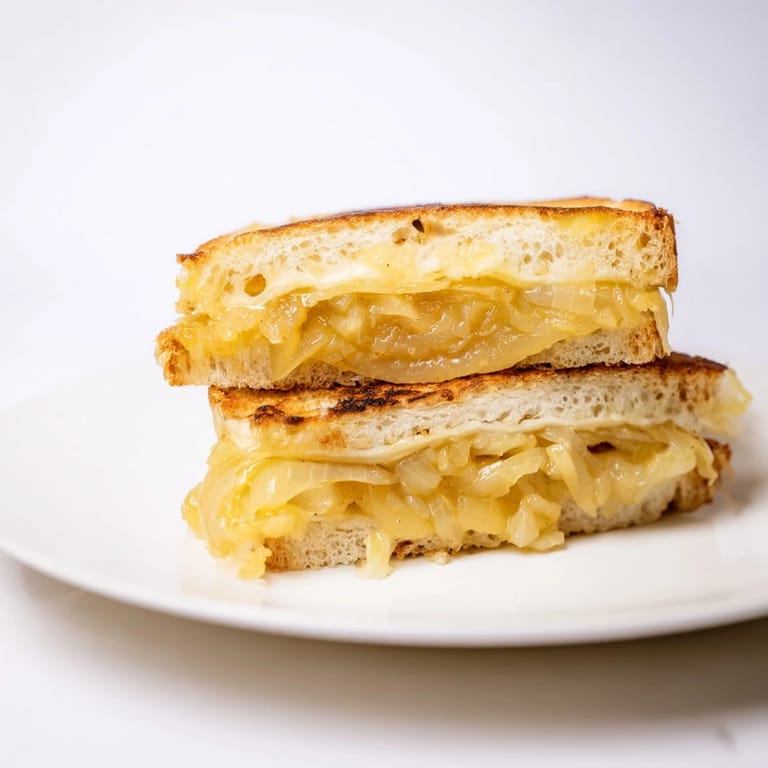
Save There's something about caramelized onions that stops time in the kitchen. Years ago, I was rushing through dinner prep when the smell hit me—sweet, deep, almost wine-like—and I realized I'd been standing at the stove for nearly half an hour without noticing. That's when I understood the magic wasn't in speed but in patience, in letting butter and onions transform into liquid gold. Pairing them with Gruyère felt inevitable, like they were always meant to be together. This grilled cheese became my answer to proving that simple ingredients, given respect and time, become something extraordinary.
I made this sandwich for a friend who'd been going through a rough month, and something shifted when she took that first bite. She stopped mid-conversation, closed her eyes, and just sat with it for a moment. That's when I realized food isn't just about flavors on a plate—it's about creating a pause, a small luxury in an ordinary day. Now whenever I make it, I think about slowing down and letting people taste what care actually feels like.
Ingredients
- Yellow onions: Medium-sized ones work best because they have natural sweetness that intensifies as they cook down; thin slicing is crucial since it speeds up caramelization and ensures even coloring.
- Unsalted butter: This gives you control over salt levels and lets the onion sweetness shine without competing flavors.
- Kosher salt and black pepper: Added early to the onions, salt draws out moisture and helps break down cell walls for deeper caramelization.
- Sugar and balsamic vinegar: Optional additions that deepen complexity—sugar balances any bitterness while vinegar adds subtle tang that wakes up your palate.
- Rustic sourdough or country bread: The structure and slight tang here complement the richness of the filling and won't get soggy when pressed.
- Softened butter for spreading: Room-temperature butter spreads evenly without tearing delicate bread and creates that golden crust you're after.
- Gruyère cheese: Its nutty, slightly salty character elevates this beyond ordinary grilled cheese; grating it yourself melts faster and more evenly than pre-shredded.
Tired of Takeout? 🥡
Get 10 meals you can make faster than delivery arrives. Seriously.
One email. No spam. Unsubscribe anytime.
Instructions
- Build your caramelization foundation:
- Melt butter in a large skillet over medium-low heat, add your thinly sliced onions with salt and pepper, then settle in for the long journey. Stir occasionally every few minutes—you're looking for onions that gradually shift from translucent to pale gold to deep amber, which takes about 25–30 minutes and is absolutely worth every minute of waiting.
- Deepen the flavor:
- Once your onions are deeply caramelized, stir in the sugar and balsamic vinegar if you're using them, let them cook together for 2–3 minutes so the flavors marry, then transfer to a plate. Taste them here—they should taste like sweet, complex onion essence, not raw onion.
- Assemble with intention:
- Spread softened butter on one side of each bread slice, then lay two slices butter-side down on your work surface. Layer half the Gruyère on each, spoon your warm caramelized onions over the cheese, then top with the remaining Gruyère and your second slice of bread with the buttered side facing up.
- Cook until golden and melted:
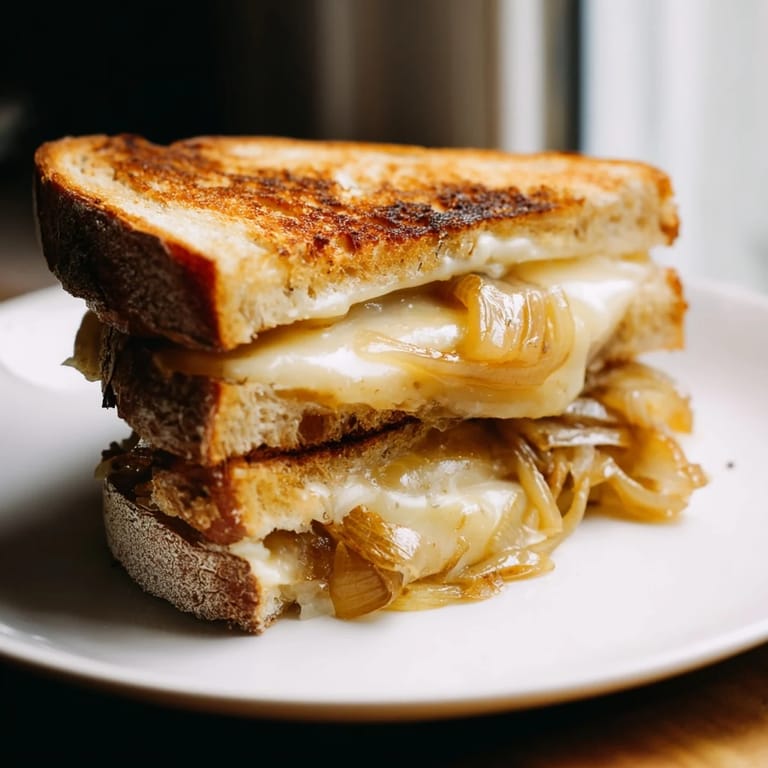
- Heat a nonstick skillet over medium heat, place your sandwiches inside, and cook for 3–4 minutes per side, pressing gently with a spatula so the cheese makes contact with the bread. You'll know it's ready when the bread is golden brown and you can see the cheese starting to ooze slightly from the edges—if the bread is browning too fast, lower the heat and give the cheese more time.
- Rest and serve:
- Let the sandwich sit for one minute after cooking so the cheese sets slightly and won't fall out when you bite into it, then slice and eat while everything is still warm.
 Save
Save I learned something unexpected making this sandwich for the third time: it tasted better when I stopped trying to make it faster. There's a rhythm to grilled cheese that reveals itself when you're not watching the clock, and this version especially rewards your attention. It became less a recipe I was executing and more a conversation between me and the ingredients.
The Secret of Caramelization
Caramelization isn't just browning—it's a chemical transformation where onion sugars break down and recombine into hundreds of new flavors. The difference between onions cooked for fifteen minutes and thirty minutes is the difference between okay and transcendent. You'll know you're there when the onions have shrunk to about a third of their original volume and smell almost sweet enough to eat with a spoon. This patience is what makes a grilled cheese feel like something you'd order in a restaurant rather than throw together at home.
Bread Selection Matters More Than You Think
The bread is your foundation, and choosing rustic sourdough or country bread over standard sandwich bread changes everything. These breads have enough structure to hold the molten cheese and caramelized onions without falling apart, and their slight tang plays beautifully against the sweet-savory filling. I've made this with white bread and with thick-cut challah, and they work, but something about the earthiness of sourdough makes the Gruyère sing differently.
Variations and Serving Suggestions
Once you master the basic version, this sandwich becomes a canvas for your instincts. Fresh thyme leaves stirred into the onions in the last minutes add an herbal note that feels almost French bistro, while a thin layer of Dijon mustard on the bread brings a gentle sharp edge. This pairs beautifully with a crisp green salad, tomato soup, or even a charcuterie board if you want to make it part of something larger.
- Add a few slices of good ham between the cheese layers for richness and a salty counterpoint to the sweet onions.
- Try Emmental or Swiss cheese if Gruyère isn't available, though the nuttiness will be slightly different.
- Make the caramelized onions ahead of time—they actually improve over a day or two in the refrigerator and save you time on busy evenings.
 Save
Save This sandwich reminds me that sometimes the most sophisticated meals are built on the simplest foundations—just butter, onions, bread, and cheese, treated with respect. It's the kind of food that makes you grateful for your kitchen and grateful for whoever you're sharing it with.
Recipe FAQs
- → How do you properly caramelize onions?
Slice onions thinly and cook them slowly in butter over low to medium-low heat. Stir occasionally for about 25–30 minutes until they turn deep golden and sweet.
- → Can I substitute Gruyère with another cheese?
Yes, mild Swiss cheeses like Emmental or classic Swiss can be used for a similar nutty melt and flavor profile.
- → What type of bread works best for this sandwich?
Rustic sourdough or country-style bread with a firm crust holds up well and adds a pleasant texture contrast.
- → Why add balsamic vinegar to the onions?
A splash of balsamic vinegar enhances the sweetness and adds a subtle, tangy depth to the caramelized onions.
- → How can I prevent the bread from browning too fast?
Cook the sandwich over medium or medium-low heat and press gently, reducing heat if the bread browns before the cheese fully melts.
- → Can fresh herbs improve the flavor?
Adding fresh thyme leaves to the onions during caramelization can introduce a lovely aromatic note complementing the rich cheese.