 Save
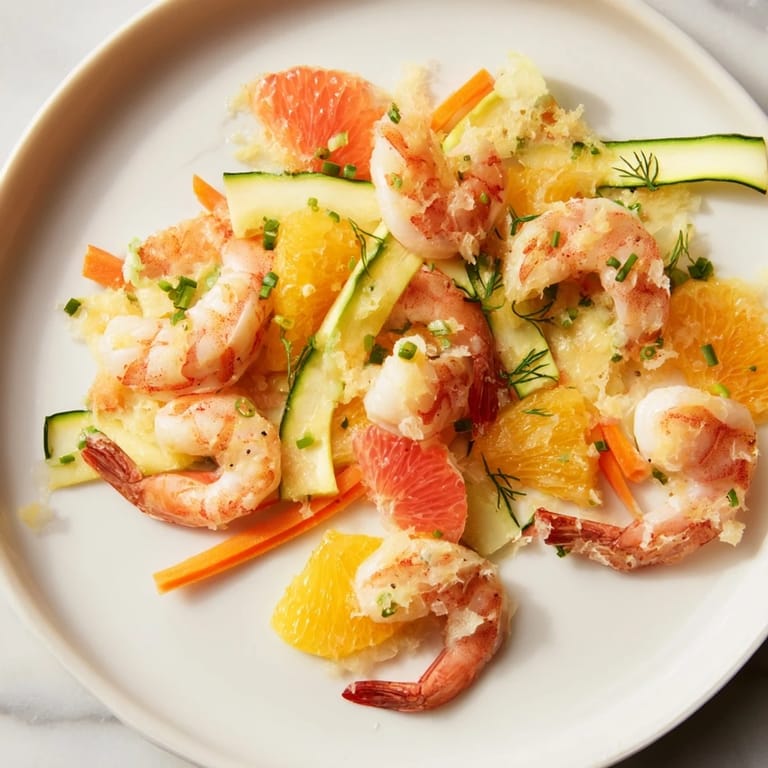
Save I first made this dish on a whim after scrolling through photos of actual coral reefs at midnight, struck by how something so impossibly colorful existed beneath the waves. The next morning, standing in my kitchen with pink shrimp and bright citrus spread across the counter, I realized I could build something equally stunning on a plate. There's something magical about arranging food to tell a story, especially when it tastes as fresh and alive as it looks. That first version wobbled a bit when I pulled it from the broiler, but the melted cheese held everything together like an edible promise. Now, whenever I make it, I'm transported back to that moment of pure kitchen optimism.
I remember cooking this for my sister's birthday dinner on a June evening when everyone was tired of heavy food but still hungry for something special. She walked into the kitchen right as I was layering the shrimp and citrus, and she gasped like I'd just performed magic rather than tossed some ingredients onto a platter. That gasp made the whole messy prep worthwhile, and now this dish means celebration to me in a way most recipes never do.
Ingredients
- Large pink shrimp, peeled and deveined (500 g): The size matters here because larger shrimp stay tender while the cheese broils, and their natural sweetness plays beautifully against the acid.
- Oranges, segmented with zest (2 medium): Fresh segmentation matters more than juice; you want those whole pieces to hold their shape and catch light on the platter.
- Pink grapefruit, segmented (1 small): Choose one that's actually pink inside, not just labeled that way, because the color is part of the magic and bitterness adds dimension.
- Lemon juice (from 1 lemon): Fresh squeeze only, as bottled tastes flat against the delicate shrimp and cheese.
- Gruyère cheese, grated (120 g): The nutty undertones matter; it broils beautifully without becoming stringy or greasy.
- Ricotta cheese (50 g): Use whole milk ricotta, which creates those little clouds of creaminess that balance the sharpness of Gruyère.
- Zucchini, thinly sliced into ribbons (1 small): A mandoline makes this faster, but a sharp knife and patience work just as well; thin ribbons wilt slightly under the broiler heat.
- Carrot, julienned (1 small): The thin cut lets it soften just enough to be silky without turning mushy.
- Fresh chives, finely chopped (1 tbsp): These go on last, after everything cools slightly, so they stay bright and punchy.
- Fresh dill, torn (1 tbsp): Torn by hand tastes less harsh than chopped, if you have the extra 10 seconds.
- Olive oil (2 tbsp): Use something you'd actually drink, because it's the final whisper of richness on the plate.
- Salt and freshly ground black pepper: Taste as you layer, because the cheese adds its own salinity.
Tired of Takeout? 🥡
Get 10 meals you can make faster than delivery arrives. Seriously.
One email. No spam. Unsubscribe anytime.
Instructions
- Season your shrimp with intention:
- Toss the shrimp with 1 tablespoon of olive oil, lemon juice, salt, and pepper in a bowl, coating every curve. Let them sit for a minute so the lemon starts working its way in.
- Sear them until just done:
- Heat a skillet over medium-high heat until a drop of water dances across it, then slide in the shrimp. They cook fast, about 2 minutes per side, and you'll know they're ready when they've just turned opaque and firm. Don't crowd the pan.
- Build your citrus base:
- In a bowl, toss the orange and grapefruit segments gently with the zest and a tiny pinch of salt, letting the fruit juices mingle. This step takes 30 seconds but tastes like intention.
- Steam your vegetables until barely tender:
- Arrange zucchini ribbons and carrot strips in a steamer basket or microwave-safe bowl with a splash of water, then steam for 1 to 2 minutes. They should still have some resistance when you bite them, because the broiler will finish the job.
- Arrange like you mean it:
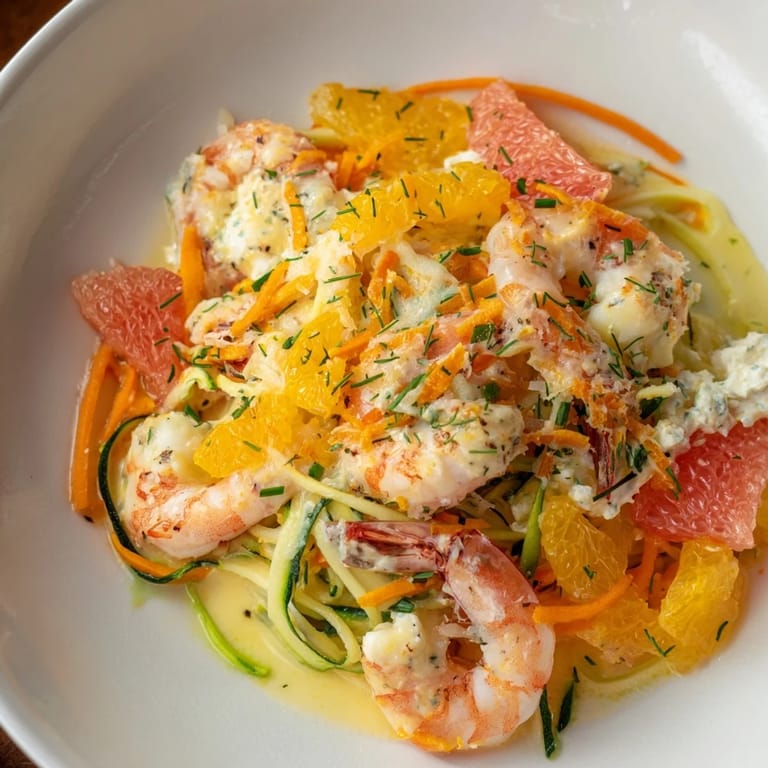
- On your oven-safe serving platter, lay the steamed vegetables in sections to form the reef base, creating hills and valleys. Nestle the warm shrimp among them, then tuck the citrus segments into gaps, thinking about color balance as much as flavor.
- Add your cheeses thoughtfully:
- Sprinkle the grated Gruyère evenly across the entire arrangement, then dot with small spoonfuls of ricotta, which will melt into creamy pockets. The mix of melting and slow-warming will create different textures.
- Broil with precision:
- Place the platter under a preheated high broiler for 2 to 3 minutes, watching carefully because broilers vary wildly. The cheese should bubble and brown slightly at the edges; any longer and the shrimp hardens.
- Finish with fresh herbs and warmth:
- Remove from the broiler, scatter the chives and torn dill across the top, then drizzle with the remaining olive oil. Serve immediately while the contrast between warm cheese and cool citrus is still singing.
 Save
Save There's a moment when you pull this platter from under the broiler and the kitchen fills with the smell of toasted cheese and warm citrus, and you realize you've created something that tastes as interesting as it looks. That's when food stops being sustenance and becomes a small act of love.
Building Your Reef: A Plating Meditation
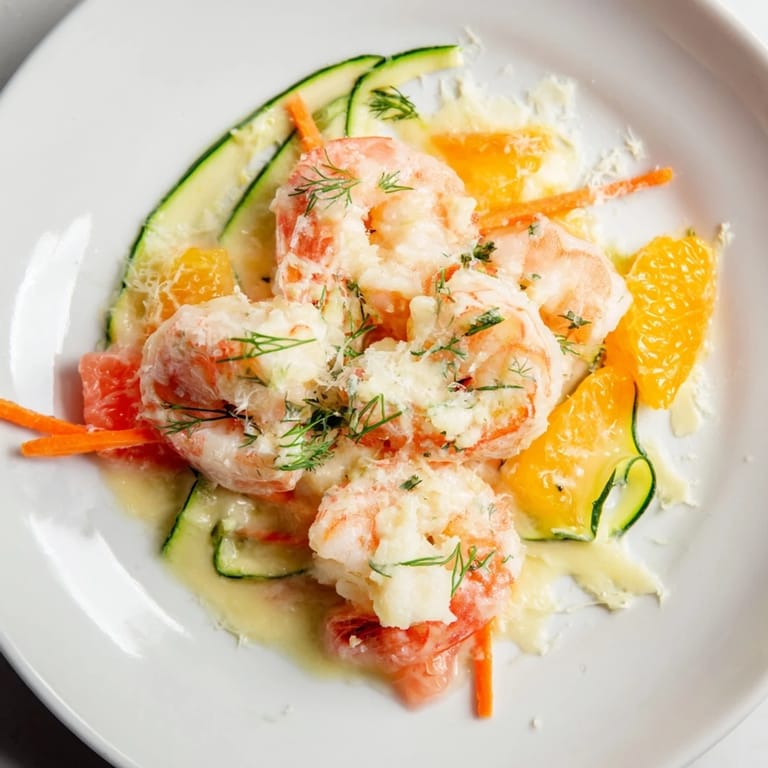
The arrangement matters more than you'd think, not just for Instagram but because your eye guides your fork. When I learned to place items with intention rather than scatter them randomly, the eating experience changed entirely. The vegetables should flow like currents, with shrimp nestled at varying heights and citrus creating visual surprise in every section. Think less like a recipe and more like you're directing a tiny edible landscape, because that's exactly what you're doing.
Citrus Without Fear
Fresh citrus in a hot kitchen sounds simple until you're actually holding a knife and wondering how to get intact segments without turning them into juice. The trick I learned is to cut away the white pith completely first, creating a clean edge, then carefully slice between the membranes with a small sharp knife, letting each segment fall into a bowl rather than onto your cutting board. It takes an extra minute but rewards you with pieces that look whole and taste bright instead of crushed and muted. Save those squeezed membranes for juicing afterward.
Cheese, Heat, and the Science of Bubbling
Gruyère behaves differently under heat than most cheeses, developing those nutty brown spots while staying creamy underneath rather than turning into a rubbery layer. The ricotta adds pockets of smooth contrast that soften the intensity of the Gruyère, and together they create something more interesting than either would alone. I once tried this with just mozzarella and it felt flat, even though mozzarella is technically more traditional. The lesson was that sometimes the ingredients that seem fancier actually matter.
- Watch the broiler like a hawk because the difference between perfectly bubbled and overdone is about 45 seconds.
- Pull it out when the cheese is still slightly molten, not when it looks fully set, because carryover heat finishes the job.
- If your broiler burns the top before the shrimp heats through, lower the oven rack so the platter sits farther from the flame.
 Save
Save This dish taught me that eating with your eyes first makes everything taste better, and that sometimes the smallest effort in plating multiplies the joy of the meal. Make it for someone who needs reminding that food can be both simple and spectacular.
Recipe FAQs
- → How do I prevent shrimp from overcooking?
Sauté shrimp just 2 minutes per side until opaque and firm to maintain tenderness and avoid rubberiness.
- → Can other cheeses replace Gruyère?
Yes, Emmental or bubbly mozzarella can be used for a similar melted, golden topping effect.
- → How should the vegetables be prepared?
Steam zucchini ribbons and julienned carrots until just tender to preserve crispness and color.
- → What is the best way to arrange the dish for presentation?
Layer the steamed vegetables as a base, nestle shrimp and citrus segments on top, and finish with cheese before broiling.
- → What wines pair well with this dish?
A crisp Sauvignon Blanc or a dry rosé complement the seafood and citrus notes beautifully.