 Save
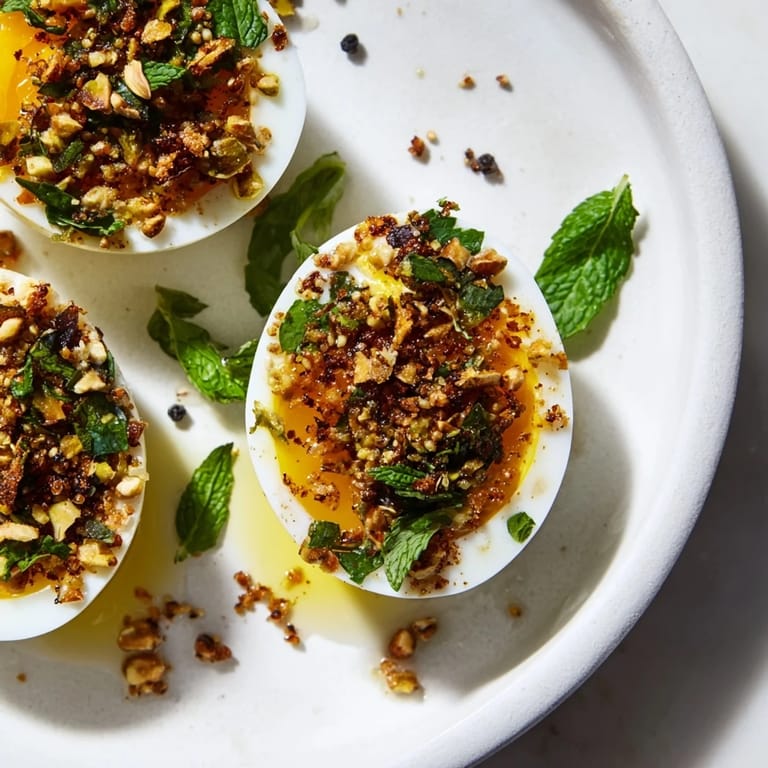
Save The first time I tasted dukkah was at a bustling Cairo market, where an elderly vendor pressed a small paper cone of it into my hand. I watched her sprinkle it generously over soft-boiled eggs and suddenly understood why this humble spice blend had been treasured for centuries. Now, whenever I make these eggs at home, that same magic happens—the nutty warmth, the sesame crunch, the way fresh herbs dance across the yolks. It's become my answer to the question: what do you make when you want breakfast to feel like a celebration?
I made this for my sister on a quiet Sunday morning, and she actually paused mid-bite to ask for the recipe. That moment—when someone stops to really taste something—told me I'd gotten it right. Now it's her go-to when she wants to impress without the stress.
Ingredients
- Eggs: Use large, room-temperature eggs for more even cooking and easier peeling afterward.
- Dukkah spice mix: The soul of this dish—buy it from a Middle Eastern market or make your own for deeper flavor and control over texture.
- Fresh parsley, cilantro, and mint: These herbs aren't optional; they add brightness and prevent the dish from feeling heavy.
- Extra virgin olive oil: Don't skip quality here—it's not just an ingredient, it's part of the flavor profile.
- Sea salt and freshly ground black pepper: Season at the end so you taste all the layers coming together.
Tired of Takeout? 🥡
Get 10 meals you can make faster than delivery arrives. Seriously.
One email. No spam. Unsubscribe anytime.
Instructions
- Boil the eggs gently:
- Bring water to a calm boil, then lower each egg in as if tucking it in. Seven minutes gives you that jammy, almost liquid center that dukkah clings to beautifully; nine minutes if you prefer firmer yolks. The gentleness matters—rushing or using too hard a boil risks cracks.
- Cool in ice water:
- This stops the cooking immediately and makes peeling less of a frustration. Two to three minutes is the sweet spot.
- Peel with patience:
- Roll the egg gently under your palm to loosen the shell, then peel from the wider end where the air pocket makes it easier. Cold eggs peel cleaner than warm ones.
- Arrange and dress:
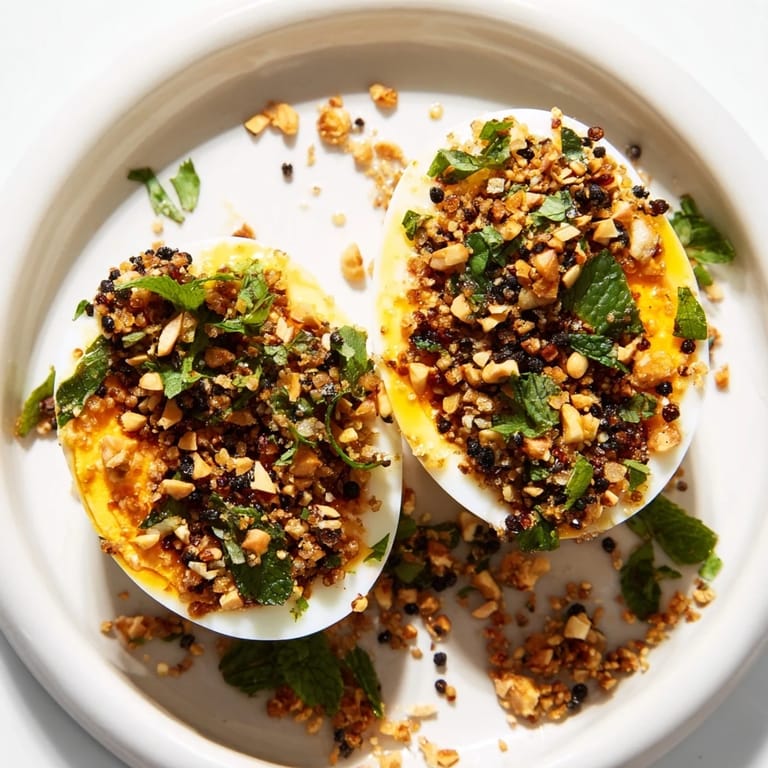
- Lay each halved egg like you're setting the table for something special. Drizzle olive oil across them—it should glisten, not pool.
- Build the layers:
- Sprinkle dukkah first while the olive oil is still there to catch it, then scatter the fresh herbs like a final flourish. The herbs stay brighter and more fragrant on top.
- Season and serve:
- Taste before adding salt—dukkah and good oil already carry flavor. Serve immediately so the herbs stay alive and the yolk stays warm.
 Save
Save My neighbor smelled these cooking one morning and showed up at my door asking what I'd made. We ended up sharing breakfast on the porch, and she told me about her grandmother's kitchen in Lebanon. Food has a way of opening doors like that—especially eggs this simple and this good.
Making Dukkah from Scratch
Store-bought dukkah is convenient, but homemade is where the magic lives. Toast hazelnuts, sesame seeds, coriander, cumin, black peppercorns, and fennel seeds in a dry pan until the kitchen fills with a warm, toasted aroma—that's your signal they're ready. Let them cool completely, then pulse in a food processor just until coarsely ground, not powdery. The moment you taste homemade dukkah sprinkled over warm eggs, you'll understand why people kept this recipe alive for generations.
Timing and Temperature Matter
Eggs cook from the outside in, which is why seven versus nine minutes makes such a difference. The ice bath stops cooking dead in its tracks, preserving that jammy center you're after. If you prefer harder yolks, lean toward nine minutes, but trust that seven-minute sweet spot if you want the full experience—the creamy yolk against the crunchy dukkah is why this dish works.
Variations and Serving Ideas
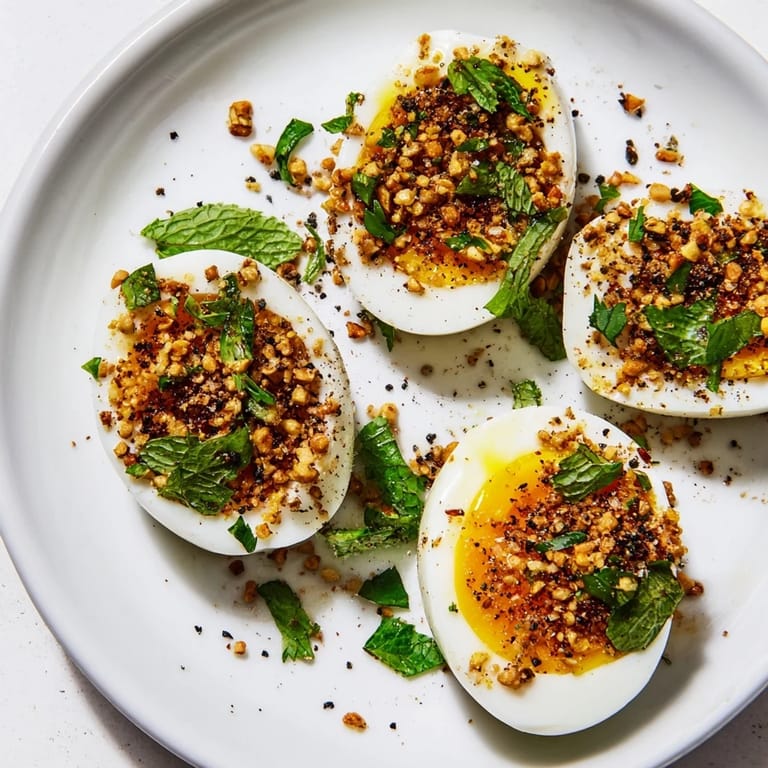
While boiled eggs are the classic canvas, dukkah works beautifully with soft-boiled eggs straight in the shell, hard-boiled halves, or even poached eggs if you want that runny center. Serve it with crusty bread for dipping in the yolk, warm pita for scooping, or on its own as a vegetable-forward plate. A squeeze of lemon juice just before eating brightens everything and adds another layer of flavor.
- For a grain-based meal, serve over toasted bread spread with hummus or labne.
- Leftover dukkah keeps for two weeks in an airtight container and transforms roasted vegetables, avocado toast, or even simple yogurt.
- Make this for a crowd by multiplying the recipe and assembling just before serving so nothing loses its texture.
 Save
Save These eggs taught me that breakfast doesn't need to be complicated to feel nourishing and joyful. A few good ingredients, a little care, and suddenly you're not just eating—you're tasting a whole history of flavor.
Recipe FAQs
- → What is dukkah and how does it enhance the dish?
Dukkah is a Middle Eastern blend of toasted nuts, seeds, and spices that adds a crunchy texture and warm, nutty flavor to the eggs.
- → Can I make dukkah at home?
Yes, by toasting hazelnuts, sesame seeds, coriander, cumin, black peppercorns, and fennel seeds, then pulsing with salt, you can create a fresh, fragrant dukkah.
- → How should the eggs be cooked for best results?
Simmer eggs for 7 minutes for a jammy yolk or 9 minutes for a firmer center, then cool in ice water before peeling and slicing.
- → What fresh herbs complement the spice mix?
Parsley, cilantro, and mint provide a bright, fresh contrast to the rich nuttiness of the dukkah.
- → Are there serving suggestions to enhance this dish?
Serve the eggs with a drizzle of extra virgin olive oil and optionally with crusty bread or warm pita to balance textures and flavors.
- → Can the egg preparation be varied?
Yes, soft-boiled, hard-boiled, or poached eggs all work well as variations to suit different preferences.