 Save
Save I discovered fattoush during a sweltering August afternoon at my neighbor's backyard gathering, when she pulled this luminous salad from her kitchen with a knowing smile. The first bite was a revelation—the way the warm pita chips softened just enough to absorb that lemony, sumac-tinged dressing while still holding their salty crunch felt like tasting sunshine and earth at once. She wouldn't share her recipe that day, just laughed and said it was all about the timing and not overthinking it. Years later, I finally cracked the code, and now it's the one salad I make when I want to feel transported without leaving home.
I made this for a dinner party once when a friend mentioned she was craving something fresh but felt like takeout was the only option. Watching her face light up when she tasted it—that moment of realization that real food doesn't require restaurant credentials—that's when I knew this recipe belonged in regular rotation.
Ingredients
- Mixed greens (4 cups): Use a combination of romaine, arugula, and spinach for complexity—each brings its own textural personality to the bowl.
- Cherry tomatoes (1 cup, halved): The sweeter cousin to regular tomatoes, they don't water down the salad and add pops of concentrated flavor.
- Cucumber (1, diced): Choose one that feels heavy for its size; watery cucumbers will dilute the dressing.
- Bell pepper (1, red or yellow, diced): Yellow is slightly sweeter and less vegetal if you're sensitive to green pepper flavor.
- Radishes (4, thinly sliced): They stay crisp longer than you'd expect and provide a peppery snap that balances the herbs.
- Green onions (3, sliced): Use both the white and green parts—the white adds subtle sweetness while the green brings fresh bite.
- Fresh parsley (1/4 cup, chopped): The bigger the leaves, the more flavor; save delicate chop for the end so it doesn't bruise.
- Fresh mint (1/4 cup, chopped): This is where the magic happens—mint transforms a vegetable salad into something transcendent.
- Pita breads (2, cut into bite-sized pieces): Day-old pita actually works better here because it won't be too soft before baking.
- Olive oil (for chips and dressing, 6 tbsp total): Don't cheap out here; the quality of your oil becomes the soul of this dish.
- Sea salt (1 tsp total): Coarser crystals dissolve slower and season more evenly than table salt.
- Ground sumac (1.5 tsp total): This tangy spice is the secret identity of fattoush—it's what makes people ask what you did differently.
- Fresh lemon juice (2 tbsp): Always fresh; bottled tastes like regret in a bottle.
- Red wine vinegar (1 tbsp): Adds a subtle depth that straight lemon juice can't quite reach.
- Garlic clove (1, minced): One is enough—this isn't garlic bread, just a whisper of flavor.
- Freshly ground black pepper (1/4 tsp): Grind it just before mixing so it releases its oils.
Tired of Takeout? 🥡
Get 10 meals you can make faster than delivery arrives. Seriously.
One email. No spam. Unsubscribe anytime.
Instructions
- Prepare your workspace:
- Line a baking sheet with parchment paper and preheat your oven to 375°F—this gives you time to chop vegetables without rushing.
- Make the pita chips:
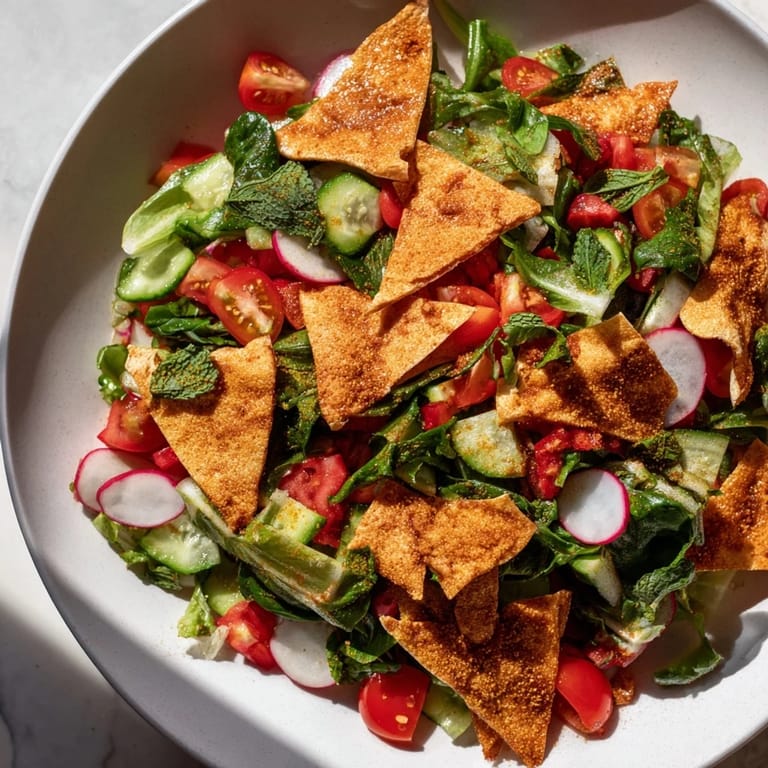
- Toss your pita pieces with olive oil, sea salt, and sumac until every piece gleams with coating. Spread them in a single layer and bake for 8-10 minutes, stirring halfway through, until they're golden and smell absolutely irresistible.
- Whisk the dressing:
- In a small bowl, combine olive oil, fresh lemon juice, red wine vinegar, sumac, minced garlic, salt, and pepper. Whisk until it emulsifies slightly and tastes bright enough to make your mouth water.
- Assemble the greens:
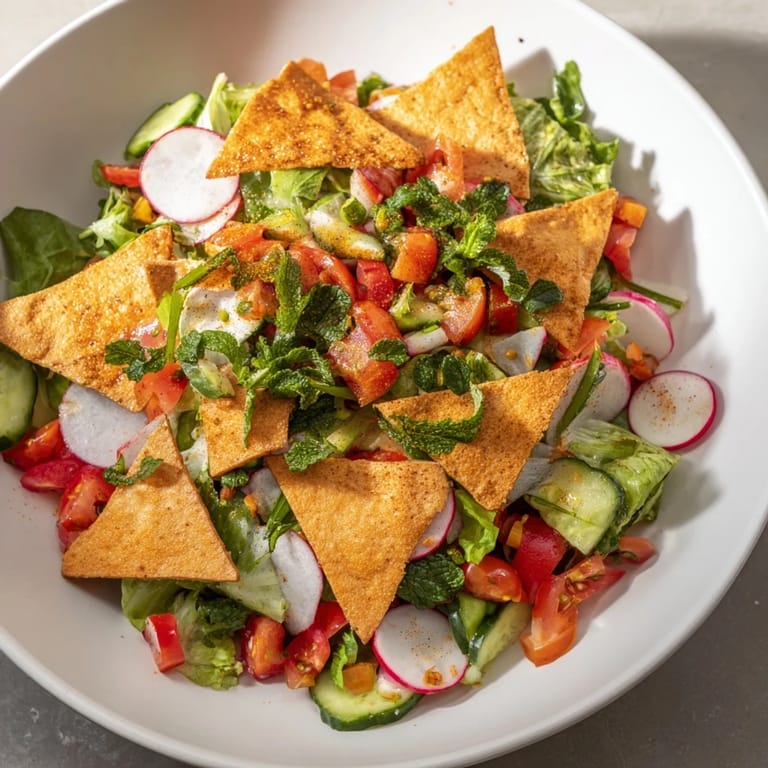
- In your largest salad bowl, combine all the greens, tomatoes, cucumber, bell pepper, radishes, green onions, parsley, and mint. The bowl should look abundant and chaotic at this point.
- Dress and toss:
- Drizzle the dressing over the salad and toss gently—this isn't a wrestling match, just enough movement to coat everything without bruising the delicate herbs.
- Add crunch at the last second:
- Crown your salad with cooled pita chips just before serving. This is non-negotiable if you want that crispy texture to survive the journey to the table.
 Save
Save There's something almost ceremonial about watching someone taste fattoush for the first time when they don't know about sumac yet. They pause mid-chew, confused and delighted, trying to name a flavor that doesn't quite match anything else they've encountered. It's proof that the best meals are the ones that make people curious.
The Sumac Secret
Sumac isn't just a spice—it's a flavor multiplier that makes vegetables sing without relying on salt or acid burn. If you've only ever tasted it at a Middle Eastern restaurant, you're missing out on bringing that specific brightness into your everyday cooking. Once you have a jar in your cabinet, you'll start sprinkling it on roasted vegetables, scrambled eggs, even plain yogurt. It becomes your secret weapon for dishes that taste like they took more effort than they actually did.
Timing and Temperature Matter
The temperature contrast in this salad is half the appeal—the cool, crisp vegetables against the warm, just-toasted pita chips create this conversation in your mouth. Getting the pita chips to that sweet spot where they're golden and crunchy requires paying attention during those 8-10 minutes; every oven behaves differently, so turn them at the midpoint and check for color. The dressing, meanwhile, comes together in under two minutes once you have your lemon juice squeezed and garlic minced, which is why this salad feels achievable even on a chaotic weeknight.
Making It Your Own
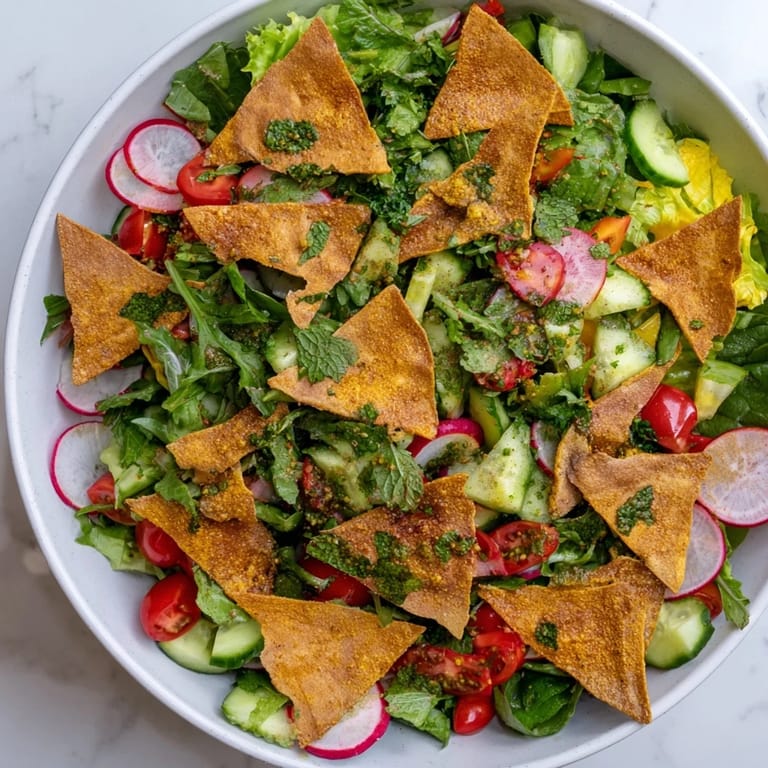
The beauty of fattoush is that it's flexible without becoming unrecognizable. If you have different vegetables on hand—diced zucchini, sliced fennel, shredded carrots—they'll all find a home here. Some people add crumbled feta or kalamata olives, and honestly, they're not wrong; the dairy-free version stands on its own, but a salty cheese component adds another layer of interest. The herbs are the non-negotiable foundation, though—parsley and mint together are what signal you're making something that tastes like the Mediterranean, not just a regular green salad.
- Swap any vegetables based on season and what your crisper contains.
- For a gluten-free version, use gluten-free pita or skip the chips entirely and add roasted chickpeas instead.
- Make extra dressing—you'll want it to drizzle over grilled meats or falafel later.
 Save
Save This is the kind of salad that reminds you why real food—food assembled with attention and a few good ingredients—tastes incomparably better than anything else. It's vibrant, it's quick, and it makes you feel transported, even when you're just standing in your own kitchen.
Recipe FAQs
- → What is sumac used for in this salad?
Sumac adds a tangy, lemony flavor that brightens the dressing and enhances the overall freshness of the salad.
- → How are the pita chips prepared?
Pita pieces are tossed with olive oil, sea salt, and sumac, then baked until golden and crispy to add crunch to the salad.
- → Can I make this salad gluten-free?
Yes, substitute pita bread with gluten-free alternatives or omit the chips altogether for a gluten-free variation.
- → What fresh herbs are included in the salad?
Fresh parsley and mint are added to provide bright herbal notes that complement the tangy dressing.
- → How should the salad be served to maintain crunch?
Add the crispy pita chips just before serving to keep their texture intact and prevent sogginess.