 Save
Save I'll never forget the moment I first saw a fractal tree arrangement at a gallery opening—not on a canvas, but on a magnificent charcuterie display. The artist had arranged cured meats, cheeses, and vegetables in a cascading pattern that echoed nature itself, and I was mesmerized. That night, I couldn't stop thinking about recreating that beauty in my own kitchen, turning an appetizer into edible art that would make guests pause and wonder before diving in.
The first time I assembled this centerpiece was for my sister's engagement party, and I watched her face light up when she saw it. Her friends spent twenty minutes just photographing it before the first bite, and that moment—when beauty and nourishment became one—taught me something about hospitality I'd never quite grasped before.
Ingredients
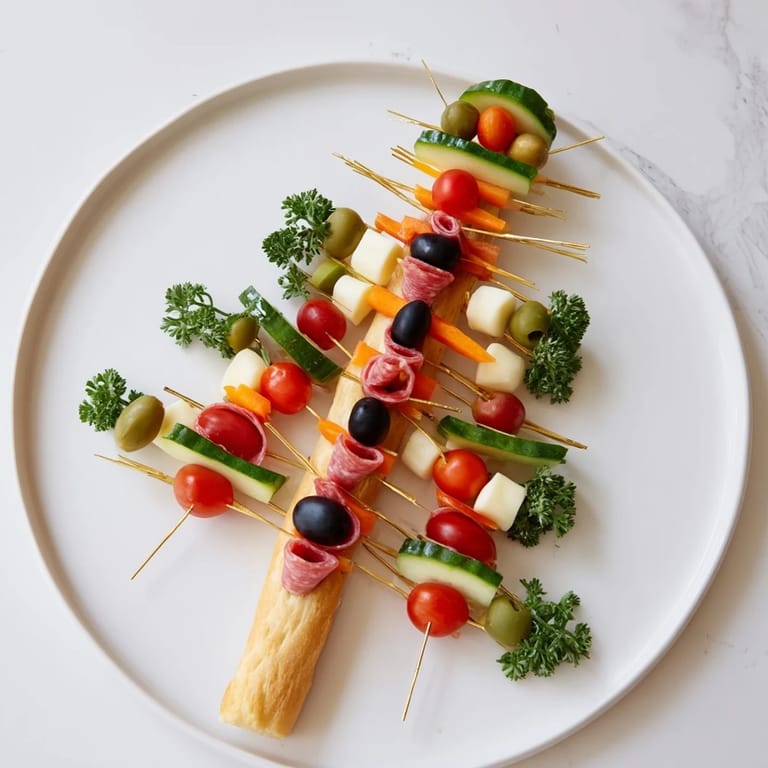
- 1 large breadstick (30 cm/12 inches long): This is your anchor, your tree trunk. Choose something sturdy—a good ciabatta or homemade stick works best because it won't roll or crumble under the weight of your branches. The quality of this single piece sets the tone for the entire structure.
- 8 thin grissini breadsticks (20 cm/8 inches long): These slender breadsticks become your main branches, so they need to be flexible enough to angle but sturdy enough not to snap. If you can't find perfect grissini, thin baguette slices work beautifully too.
- 8 wooden skewers (20 cm/8 inches, optional): These are your safety net. They provide extra structural support if your grissini feel fragile, making the whole arrangement foolproof.
- 16 cocktail sticks (10 cm/4 inches): The smaller picks that hold your vegetables and delicate elements. Having a few extras on hand is always smart—you'll inevitably want to adjust as you build.
- 12 baby carrots, peeled and trimmed: Look for carrots with vibrant orange color and firm texture. They're not just decoration—they're the backbone of your secondary branches, so choose ones of similar size for balance.
- 12 mini cucumbers or cucumber spears: Crisp and cool, these add a fresh green element. Slice them lengthwise if using regular cucumbers, and pat them completely dry so they don't weep moisture onto your display.
- 12 cherry tomatoes: The jewels of your arrangement. These should be ripe but still firm—slightly underripe is actually better here because they'll hold their shape through assembly and serving.
- 50 g hard cheese (aged gouda or cheddar), cut into cubes: These little golden blocks add richness and also serve as edible connectors, holding other elements in place. The slight saltiness is essential to the whole flavor story.
- 50 g mild cheese (mozzarella pearls): These delicate white spheres provide contrast and a creamy note. If you can't find pearls, cut fresh mozzarella into small cubes—they'll actually work even better as anchors.
- 50 g cured meats (thinly-sliced salami or prosciutto), rolled: The umami element that makes people close their eyes when they take a bite. Roll each slice tightly before skewering so it becomes like a little gift to unfurl as you eat.
- 12 green olives, pitted: These add a briny punch and visual pop. The pitting is important—unpitted olives are a choking hazard and complicate eating during mingling.
- 12 black olives, pitted: The darker counterpart, adding depth and visual drama. Mix them throughout so no section feels monotone.
- 1 small bunch fresh herbs (parsley, dill, microgreens): These are your tree's foliage—absolutely essential for that natural, alive quality. Add them last, right before serving, so they stay perky and vibrant.
Tired of Takeout? 🥡
Get 10 meals you can make faster than delivery arrives. Seriously.
One email. No spam. Unsubscribe anytime.
Instructions
- Clear your canvas and prep with intention:
- Find your largest, most stable platter—this needs to feel solid under your hands. Wash every vegetable under cold running water and pat dry with a clean towel until there's not a hint of moisture. Moisture is your enemy here; it makes everything slip and slide. Cut your cheese into uniform cubes about the size of a die—consistency here matters for visual harmony. If you're using cured meats, roll each slice tightly, almost like you're creating tiny scrolls. As you work, notice the colors in front of you: the oranges, greens, deep reds. You're not just preparing ingredients; you're sorting your palette.
- Plant your trunk with confidence:
- Take that main breadstick and position it on your platter. This is your anchor point, your tree's foundation. If you're feeling a little nervous about stability, place it at a slight diagonal rather than perfectly vertical—this actually looks more natural and is easier to balance. If it rolls, don't panic; wedge a small piece of bread or a cheese cube beneath it until it sits steady. This single piece needs to feel immovable because everything else will lean on it. Step back and admire it for a moment—you've just created the structure from which everything else will grow.
- Angle your main branches outward and upward:
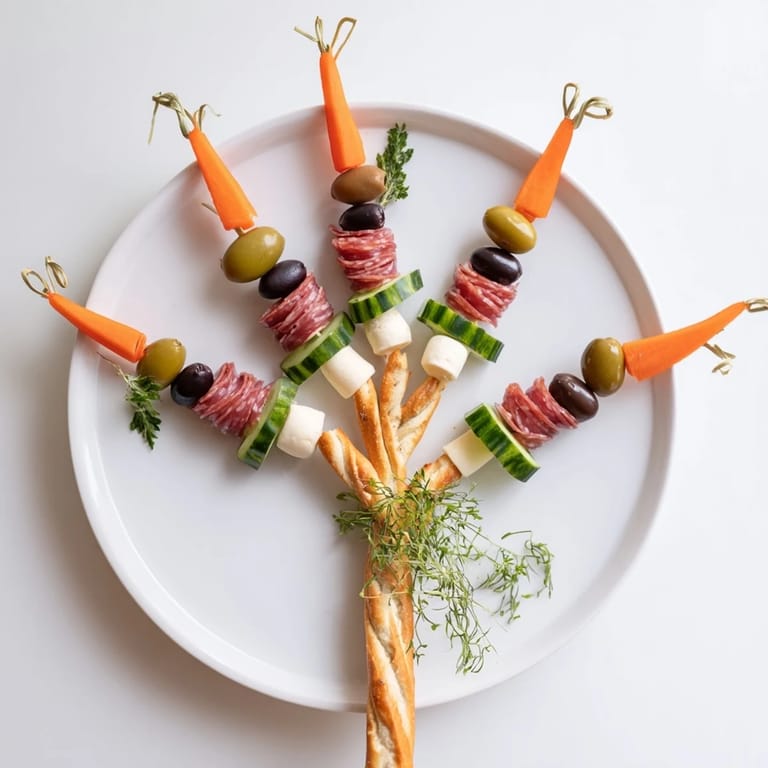
- Take your first grissini and position it under the trunk at roughly a forty-five-degree angle, as if it's reaching upward and outward. Repeat on the opposite side, then add branches angled slightly differently—some more upright, some wider. You're creating asymmetrical balance here, mimicking how real trees grow. If a grissini feels wobbly, lift it gently and tuck a tiny dab of soft cheese or a folded herb leaf underneath as an edible wedge. Gently touch each branch; it should feel secure and confident, like it's committed to its position.
- Thread and attach your secondary branches:
- Take a cocktail stick and thread it with a baby carrot, perhaps a cherry tomato, maybe a cucumber spear—be intentional about the order and color. These smaller branches now attach to your main grissini branches, inserted underneath or nestled against them. Each secondary branch should be shorter and more delicate than the main branch it's attached to. This is the magic of fractals—the pattern repeating in smaller and smaller iterations. Stand back frequently to see the overall shape emerging. You should be able to see the tree taking form, with clear lines of decreasing size and complexity.
- Crown with the tiniest treasures:
- Now your finest picks come out—the cheese cubes, the rolled cured meats, the olives. Thread these onto your smallest cocktail sticks or place them directly into the tiny gaps between other elements. These are your tree's outermost twigs and leaves. Fill the negative space without overcrowding; negative space is what makes this elegant rather than chaotic. Tuck small sprigs of fresh herbs in among everything, tucking them between branches so they look like they're growing naturally from the structure. Step back and look at the entire arrangement from multiple angles. Does it feel balanced? Are there any gaps that feel empty? Those are opportunities for final adjustment.
- Final inspection and service:
- Walk around your arrangement slowly, checking it from every side like you're admiring a sculpture. Adjust any elements that feel precarious. If any branch wobbles, add an extra cheese cube or reinforce with an herb wedge. This is your moment to make sure everything will remain beautiful as people reach in to pluck pieces. Serve immediately, with a small bowl of olive oil or your favorite dipping sauce nearby. Your creation is alive right now, in this moment—enjoy watching people interact with it, watching it slowly transform from a complete structure into a beautiful memory of sharing.
 Save
Save What I didn't expect was how this simple arrangement would become a metaphor for connection itself. Watching people reach in and pull pieces, discovering new flavor combinations, making conversation around something beautiful and edible—it reminded me why we cook. It's never really about feeding hunger; it's about creating moments where people feel welcomed and delighted.
Understanding the Fractal Pattern
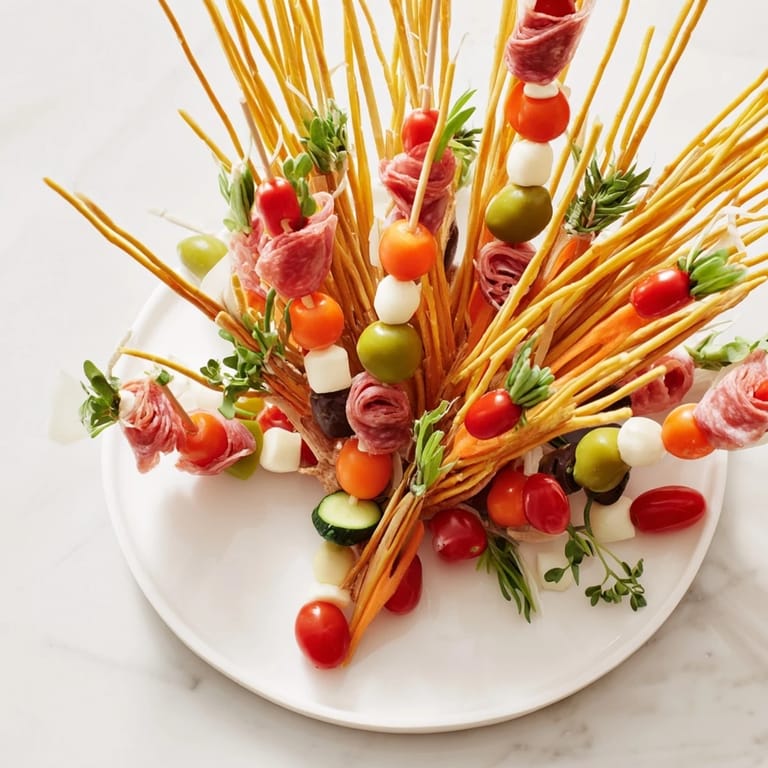
A fractal is a pattern that repeats at smaller and smaller scales, and nature is obsessed with them. Pine cones, ferns, the branches of trees themselves—they all follow this principle. When you build this centerpiece, you're not just arranging food; you're recreating something fundamental about how the natural world organizes itself. The central trunk divides into increasingly smaller branches, and each level echoes the structure of the whole. This isn't accident; it's geometry made delicious. Understanding this pattern helps you make intuitive decisions about what goes where, and it's why guests are often mesmerized—our eyes recognize this pattern even if our conscious minds don't quite understand why it feels so right.
Color, Texture, and Visual Balance
Think of this arrangement as a painting where your ingredients are your colors. You have deep greens from cucumbers and herbs, bright reds from tomatoes and maybe peppers, golden yellows from aged cheese, creamy whites from mozzarella, earthy browns from cured meats and the breadstick trunk. As you build, distribute these colors throughout rather than clumping them together. A section that's all red loses impact, but red distributed across multiple branches creates visual rhythm. Similarly, textures matter—the crisp crunch of fresh vegetables against the tender give of cured meats, the crumbly hard cheese beside creamy mozzarella. These contrasts aren't just about how it looks; they're about how it feels in your mouth, and that multisensory experience is what makes people remember this arrangement long after the last piece is eaten.
Variations, Timing, and Storage Wisdom
This arrangement thrives on flexibility. For a vegetarian version, simply omit the cured meats and add roasted red pepper strips, marinated artichokes, or sautéed mushrooms—the structure doesn't care, and the flavor story remains compelling. Gluten-free breadsticks work beautifully if you have guests with restrictions. You can assemble this up to four hours ahead if necessary, but wrap it tightly in plastic and refrigerate—add the fresh herbs only in the final moments before serving so they stay vibrant and alive. One crucial rule: never reheat or attempt to modify this after assembly. It's designed to be served fresh and at room temperature. If you're making this for an event where timing is tight, do a full practice run the day before. It takes less time than you think once you understand the structure, and the confidence that practice brings will shine through to your guests.
- Assemble as close to serving time as possible for maximum freshness and crispness of all elements.
- If you must prepare ahead, keep it covered and refrigerated, then add fresh herbs and do a final stability check right before serving.
- Keep this centerpiece away from direct sunlight or warm spots—you want ingredients to stay cool and firm, not wilted or warm.
 Save
Save This recipe isn't really about the ingredients or even the technique—it's about the joy of creating something beautiful with your own hands and watching people light up when they see it. That's the real nourishment.
Recipe FAQs
- → How do I keep the centerpiece stable during assembly?
Use a sturdy breadstick trunk and support branches with wooden skewers if needed. Secure joints with small cheese cubes or herb leaves as edible adhesives to maintain balance.
- → Can I substitute ingredients for dietary preferences?
Yes, for vegetarian options omit cured meats and add roasted peppers or marinated mushrooms. Gluten-free breadsticks also work well for alternative diets.
- → What is the best way to prepare the vegetables for easy assembly?
Trim and peel vegetables like baby carrots and mini cucumbers to create flat edges, ensuring they stay firmly on cocktail sticks without slipping.
- → How far in advance can I prepare this centerpiece?
Assemble just before serving for maximum freshness. If prepared earlier, wrap tightly and refrigerate; add fresh herbs last minute. Avoid reheating.
- → What serving accompaniments pair well with this display?
Serve alongside dipping sauces or olive oil to enhance flavors. Small bowls with herbed olive oil or tangy vinaigrettes complement the components nicely.
- → How do I maintain the visual appeal of the fractal branching?
Arrange branches in decreasing sizes with careful spacing and angle variation. Alternating colors and textures among vegetables, cheeses, and meats adds depth and interest.