 Save
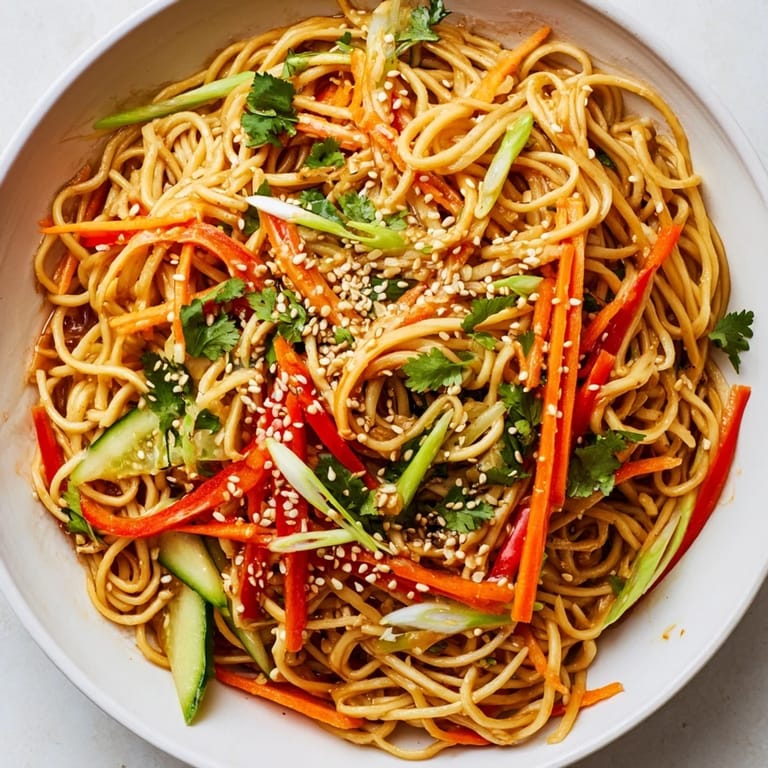
Save There's something magical about garlic noodles on a warm afternoon. I stumbled onto this dish during a particularly uninspired week when my fridge held nothing but noodles, carrots, and half a cucumber. Rather than order takeout, I decided to improvise—heating oil until the garlic turned golden and fragrant, then tossing it all together with whatever vegetables I had on hand. That simple act of stirring it all together transformed everything into something so much better than the sum of its parts. Now I make this whenever I need something bright, alive, and ready in under thirty minutes.
The first time I served this to friends was at a picnic on an unexpectedly hot Saturday. I packed it in a container, convinced it would taste flat by lunchtime. When I opened it and stirred the noodles—cold, glistening with garlic oil—my friend asked if I'd made it at a restaurant. I still remember laughing because I'd been too nervous to mention it was just noodles and whatever was on sale at the market.
Ingredients
- Dried wheat noodles (250 g): Lo mein, spaghetti, or soba all work, though I've learned that thinner noodles absorb the garlic oil better—they feel silkier when you twirl them.
- Neutral oil (3 tbsp): Grapeseed or vegetable oil has a high smoke point and won't overpower the garlic's delicate, toasted flavor.
- Garlic cloves (5 large, minced): The heart of this dish—don't skip mincing them fine, because bigger pieces turn bitter and overpowering.
- Toasted sesame oil (1 tsp): Just a whisper at the end, added after you remove the pan from heat so it keeps its nutty aroma.
- Carrots (1 cup, julienned): Cut them thin so they stay slightly crisp and absorb the dressing without becoming limp.
- Red bell pepper (1 cup, thinly sliced): The color matters as much as the sweetness—it brightens the whole bowl.
- Cucumber (1 cup, deseeded and julienned): Deseeding keeps it from watering down the dish as it sits.
- Spring onions (2, thinly sliced): A bit of raw onion sharpness keeps everything from feeling too rich.
- Fresh cilantro (1/2 cup, roughly chopped): Add it right before serving so it doesn't wilt into invisibility.
- Soy sauce (3 tbsp): Low sodium if you want room to taste the other flavors—this is seasoning, not drowning.
- Rice vinegar (1 tbsp): The brightness that makes you keep eating when you thought you were full.
- Honey or maple syrup (1 tsp): A tiny touch of sweetness that rounds out the salt and acid, nothing more.
- Chili flakes (1/2 tsp, optional): I learned this the hard way—add it to the dressing before tossing so the heat spreads evenly.
- Black pepper (to taste): Freshly ground, always.
- Toasted sesame seeds (2 tbsp): The final flourish that catches the light and makes people ask for the recipe.
- Lime wedges (optional): A squeeze at the end feels like you planned this all along.
Tired of Takeout? 🥡
Get 10 meals you can make faster than delivery arrives. Seriously.
One email. No spam. Unsubscribe anytime.
Instructions
- Bring the noodles to life:
- Fill a large pot with water and bring it to a rolling boil—you'll smell it before it's ready. Add the noodles and cook exactly to package instructions, stirring once halfway through so they don't stick. When they're done, drain them in a colander and run cold water over them, moving them gently with your fingers until they cool completely.
- Make the golden garlic oil:
- Pour the neutral oil into a small saucepan and set it over medium-low heat. Watch the oil carefully as it warms—you're looking for a shimmer, not a sizzle. Add the minced garlic slowly and listen; it should make a gentle, steady sound as it softens.
- Toast the garlic until it whispers:
- Keep stirring gently for 2 to 3 minutes, until the garlic turns pale golden and the whole kitchen smells like a warm hug. The moment it looks perfect, remove it from heat and stir in the sesame oil. Let it cool for a minute while you catch your breath.
- Build the dressing:
- In a small bowl, whisk together the soy sauce, rice vinegar, honey, chili flakes if you're using them, and a few cracks of black pepper. Taste it on your finger—it should make you pause, then lean in for more.
- Bring it all together:
- Pour the cooled garlic oil and dressing over your noodles and toss as if you're handling something precious. Make sure every strand gets coated and glistens. Then, add the carrots, bell pepper, cucumber, spring onions, and cilantro, tossing gently so nothing gets bruised.
- The final moment:
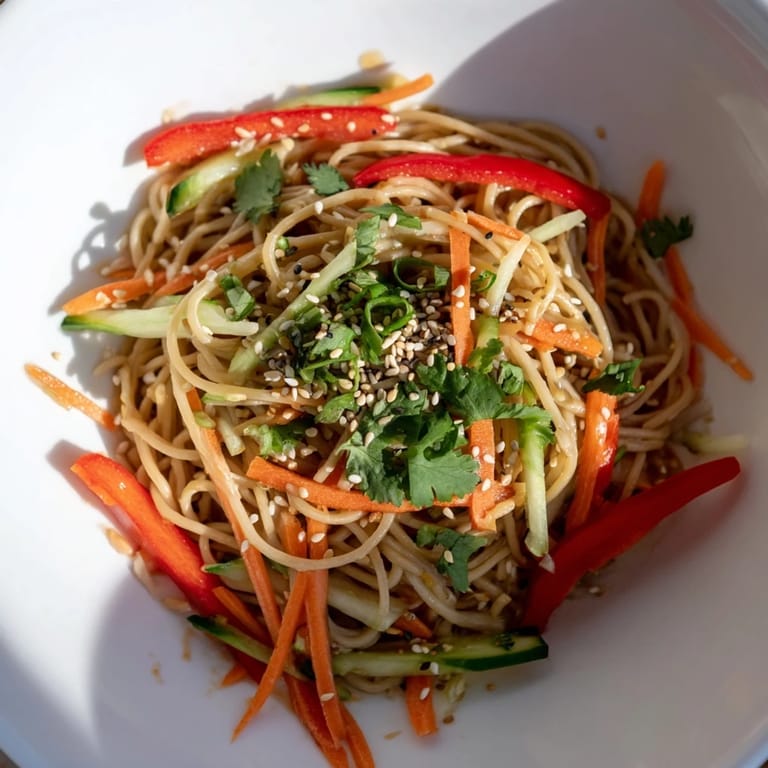
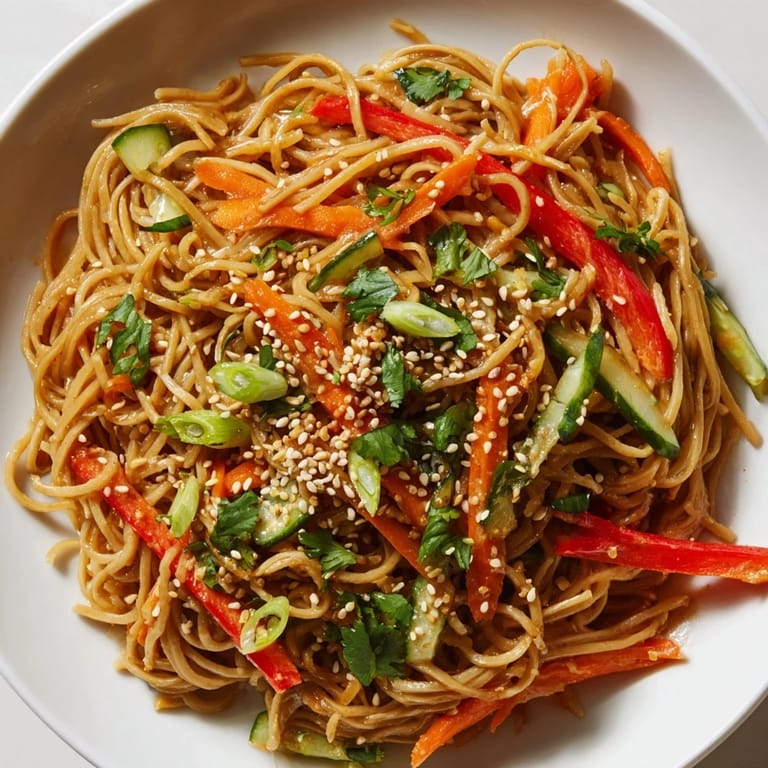
- Transfer everything to a serving platter or straight into bowls, then scatter the toasted sesame seeds across the top. If you have lime wedges, arrange them nearby like little promises of brightness.
 Save
Save I made this for a friend who was going through a rough season, and watching her face light up as she tasted it reminded me that sometimes the simplest food carries the most meaning. She came back the next week asking if I could teach her how to make it, and now it's part of her regular rotation too.
The Magic of Garlic Oil
The garlic oil is what separates this from a basic vegetable noodle dish. When you heat oil with garlic slowly over gentle heat, something alchemical happens—the garlic releases its sulfurous bite and becomes something soft, sweet, and almost caramel-like. This is where patience matters. Rush it and you get burnt, bitter notes that feel aggressive on your tongue. Take your time and you get this golden, fragrant elixir that clings to every noodle and makes them sing.
Timing and Temperature
Cold noodles are the entire premise of this dish. When noodles are warm, the vegetables wilt into the heat, and the dressing breaks down into something thin and forgettable. When everything is cold, the noodles stay silky, the vegetables stay crisp, and the flavors stay distinct. I once made this with warm noodles because I was impatient, and it tasted like I was eating a warm salad instead of the bright, alive dish it's meant to be.
What Makes It Yours
This recipe is a canvas, not a rule book. Some nights I add shredded cooked chicken or crumbled tofu for protein. Other times I throw in snap peas or shredded cabbage when that's what I have. Once, I added a drizzle of chili-garlic paste because I was feeling bold, and it became my favorite version.
- If you're cooking for someone with dietary restrictions, swap the soy sauce for tamari and use gluten-free noodles—the dish loses nothing.
- Leftovers actually taste better the next day once the flavors settle, so make extra if you can.
- If you're serving it at a picnic or potluck, keep the cilantro and sesame seeds separate so they don't wilt, then add them just before eating.
 Save
Save There's a reason I come back to this recipe again and again. It asks for nothing but noodles and whatever's in your kitchen, and it gives back something that tastes like care. Make it when you need to impress someone with minimal effort, or make it when you just need something real.
Recipe FAQs
- → What type of noodles work best for this dish?
Dried wheat noodles like lo mein, spaghetti, or soba work well. For gluten-free options, substitute with rice or gluten-free noodles.
- → How is the garlic oil prepared for this salad?
The garlic is gently cooked in neutral oil until golden and fragrant, then mixed with toasted sesame oil to add depth and aroma.
- → Can I add protein to this dish?
Yes, shredded cooked chicken, tofu, or edamame can be added to enhance the dish and make it more filling.
- → What vegetables are included and can they be substituted?
This salad includes julienned carrots, red bell pepper, cucumber, spring onions, and cilantro. You can swap in snap peas, radish, or shredded cabbage as preferred.
- → How should leftovers be stored and how long do they keep?
Store leftovers in an airtight container in the refrigerator for up to 2 days. Toss gently before serving to redistribute flavors.