 Save
Save My neighbor dropped by one evening with fresh dill from her garden, and I had just bought beautiful cod fillets at the market. She stood in my kitchen watching me work, and within minutes we'd created something that felt effortlessly elegant—herb-crusted cod that cooked while vegetables caramelized on the same sheet. It became our go-to when we wanted something that looked impressive but tasted like comfort.
I made this for my sister's dinner party last spring when everyone was tired of heavy food. She brought someone new, and halfway through the meal I noticed them asking for the recipe—that moment when you realize you've created something that resonates with people is always special.
Ingredients
- Cod fillets (4 fillets, about 150g each): Look for fillets that are roughly the same thickness so they cook evenly; if yours are thicker than an inch, gently pound them with the heel of your hand to even them out.
- Fresh parsley (1/2 cup, finely chopped): This is your base herb—it's forgiving and bright, and honestly half the appeal is how green it makes everything look.
- Fresh dill (2 tablespoons): Dill with fish is non-negotiable; it's almost like they were meant for each other, and the freshness cuts through the richness beautifully.
- Fresh chives (2 tablespoons): A gentle onion note without the bite; they keep everything tasting refined and fresh.
- Lemon zest (2 teaspoons from 1 lemon): Use a microplane if you have one—it gives you fine, fluffy zest that actually incorporates into the crust rather than big bitter pieces.
- Garlic (2 cloves, minced): Raw garlic brings a quiet intensity that grounds all those tender herbs.
- Gluten-free breadcrumbs (3 tablespoons): They're just there to give the crust texture and help everything adhere; regular breadcrumbs work fine if that's what you have.
- Parmesan cheese (2 tablespoons, optional): It adds umami and helps the crust brown more evenly, but skip it if dairy isn't your thing.
- Carrots (2 medium, sliced into rounds): They take longer to roast than other veg, so cutting them on the diagonal or into thinner pieces helps them cook through.
- Red bell pepper (1, seeded and chopped): The sweetness is lovely next to the fish, and it stays slightly firm with a little char on the edges.
- Zucchini (1, sliced): It releases water as it cooks, so don't worry if it looks a bit loose at first—it'll settle down.
- Red onion (1, cut into wedges): The natural sugars caramelize beautifully, turning everything sweet and mellow.
- Olive oil (3 tablespoons total, divided): Two tablespoons go to the vegetables, one to the fish; good quality matters here since there's nowhere for it to hide.
- Dried thyme (1 teaspoon): It's earthy and warm, the kind of seasoning that makes roasted vegetables sing.
- Salt and pepper: Season in layers—vegetables first, then the fish—and you'll get better flavor throughout.
- Lemon wedges (for serving): A squeeze right before eating brings everything into focus.
Tired of Takeout? 🥡
Get 10 meals you can make faster than delivery arrives. Seriously.
One email. No spam. Unsubscribe anytime.
Instructions
- Heat your oven and prepare:
- Turn your oven to 400°F and line a large baking sheet with parchment paper; this matters because it means nothing sticks and everything browns evenly. If you don't have parchment, a light oil coating works, but honestly parchment is worth it.
- Toss and spread the vegetables:
- In a big bowl, combine your carrots, bell pepper, zucchini, and red onion with the two tablespoons of olive oil, the dried thyme, salt, and pepper until everything's lightly coated. Spread them in a single layer on your prepared sheet, trying not to crowd them too much—they need room to breathe and brown.
- Get the vegetables started:
- Roast for 10 minutes while you work on everything else; this head start means they'll be perfectly tender when the fish is done. Listen for a gentle sizzle—that's your cue they're browning nicely.
- Build your herb crust:
- In a small bowl, mix together your chopped parsley, dill, chives, lemon zest, minced garlic, breadcrumbs, and Parmesan if you're using it. It should feel almost like damp sand—everything combined but still with a little texture.
- Prepare your cod:
- Pat your cod fillets completely dry with paper towels; moisture is the enemy of a good crust. Brush both sides lightly with the remaining tablespoon of olive oil and season generously with salt and pepper on both sides.
- Crown with herbs:
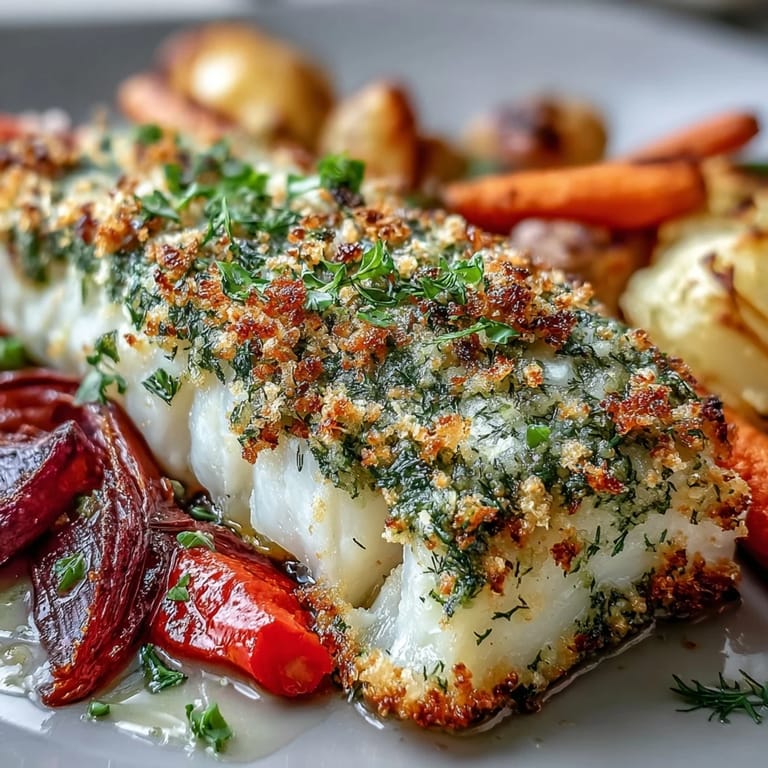
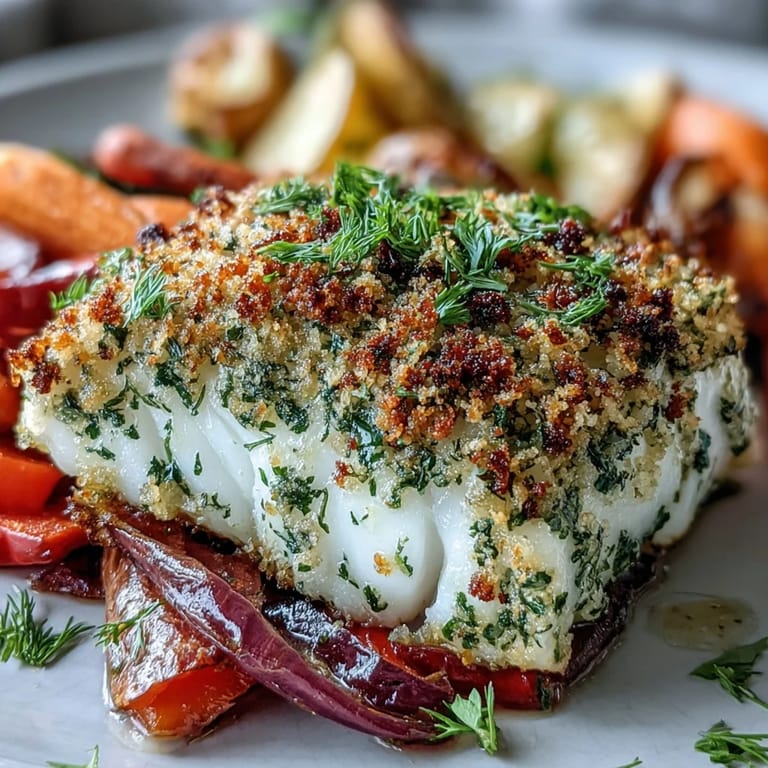
- Press the herb mixture firmly onto the top of each fillet, making sure it's packed on there so it won't fall off during cooking. Don't leave bare spots; the crust is going to protect the delicate fish and keep it moist.
- Add fish to the pan:
- Pull the baking sheet with the partially roasted vegetables out of the oven, push the vegetables gently to one side, and nestle your herb-crusted fillets on the open space. You want them in a single layer, not touching, so hot air can flow around them.
- Finish baking:
- Return everything to the oven for 15 more minutes; the fish is done when it's opaque all the way through and flakes easily with a fork when you test the thickest part. The vegetables should be tender with some caramelized edges—that's when everything tastes its best.
- Serve while warm:
- Transfer the cod and vegetables to plates, add lemon wedges on the side, and serve immediately while the crust is still crispy and the fish is steaming hot. A squeeze of fresh lemon right before eating ties everything together.
 Save
Save There's something about serving a whole sheet pan meal that makes people feel cared for—like you've created an edible landscape just for them. The colors alone tell the story of what you've made.
The Magic of One-Pan Cooking
Cooking everything on one sheet isn't just convenient; it's actually better. The fish cooks gently above the caramelizing vegetables, and those roasted bits add flavor to everything through steam and proximity. It's one of those techniques that makes you look like you know what you're doing without requiring any special skill—just timing.
Why Fresh Herbs Make All the Difference
I've made this with dried herbs when fresh weren't available, and it's competent but somehow flatter. Fresh parsley, dill, and chives have a brightness that dried herbs can't replicate; they're alive in a way that transforms simple fish into something memorable. If you can only get dried herbs, use about half the amount and toast them briefly in a dry pan first to wake them up.
Making It Your Own
This recipe is a foundation, not a rule book. I've made it with halibut when cod wasn't available, swapped zucchini for asparagus, and once added cherry tomatoes just because I had them. The structure stays the same but the flavors shift based on what looks good at the market that day.
- If you want more color, add a handful of cherry tomatoes in the last few minutes of roasting, or toss in some asparagus spears alongside the other vegetables.
- Swap the fish for haddock, halibut, or even thick salmon fillets if that's what speaks to you—just adjust baking time if the fillets are much thicker than the cod.
- For dairy-free, simply leave out the Parmesan and the crust will still be delicious and crispy.
 Save
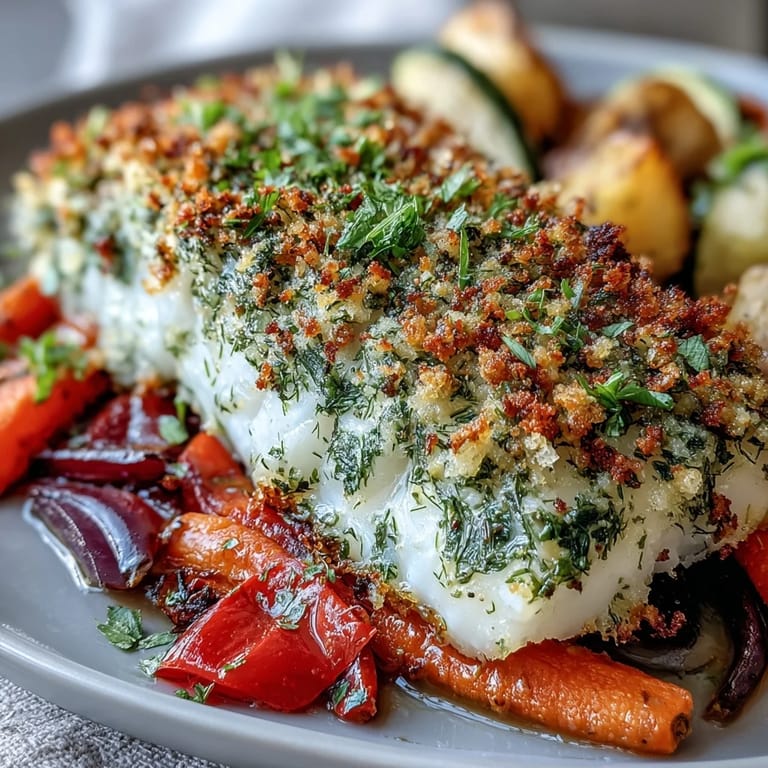
Save This meal has become my answer to the question of what to cook when you want something that feels special but doesn't require hours in the kitchen. It's the kind of dish that reminds you why cooking for people matters.
Recipe FAQs
- → Can I use frozen cod fillets?
Yes, thaw frozen cod completely in the refrigerator before patting dry and applying the herb crust. Excess moisture prevents proper crust adhesion, so ensure fillets are thoroughly dried with paper towels.
- → What other fish work well?
Haddock, halibut, sea bass, or mahi-mahi make excellent substitutes. Choose firm white fillets of similar thickness to ensure even cooking. Adjust baking time slightly for thicker cuts.
- → How do I know when the fish is done?
Insert a fork into the thickest part—it should flake easily with minimal resistance. The flesh will turn opaque white throughout and reach an internal temperature of 145°F. Avoid overcooking for the most tender texture.
- → Can I prepare the herb crust ahead?
Mix the herb crust ingredients up to a day in advance and store in an airtight container. Keep refrigerated until ready to use. For best results, press onto fish just before baking rather than storing it on the fillets.
- → What vegetables roast well with cod?
Root vegetables like parsnips, sweet potatoes, and beets work beautifully. Asparagus, green beans, or cherry tomatoes can be added during the last 10 minutes to prevent overcooking. Keep pieces uniform for even roasting.
- → Is this suitable for meal prep?
Cooked portions refrigerate well for 2-3 days. Reheat gently in a 350°F oven for 10-12 minutes until warmed through. Avoid microwaving, which can make the fish rubbery. Store with a squeeze of fresh lemon to maintain flavor.