 Save
Save I discovered this salmon salad on a Wednesday afternoon when my fridge was nearly bare but my herb garden was overflowing. Standing at the kitchen counter with a handful of fresh dill and parsley, I realized I could turn a simple salmon fillet into something that felt restaurant-quality without any fuss. The herb paste came together so quickly, and watching it bake while I assembled the salad felt like the kind of cooking I actually do on weeknights—minimal stress, maximum flavor.
My neighbor stopped by just as I was plating this for dinner, and the aroma of those herbs roasting with salmon drew her into the kitchen. She stayed for a plate, and we ended up talking for an hour over this salad, realizing how a simple meal can become a moment worth sharing. That's when I knew this recipe was worth making again and again.
Ingredients
- Salmon fillets (4, about 150g each), skinless: Look for fillets that smell ocean-fresh and have a slight sheen—this is where half your flavor comes from, so quality matters here.
- Olive oil (2 tbsp): Use regular olive oil for the herb paste; it helps carry all those flavors right into the fish without burning.
- Dijon mustard (2 tsp): This adds a subtle tang that plays beautifully with the lemon and herbs, don't skip it.
- Lemon juice (1 tbsp): Fresh is non-negotiable—bottled juice won't give you that bright, living quality.
- Fresh parsley, dill, and chives (1 tbsp each, finely chopped): These three together create the soul of the dish; if you only have two, use more of what you have.
- Garlic powder (1 tsp): This rounds out the herb flavor and adds earthiness without the raw bite of fresh garlic.
- Salt and black pepper (1/2 tsp each): Season boldly here since the salmon absorbs it beautifully.
- Mixed salad greens (120g or 4 cups): Use whatever you love—arugula adds peppery notes, spinach brings earthiness, romaine gives you crunch.
- Cherry tomatoes (1 cup, halved): Halve them right before serving so their juices don't weep into the salad too early.
- English cucumber (1/2, sliced): English cucumbers are milder and have fewer seeds, so they don't water down your salad.
- Red onion (1/4, thinly sliced): This adds bite and color; soak it in cold water for 10 minutes if you want it gentler.
- Toasted walnuts or almonds (1/4 cup, optional): Toast them yourself if you can—the difference in flavor is worth those extra minutes.
- Feta cheese (60g or 1/4 cup, crumbled, optional): Quality feta makes all the difference; cheap crumbles turn to dust, so choose carefully.
- Extra-virgin olive oil (3 tbsp): This is for your vinaigrette, where it shines bright—don't waste good oil on cooking.
- White wine vinegar or lemon juice (1 tbsp): White wine vinegar is mellower than other vinegars and won't overwhelm the delicate salmon.
- Honey or maple syrup (1 tsp): A tiny touch of sweetness balances the acid and makes the dressing cling to every leaf.
- Dijon mustard (1 tsp for the vinaigrette): This acts as an emulsifier, helping all your oil and vinegar become friends instead of separating.
Tired of Takeout? 🥡
Get 10 meals you can make faster than delivery arrives. Seriously.
One email. No spam. Unsubscribe anytime.
Instructions
- Heat your oven and prep your stage:
- Set the oven to 200°C (400°F) and line your baking sheet with parchment paper—this keeps the salmon from sticking and makes cleanup effortless. You want everything ready to go so you're not fumbling once you've seasoned the fish.
- Build your herb paste:
- In a small bowl, whisk together the olive oil, Dijon mustard, lemon juice, chopped parsley, dill, chives, garlic powder, salt, and pepper until it looks like loose, herbaceous sand. The mustard helps it all emulsify, so don't skip whisking it in fully.
- Coat the salmon:
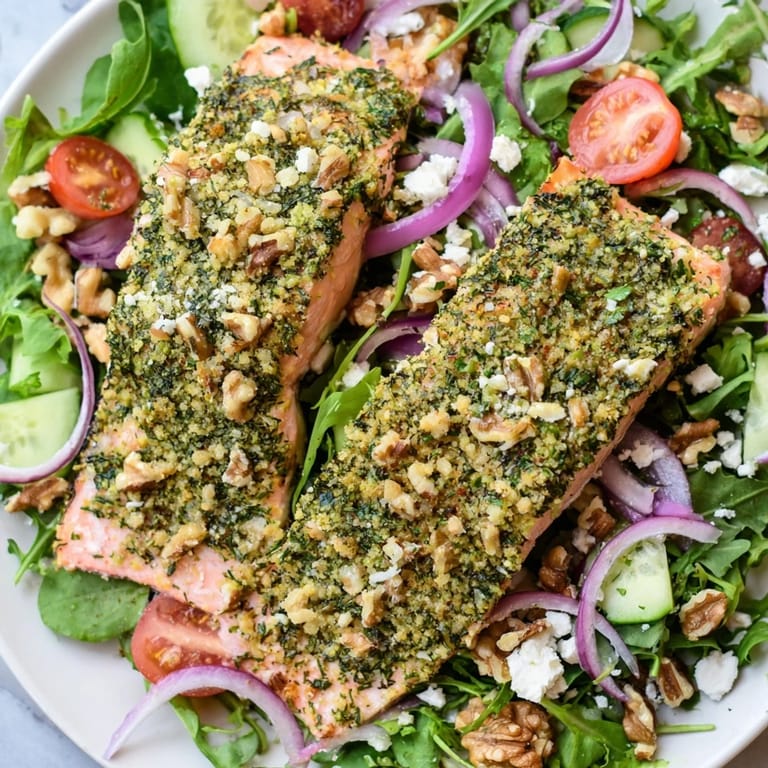
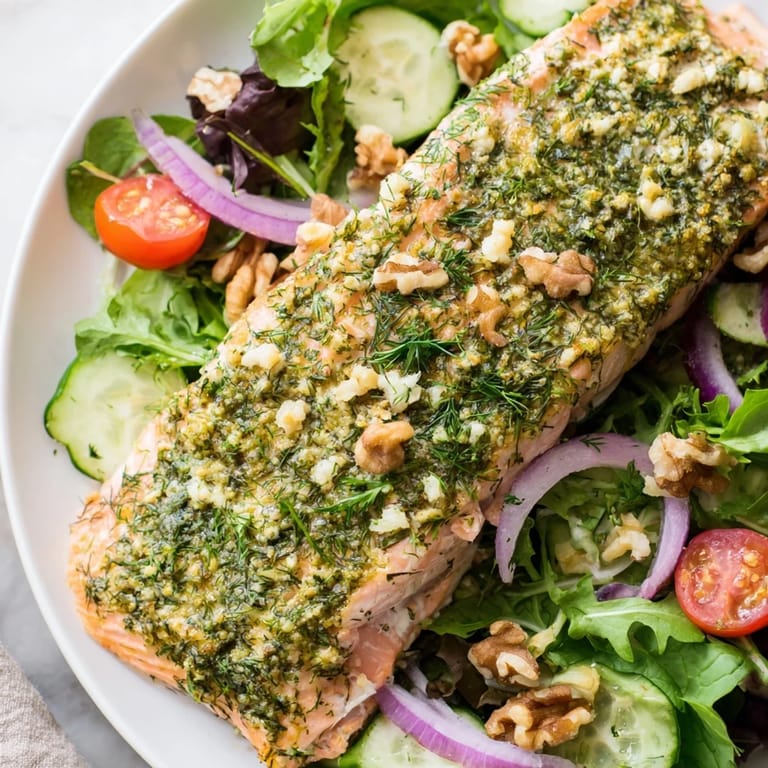
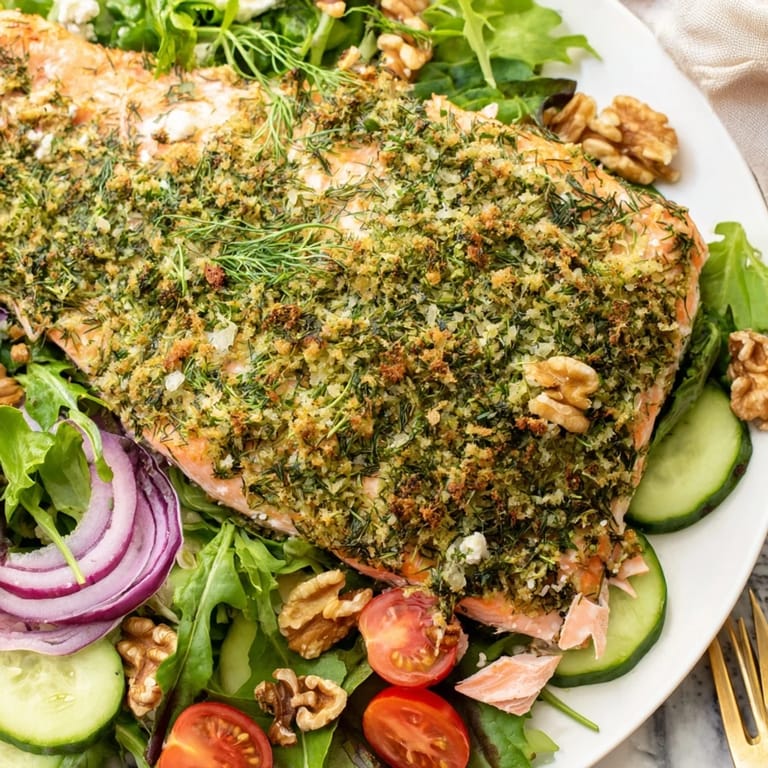
- Place your salmon fillets on the parchment and spread the herb paste generously across the top of each one, like you're icing a cake. The paste should coat the fish evenly so every bite gets the herb flavor.
- Roast until just cooked:
- Bake for 12 to 15 minutes—you're looking for the fish to flake easily with a fork and have that moist, tender texture. Overcooked salmon turns dry and sad, so keep an eye on it in those last few minutes.
- Assemble your salad base:
- While the salmon roasts, combine your mixed greens, halved tomatoes, sliced cucumber, thinly sliced red onion, nuts, and crumbled feta in a large bowl. Don't dress it yet or it'll wilt and weep while you wait for the salmon.
- Make your vinaigrette:
- In a small bowl, whisk the extra-virgin olive oil, vinegar or lemon juice, honey, and Dijon mustard together until slightly thickened, then season with salt and pepper to taste. A proper vinaigrette should taste bright and balanced, not aggressively acidic or oil-heavy.
- Dress and plate:
- Drizzle the vinaigrette over your salad and toss gently so everything is coated without bruising the greens. Divide the salad among four plates and crown each pile with a warm salmon fillet, then serve immediately so the warmth meets the cool crispness.
 Save
Save There's something that happens when you place warm salmon on cool salad and take that first bite—the herbs bloom with the heat, the salmon is tender and buttery, and suddenly you're eating something that tastes like care. That's the moment this dish stopped being just another Wednesday dinner and became something I reach for whenever I want to feel like I'm treating myself.
Timing and Temperature Matter
I learned the hard way that cold salmon fillet straight from the fridge takes longer to cook evenly. Now I let mine sit at room temperature for about 5 minutes before baking—it ensures the inside is perfectly cooked when the outside is golden. The temperature difference between the warm fish and cool salad is intentional and magical, so don't skip either step.
Variations and Swaps That Work
This salad is forgiving once you understand its bones. I've made it with trout when salmon wasn't available, and it was just as good. Sea bass, halibut, or even swordfish all work beautifully with the same herb treatment and cooking time. Beyond the fish, you can swap the greens, add sliced avocado, toss in cooked quinoa, or swap feta for goat cheese.
Pairing and Serving Thoughts
This salad shines on warm days when you want something nourishing but not heavy, though it's equally welcome in cooler months when roasted warm salmon feels comforting. A crisp Sauvignon Blanc pairs beautifully with the herbs and lemon, or keep it simple with sparkling water and a lemon wedge. If you're feeding a crowd, make the vinaigrette and herb paste ahead and bake the salmon just before serving so it's hot and at its best.
- You can prep the salad greens and vinaigrette the morning of and store them separately until you're ready to eat.
- The herb paste keeps in the fridge for a day or two, so make extra if you want an easier dinner tomorrow night.
- Scale this up or down easily—the ratios stay true whether you're cooking for two or ten.
 Save
Save This herb-crusted salmon salad has become my answer to 'what's for dinner' because it's simple enough for any night and special enough for someone you want to impress. It reminds me that the best meals don't need complexity—just fresh ingredients, a little care, and the willingness to let each component shine.
Recipe FAQs
- → How do I make the herb crust for the salmon?
Mix olive oil, Dijon mustard, lemon juice, chopped parsley, dill, chives, garlic powder, salt, and pepper to create a fresh herb paste that coats the salmon.
- → What is the best way to bake the salmon?
Preheat the oven to 200°C (400°F) and bake the herb-coated salmon fillets on a parchment-lined sheet for 12–15 minutes until they flake easily.
- → Can I substitute the salmon with another fish?
Yes, trout or other firm fish varieties work well when prepared with the same herb crust and baking method.
- → What salad ingredients pair well with the salmon?
Mixed greens like arugula and spinach, cherry tomatoes, cucumber, red onion, and optional toasted nuts or crumbled feta complement the dish beautifully.
- → How is the vinaigrette prepared?
Whisk together extra-virgin olive oil, white wine vinegar or lemon juice, honey or maple syrup, Dijon mustard, salt, and pepper for a bright, tangy dressing.
- → Can this dish accommodate dietary restrictions?
Yes, it suits pescatarian and gluten-free diets. Omit nuts or cheese to reduce allergen concerns.