 Save
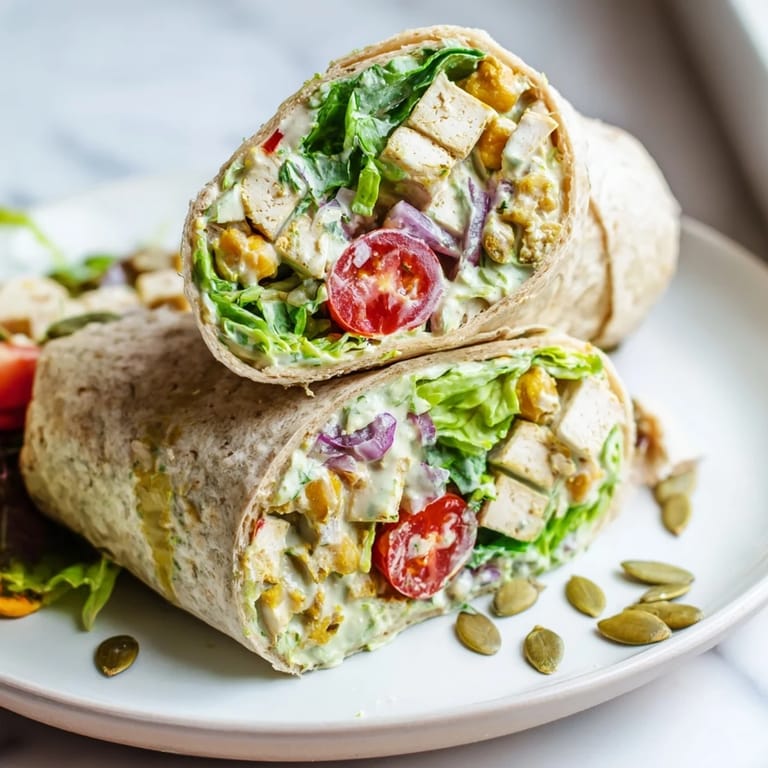
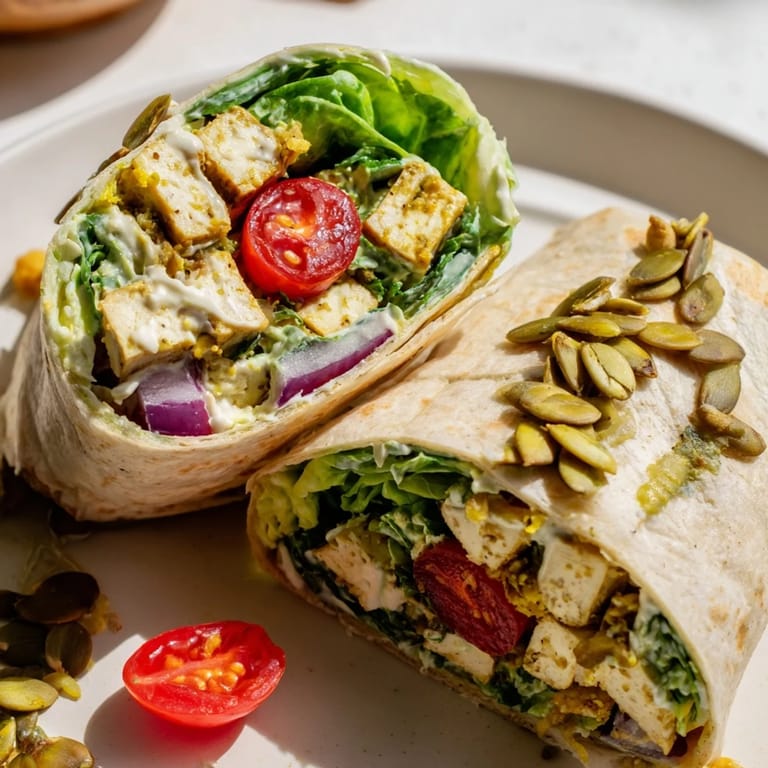
Save I was tired of the same lunch rotation when a friend brought over a Caesar wrap filled with chickpeas and tofu instead of the usual chicken breast. One bite changed everything—the protein was there, the flavor was undeniable, and suddenly I wasn't wrestling with another bland meal. That afternoon, I realized Caesar doesn't need meat to work; it just needs the right combination of textures and that bold, garlicky dressing that makes everything sing. Now this wrap is what I reach for when I need something satisfying that doesn't feel like a compromise.
Last week I made this for my sister who's been experimenting with eating less meat, and watching her surprise at how hearty it was made my day. She actually asked for the recipe, which hardly ever happens. That's when I knew this wasn't just a work lunch hack anymore—it was something worth sharing with the people who matter.
Ingredients
- Chickpeas: The backbone of your protein—they're meaty enough when pressed slightly, with just enough give to feel substantial without being dense.
- Extra-firm tofu: Press it dry first, then cube it small so it absorbs flavor and creates little pockets of texture throughout the wrap.
- Whole wheat or spinach wraps: Choose ones sturdy enough to hold everything without tearing; flimsy wraps are the enemy of a good wrap experience.
- Romaine lettuce: Use the inner leaves where they're tender but still crisp—the pale green ones are worth hunting for.
- Cherry tomatoes: Halve them so they don't roll around and create wet spots; their natural sweetness balances the savory dressing.
- Red onion: Slice it thin and don't skip it—that bite is what keeps the wrap from feeling flat.
- Greek yogurt: The secret to a creamy dressing without the heaviness; use plain, full-fat if you can find it.
- Lemon juice: Fresh only—bottled will taste tinny and undermine everything you're building here.
- Dijon mustard: Just a teaspoon, but it's the silent player that brings depth and keeps the dressing from being one-note.
- Worcestershire sauce: A vegetarian version is essential; it adds that umami depth that makes people wonder what you did.
- Garlic: One small clove, minced fine—too much and it overpowers, too little and you lose the Caesar magic.
- Parmesan cheese: Grate it fresh if possible; pre-grated versions have weird coatings that prevent them from melting into the dressing.
- Sunflower or pumpkin seeds: Roasted, salted ones add the crunch that makes this wrap feel complete.
Tired of Takeout? 🥡
Get 10 meals you can make faster than delivery arrives. Seriously.
One email. No spam. Unsubscribe anytime.
Instructions
- Prep your proteins with intention:
- Drain and rinse your chickpeas until the water runs clear—cloudy water means starch that'll make everything mushy. Press your tofu between paper towels with something heavy on top for five minutes, then cut it into small cubes so it has surface area to absorb flavor.
- Make the dressing while everything's cold:
- Whisk the yogurt, oil, and lemon juice together until smooth, then add the mustard, Worcestershire, and minced garlic. Fold in the Parmesan last so it stays suspended throughout instead of sinking to the bottom.
- Build the mixture with care:
- Toss the chickpeas and tofu together gently—you want them to stay distinct, not turn into a paste. Add your lettuce, tomatoes, and onion, then drizzle the dressing over everything and fold it together slowly, making sure every piece gets coated without crushing the delicate greens.
- Fill and roll with confidence:
- Lay your wrap flat on a clean surface, divide the filling evenly between the two, and sprinkle seeds over the top. Fold the bottom edge up first to contain the filling, then roll from one side, keeping pressure even so nothing slips out.
- Finish and serve:
- Slice each wrap in half on an angle so it looks inviting, and eat immediately while the wrap is still pliable and the lettuce is at peak crispness.
 Save
Save There's something quietly satisfying about a meal that's this good for you but doesn't taste like virtue—it just tastes like lunch done right. That's what this wrap became for me, and why I keep making it week after week.
The Caesar Question
When I first heard the idea of a Caesar salad without chicken, my brain resisted for a moment. But Caesar was never about the meat—it's always been about the interplay of garlicky, briny, creamy richness against crisp greens and that punch of acid. Chickpeas and tofu respect that tradition while bringing their own texture and substance to the table. The dressing still does all the heavy lifting it always has; the protein just gets out of the way and lets it shine.
Why This Works as a Wrap
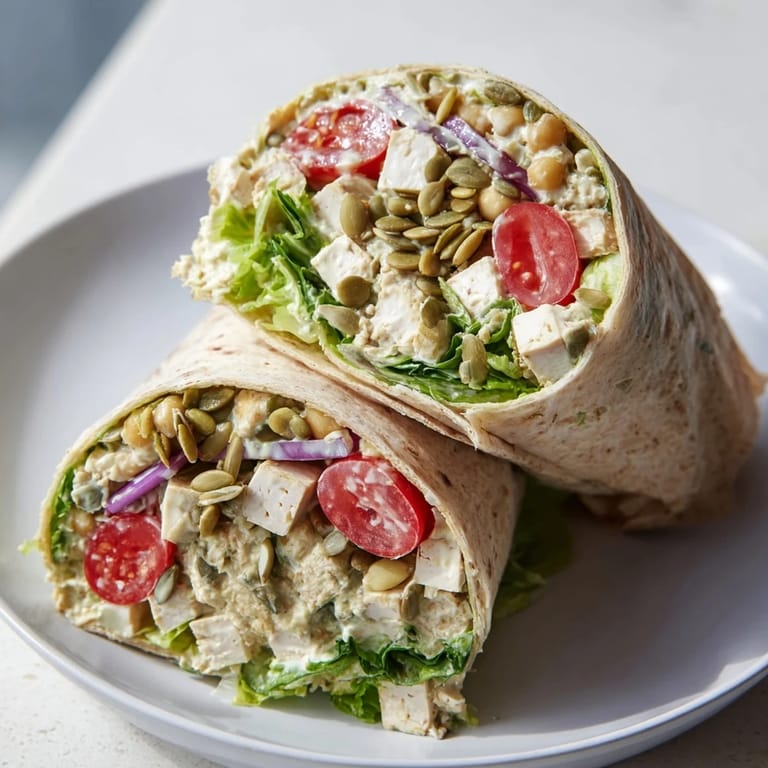
A wrap forces you to think about proportion in a way a salad never does—every bite needs to contain a bit of everything, which means the flavors stay in balance from start to finish. The wrap itself becomes structural; it holds everything together and adds its own mild grain flavor that echoes the wheat underneath. Plus, a wrap is portable in a way that matters, whether you're eating at your desk or taking it to a picnic where you can't exactly sit with a bowl and a fork.
Building Your Own Variations
The beauty of this wrap is how flexible it is once you understand the framework. The Caesar dressing is non-negotiable, and you need two sources of protein, but beyond that you have room to play. I've added avocado on mornings when I wanted richness, roasted chickpeas for extra crunch, or even some pickled vegetables when I felt like brightness. The core stays the same, but it never feels repetitive because the possibilities are genuinely open.
- Try adding sliced avocado or even a thin layer of hummus for creaminess without relying on more dressing.
- Make extra roasted chickpeas as a topping—toss them with smoked paprika and they become something special.
- Keep a container of this dressing in your fridge; it's excellent on grain bowls, roasted vegetables, or even as a dip for raw snap peas.
 Save
Save This wrap taught me that satisfying eating doesn't require the same old script. Sometimes the best meals are the ones that surprise you with how complete they feel.
Recipe FAQs
- → What protein sources are used in this wrap?
Chickpeas and extra-firm tofu provide the primary plant-based protein, creating a hearty filling.
- → How is the dressing made?
The dressing combines Greek or plant-based yogurt with olive oil, lemon juice, Dijon mustard, vegetarian Worcestershire sauce, garlic, and grated Parmesan for creamy, tangy flavor.
- → Can this wrap be made vegan?
Yes, by using dairy-free yogurt and vegan Parmesan alternatives, the wrap remains fully plant-based and suitable for vegans.
- → What wraps are recommended?
Whole wheat or spinach tortillas work well, but gluten-free options can be used to meet dietary needs.
- → How should the wrap be served or stored?
Serve immediately for freshness or wrap tightly in foil for convenient on-the-go meals.
- → Are there any suggested add-ons?
Adding sliced avocado or roasted chickpeas enhances flavor and texture.