 Save
Save I discovered microwave pasta on a Tuesday night when my stovetop decided to stop working, and I was too stubborn to order takeout. A bowl, some dried penne, water, and eight minutes later, I had something that tasted nearly as good as my usual pasta—and I'd saved myself from the chaos of pots boiling over. Now it's my go-to move whenever I'm in a rush or cooking solo, and honestly, it's become one of those kitchen tricks I keep coming back to.
My roommate watched me make this in the microwave and thought I'd completely lost it—until she tasted it and asked me to make her one the next day. There's something about standing there listening to the microwave hum, knowing your dinner is five minutes away, that makes the whole experience feel oddly comforting.
Ingredients
- Dried pasta (75 g): Penne, fusilli, or elbow shapes work best because they cook more evenly in the microwave and hold sauce beautifully.
- Water (500 ml): This is your cooking liquid and what makes the magic happen—don't skimp on it or you'll end up with gummy pasta.
- Salt (1/2 tsp): Season the water like you're making pasta the traditional way; it flavors the pasta as it cooks.
- Sauce (100 ml): Marinara, pesto, or Alfredo all work—use store-bought if you're in a hurry, or warm up leftovers from yesterday.
- Parmesan cheese (1 tbsp): A small amount goes a long way when it's freshly grated and melts into the hot pasta.
- Fresh herbs: A small handful of basil or parsley brightens everything up right at the end.
Tired of Takeout? 🥡
Get 10 meals you can make faster than delivery arrives. Seriously.
One email. No spam. Unsubscribe anytime.
Instructions
- Gather and combine:
- Dump your dried pasta into a large microwave-safe bowl—it should be roomy enough that water can circulate around each piece. Add your water and salt, then give it a stir to make sure nothing's clumping at the bottom.
- First microwave round:
- Microwave uncovered on high for 4 minutes. You'll see the water start to bubble and the pasta begin to soften; this is when you take it out and give everything a good stir to prevent sticking.
- Continue cooking in intervals:
- Microwave in 2–3 minute chunks after that, stirring after each round. Watch for the pasta to turn from firm to tender—you're looking for al dente, not mushy. Total time is usually 8–12 minutes depending on your microwave's mood.
- Test for doneness:
- Carefully remove the hot bowl (use a kitchen towel or oven mitt—it gets genuinely hot), and taste a piece of pasta. If it still feels a bit firm in the center, give it another minute or two.
- Drain the water:
- Use a fine-mesh sieve or tip the bowl carefully, using a fork to hold back the pasta while the water drains out. Some people eat it with a little of the starchy water left behind, which is honestly fine.
- Sauce and serve:
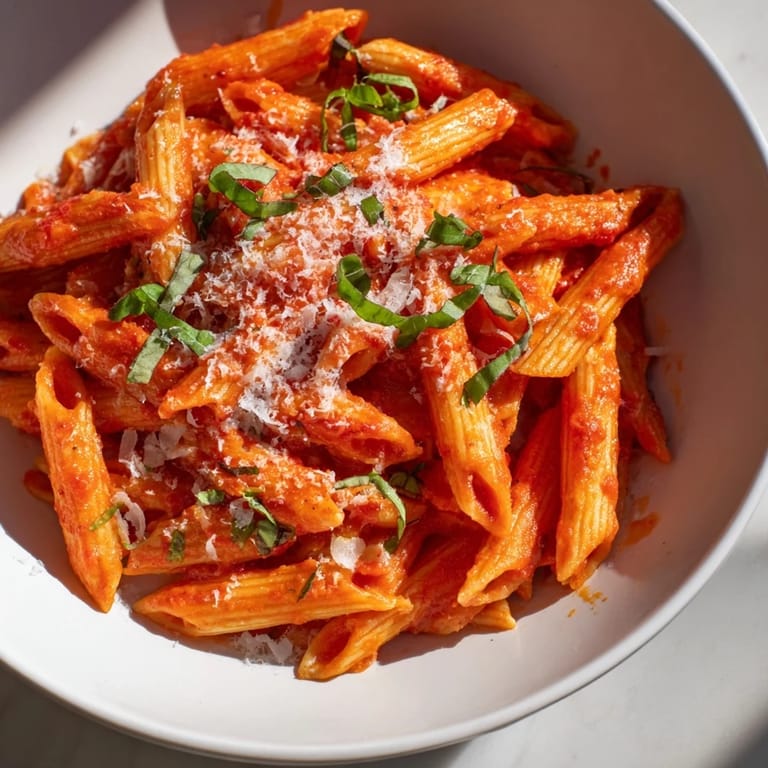
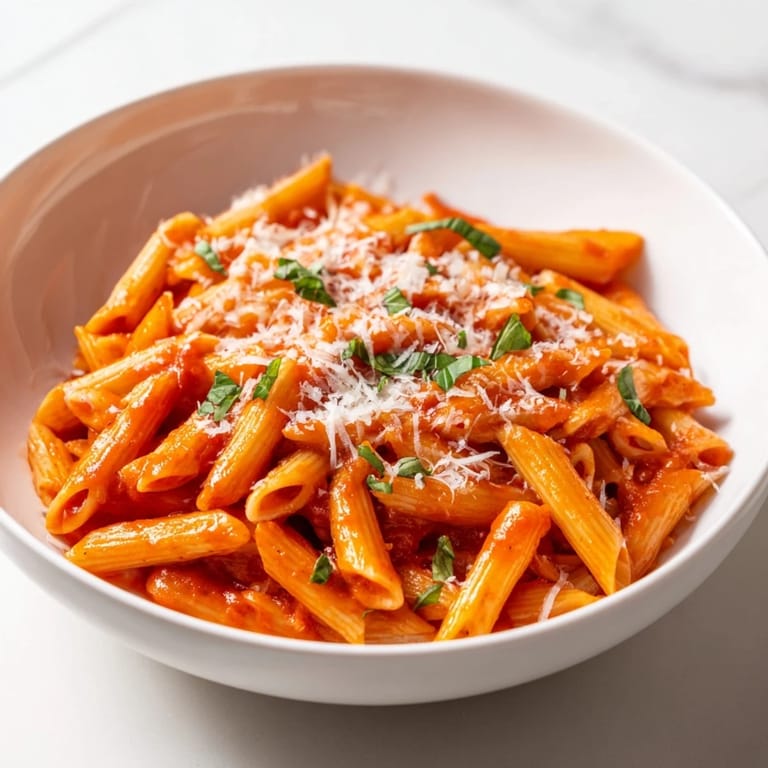
- Pour your sauce straight into the hot pasta and stir it around until every piece is coated. The heat from the pasta will warm the sauce perfectly, and the flavors meld together beautifully.
- Finish and taste:
- Sprinkle on Parmesan, add your herbs, taste it, then adjust salt and pepper to your liking. Eat it while it's still hot.
 Save
Save There was a moment when a friend from out of town was visiting and we were all hungry but nobody wanted to cook. I made this without thinking twice, and she was genuinely shocked that something so quick could taste so satisfying. It became her emergency dinner go-to for busy weeks after that.
The Beauty of Microwave Cooking
People get snobbish about microwave cooking, but the truth is it's just heat doing its job in a different way. The pasta cooks through the surrounding water, and there's less evaporation than on a stovetop, which means less water boils away. Your pasta ends up tender and actually flavorful because it stays in contact with the seasoned cooking liquid the whole time. It's not fancy, but it works, and sometimes the simplest methods are the ones we return to.
Sauce Choices That Actually Matter
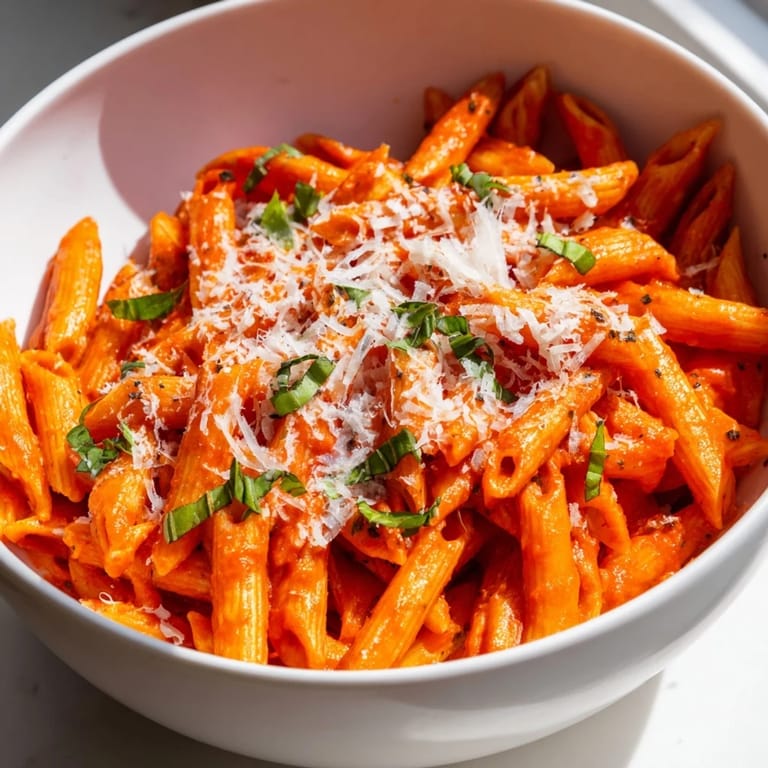
The sauce you choose completely changes the vibe of this dish. Marinara is your comfort choice—warm, familiar, you know what you're getting. Pesto feels more summery and bright, especially if you add fresh herbs at the end. Alfredo leans into richness and heaviness, perfect for when you need serious comfort food. I've also mixed cream cheese with a bit of water to make an emergency sauce, and it's genuinely better than you'd think.
Quick Add-Ins to Make It a Full Meal
This recipe is a blank canvas, which is part of what makes it so useful. Frozen peas stirred in during the last two minutes add color and sweetness. A handful of spinach wilts right into the hot pasta. Canned chickpeas or shredded cooked chicken turn it into something with real staying power.
- Frozen vegetables cook in the same time as the pasta—no extra steps needed.
- Protein additions mean you're not hungry again an hour later.
- A squeeze of lemon juice at the end brightens everything up, especially with pesto.
 Save
Save This is the kind of recipe that taught me that convenience doesn't have to mean compromising on taste. Whether you're in a dorm, running late, or just tired of cleaning a sink full of pots, this one's got your back.
Recipe FAQs
- → How do I know when the pasta is perfectly cooked?
Check the texture after microwaving for 8 to 12 minutes by tasting a piece—it should be al dente, tender but slightly firm to the bite.
- → Can I add vegetables during cooking?
Yes, add frozen peas or spinach during the last two minutes of cooking to incorporate extra nutrients and color.
- → What types of pasta work best for this method?
Short dried pastas like penne, fusilli, or elbow macaroni cook well using this bowl method.
- → How do I safely drain the pasta from the bowl?
Use a fine-mesh sieve or carefully tilt the bowl while holding back pasta with a fork or spoon to drain excess water.
- → Can I adjust cooking time for gluten-free pasta?
Yes, gluten-free pastas usually cook faster; monitor closely and reduce cooking time as needed.
- → What sauces pair best with microwave bowl pasta?
Marinara, pesto, or Alfredo sauces work well, enhancing the simple preparation with rich flavors.