 Save
Save There's something about setting out a mezze platter that transforms a simple afternoon into a celebration. I learned this watching my neighbor Amira arrange one for her family dinner, her hands moving with such ease between bowls of hummus and platters of vegetables, as if she were painting. When she invited us to join, I realized mezze isn't really about the individual components—it's about the rhythm of sharing, the way everyone's fingers reach for different things at different moments, and suddenly you're connected around a table without anyone having planned a formal meal.
The first time I made this for my book club, I was nervous about the hummus texture—would it be too thick, too thin?—but as I added that cold water bit by bit and watched it transform into something silky, I felt this small rush of control and creativity that cooking doesn't always give you. By the time we sat down, I'd stopped worrying about whether it was perfect and started noticing how quickly the platter emptied, how someone asked for the recipe, how one friend went back three times for more vegetables because she'd discovered she actually loved raw bell pepper.
Ingredients
- Cooked chickpeas (1½ cups): The foundation of creamy hummus—I always rinse canned ones twice to remove excess sodium and any metallic taste that can sneak in.
- Tahini (¼ cup): This nutty paste is what gives hummus its signature body; don't skip it or substitute it lightly, as it's truly non-negotiable for the right consistency and flavor.
- Fresh lemon juice (3 tbsp): Acidity brightens everything, so squeeze fresh rather than using bottled if you can—the difference is noticeable and worth those few extra seconds.
- Extra virgin olive oil (2 tbsp, plus extra for drizzling): Choose one you genuinely like eating by itself, because that flavor will shine through in the hummus and across the whole platter.
- Garlic clove (1 small, minced): Start small; you can always taste and add more, but you can't take raw garlic back out once it's in.
- Ground cumin (½ tsp): This warm spice is what makes people pause and ask what the secret ingredient is.
- Salt (½ tsp): Season as you blend, tasting constantly, because salt brings everything together in a way that's hard to predict until you taste.
- Cold water (2–3 tbsp): Add gradually to control creaminess—some tahini brands are thicker than others, so you might need more or less.
- Cherry tomatoes (1 cup, halved): Their natural sweetness and burst of juice make them irresistible on a platter.
- Cucumber (1 cup, sliced): Cool and crisp, they're the palate cleanser no one consciously reaches for but everyone's grateful for.
- Red bell pepper (1 cup, sliced): Sweet and crunchy, they add color and a subtle crispness that stays satisfying even as they sit.
- Carrot sticks (1 cup): Their natural sweetness and satisfying crunch make them the quiet favorite of any platter.
- Mixed olives (1 cup): A mix of green and Kalamata gives you briny depth and visual interest; pitting them beforehand is a small kindness to your guests.
- Feta cheese (150 g, cubed or sliced): Creamy, salty, and substantial, it's the element that transforms snacking into feeling nourished.
- Pita bread (4 breads, cut into triangles): Warm them just before serving if you have time—the difference is immediate and makes everything taste more intentional.
- Fresh parsley (2 tbsp, chopped): A final scatter of green adds freshness and signals care in how you've assembled things.
- Sumac or paprika (1 tsp): These finish the hummus with color and a subtle tang or warmth that invites people to dig in.
- Lemon wedges: Their bright, squeezable juice becomes the secret weapon people use to adjust flavors as they eat.
Tired of Takeout? 🥡
Get 10 meals you can make faster than delivery arrives. Seriously.
One email. No spam. Unsubscribe anytime.
Instructions
- Build your hummus base:
- In a food processor, combine chickpeas, tahini, lemon juice, olive oil, garlic, cumin, and salt. Blend until the mixture goes from grainy to silky, about a minute—listen for the sound to change as you blend. Add cold water one tablespoon at a time, tasting between additions, until the hummus feels cloud-like and spreadable, like something you'd want to sink a carrot into.
- Make the hummus sing:
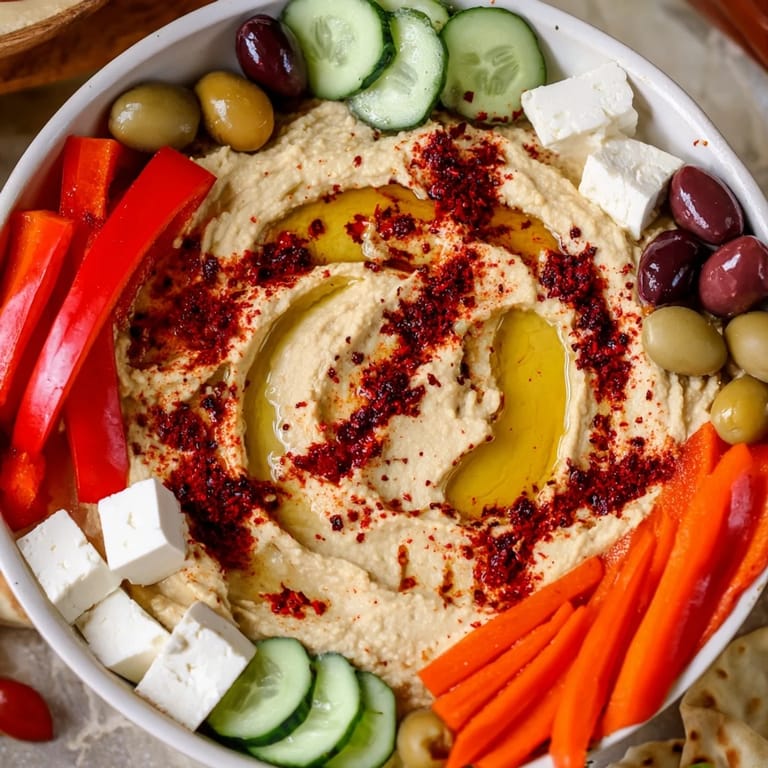
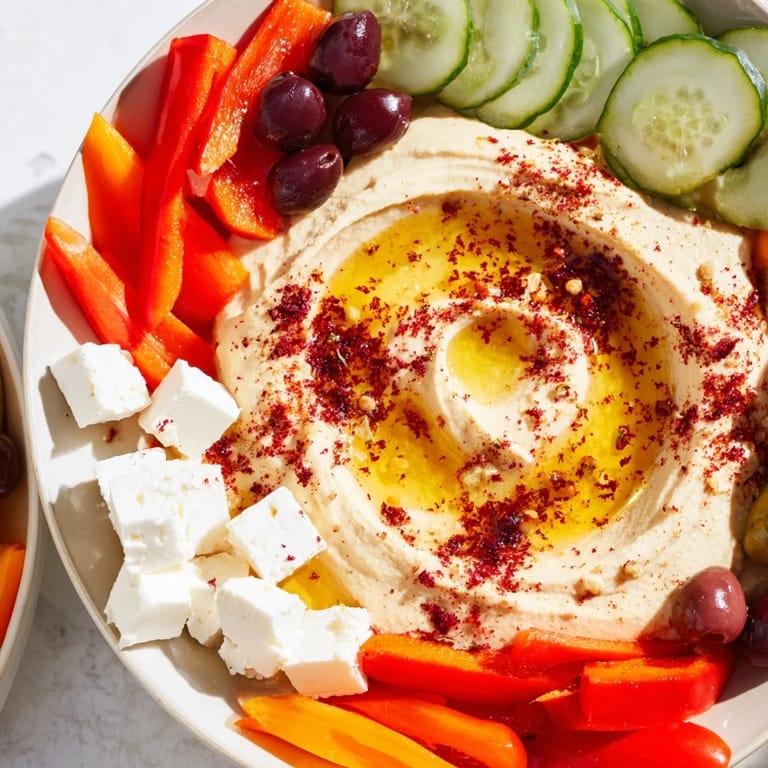
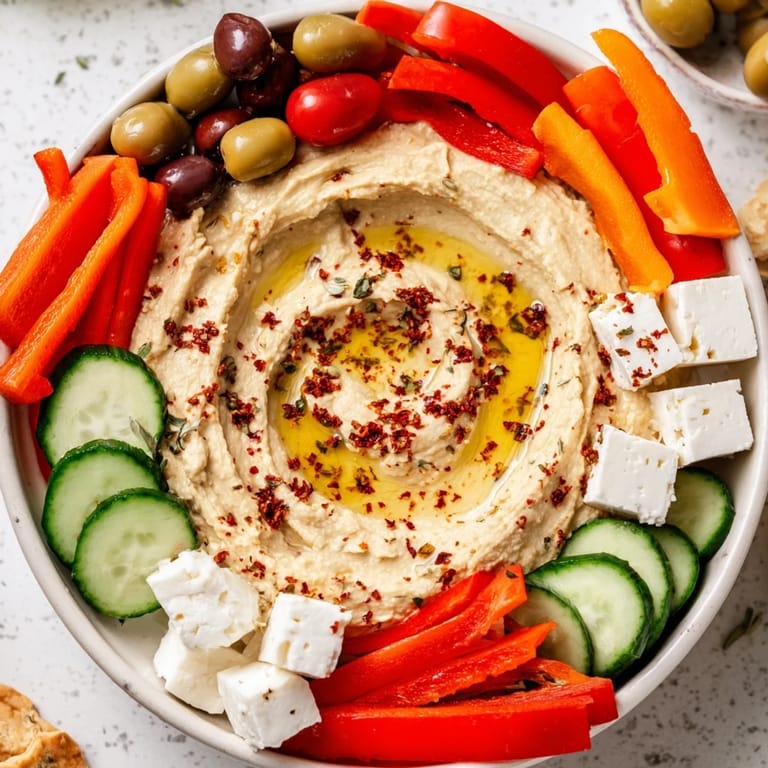
- Transfer to a shallow serving bowl or directly onto your platter, then create a shallow well in the center with the back of a spoon. Drizzle generously with olive oil and sprinkle with sumac or paprika—this isn't just pretty, it's how you signal to people that something special is inside that bowl.
- Compose your platter:
- Arrange tomatoes, cucumber, bell pepper, carrots, olives, and feta around the hummus in a loose, generous way. You're not aiming for symmetry here; think of it as creating different territories on a map that people will explore at their own pace.
- Warm and cut the pita:
- If you have a moment, warm pita in a dry pan or wrapped in foil in a low oven for a minute or two—people notice. Cut into triangles and nestle them around the platter where there's room, or serve them slightly apart so they don't steam and soften against the vegetables.
- The final flourish:
- Scatter chopped parsley across the platter, add lemon wedges in pockets you find, and step back. You're done, and it looks intentional, abundant, and inviting.
 Save
Save I remember my mother saying that mezze was what you made when you wanted everyone at the table to feel like themselves, unrestricted, choosing what they wanted rather than being served. It stuck with me—that generosity of offering instead of directing—and now whenever I set out a platter like this, I'm reminded that feeding people is as much about trust as it is about ingredients.
The Art of Arrangement
The way you arrange a mezze platter matters more than you might think, not because it needs to be perfect, but because the arrangement influences how people move through it and what they try first. I've learned that placing hummus at one end and bread at the other creates a natural flow, while clustering vegetables in the middle gives people permission to graze casually. The feta and olives act as visual breaks—small hills in the landscape that keep eyes interested and feet moving to different sections of the platter.
Timing and Temperature
One afternoon I made hummus two hours before guests arrived and kept it in the refrigerator, proud of my efficiency until I tasted it cold and found it flat and dense. Bringing it to room temperature transformed it completely—suddenly the garlic was brighter, the cumin warmer, the whole thing more generous. Now I understand that cold dull hummus is one of the small tragedies of entertaining, easily prevented by pulling things out 15 minutes before people arrive and remembering that serving temperature is part of the recipe itself.
Making It Your Own
The beauty of mezze is that it invites tinkering without losing its soul. I've added roasted red peppers to the hummus, stirred in za'atar, swapped feta for labneh on a day when I wanted something tangier, and each time the platter felt different but still itself. The structure is flexible enough to hold your improvisation, and that's what makes it something you can return to again and again without feeling like you're repeating yourself.
- Try adding a pinch of smoked paprika or a drizzle of pomegranate molasses to the hummus for depths you didn't know you were missing.
- If you find yourself with fresh herbs—mint, cilantro, or dill—scatter them across the vegetables for brightness.
- Warm pita is non-negotiable; even 90 seconds in a dry pan makes people taste the difference.
 Save
Save A mezze platter is one of those recipes that whispers rather than shouts, letting the quality of each ingredient speak quietly for itself. There's something peaceful about setting one down and watching people find their own way through it, choosing, returning, discovering.
Recipe FAQs
- → How can I achieve the perfect hummus texture?
Use a food processor to blend chickpeas with tahini, lemon juice, garlic, and olive oil, adding cold water gradually until smooth and creamy.
- → What breads pair best with this mezze platter?
Warm pita cut into triangles is traditional, but gluten-free pita or crackers work well for alternative options.
- → Can I prepare this platter ahead of time?
Yes, hummus can be made a day in advance and refrigerated. Assemble vegetables and garnishes just before serving for freshness.
- → How to add extra flavor to the hummus?
Incorporate roasted red peppers, smoked paprika, or additional garlic to deepen the dip’s flavor profile.
- → What are good beverage pairings with this assortment?
Crisp white wines or refreshing mint tea complement the mix of creamy, tangy, and fresh flavors beautifully.