 Save
Save One sweltering afternoon, I stood in my tiny kitchen watching my coworker slice vegetables with surgical precision, barely able to keep up. She'd brought this soba noodle salad for lunch three days in a row, and on day four, I finally asked her to share the secret. What she handed me was simple but revelatory—thin buckwheat noodles tossed with crisp vegetables and a peanut dressing so creamy and tangy it made everything taste alive. I made it that same weekend and realized I'd been overthinking lunch.
I remember bringing a batch to a potluck once and watching people come back for thirds, each time saying it tasted different somehow. They were adding more lime, extra cilantro, adjusting the heat with chili—it's one of those dishes that invites tinkering, where people feel confident making it their own rather than following orders.
Ingredients
- Soba noodles (250 g): These buckwheat strands have a nutty, slightly earthy flavor that's completely different from wheat pasta—seek out the actual buckwheat kind, as some brands sneak in wheat flour and it changes everything.
- Carrot (1 medium, julienned): The sweetness and crunch matter here; take your time with the knife or use a julienne peeler because thin strips soak up the dressing better than chunky pieces.
- Cucumber (1 small, thinly sliced): Choose one that's not watery if you can, and slice it just before serving so it stays crisp and snappy.
- Red bell pepper (1, thinly sliced): The color is a bonus, but the slight sweetness balances the savory dressing perfectly.
- Spring onions (2, finely sliced): Don't skip these—they add a brightness that makes the whole salad feel fresher.
- Red cabbage (1 cup shredded): It adds texture and a subtle peppery note, plus it doesn't get soggy like regular cabbage sometimes does.
- Peanut butter or tahini (3 tbsp): Smooth peanut butter is forgiving, but tahini gives you an elegant sesame flavor if nuts aren't your thing.
- Soy sauce (2 tbsp): This is your salt and umami anchor; don't water it down with extra soy thinking it makes the dressing better.
- Rice vinegar (1 tbsp): The mildness matters—it brightens without being aggressive like regular vinegar would be.
- Toasted sesame oil (1 tbsp): Buy the good stuff in a small bottle because a little goes a long way and rancid sesame oil tastes like broken promises.
- Maple syrup or honey (1 tbsp): Just enough sweetness to round out the savory elements without making it dessert.
- Fresh ginger (1 tsp grated): Mincing fresh ginger takes thirty seconds and tastes infinitely better than the jar version.
- Garlic clove (1 small, minced): One clove is shy but intentional—you want it as a whisper, not a shout.
- Water (1–2 tbsp): Add it gradually because you can always thin the dressing more but you can't thicken it back up.
- Toasted sesame seeds (2 tbsp): Toast them yourself if you have five minutes; the difference is the smell and the flavor depth.
- Fresh cilantro (2 tbsp chopped): Either you love it or you don't, and that's fine—substitute parsley if you're in the latter camp.
- Red chili (1 small, thinly sliced, optional): I like the slow heat more than the aggressive burn, so I use just a few slices.
- Lime wedges: These are not optional—the brightness at the end is crucial.
Tired of Takeout? 🥡
Get 10 meals you can make faster than delivery arrives. Seriously.
One email. No spam. Unsubscribe anytime.
Instructions
- Boil and cool the noodles:
- Bring a pot of water to a rolling boil and add the soba noodles, stirring immediately so they don't stick together. They'll cook in about five to seven minutes—watch them because overcooked soba turns mushy and loses its personality. Drain them in a colander and run cold water over them until they're completely cool, which stops the cooking and rinses away the excess starch that makes them gluey.
- Build the dressing:
- In a mixing bowl, combine the peanut butter, soy sauce, rice vinegar, sesame oil, maple syrup, ginger, and garlic, whisking until everything is incorporated. Start adding water one tablespoon at a time, whisking between additions, until the dressing is smooth and flows easily—it should coat the back of a spoon without clumping.
- Toss everything together:
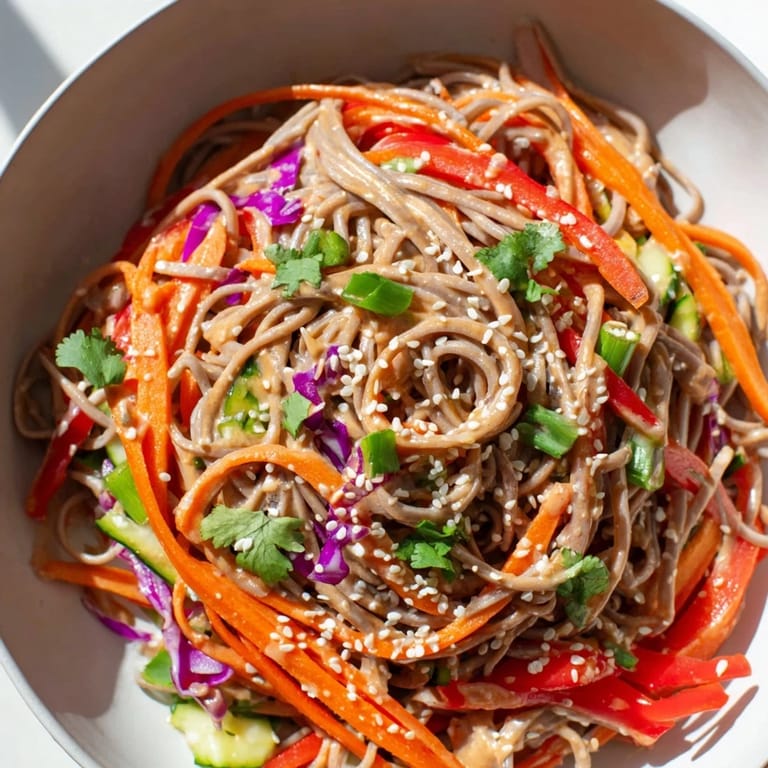
- Add your cooled noodles to the bowl along with the carrot, cucumber, bell pepper, spring onions, and cabbage, then toss everything until every strand and vegetable piece is coated in that creamy dressing. If it feels tight, add another teaspoon of water rather than overcommitting.
- Serve with joy:
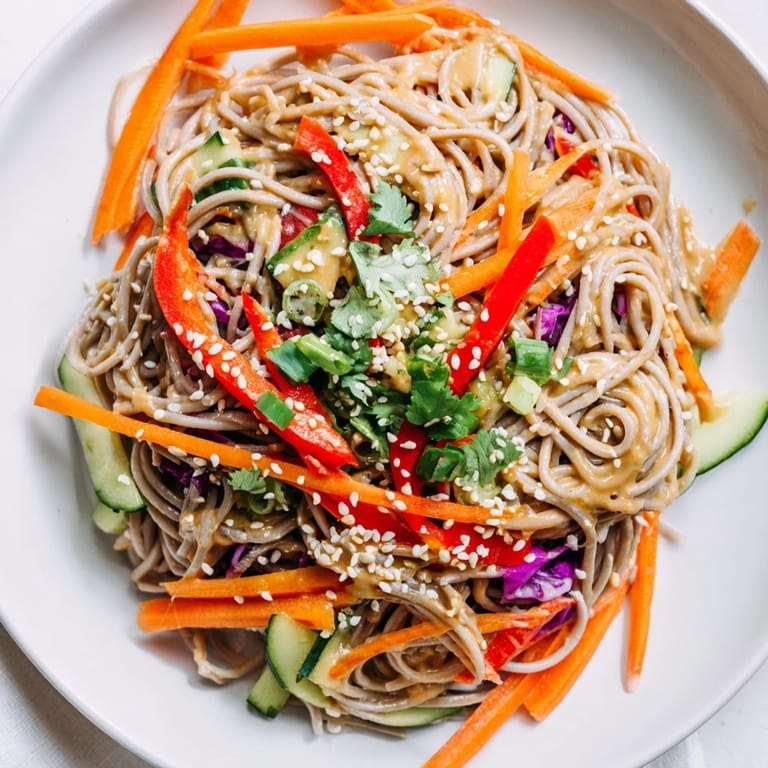
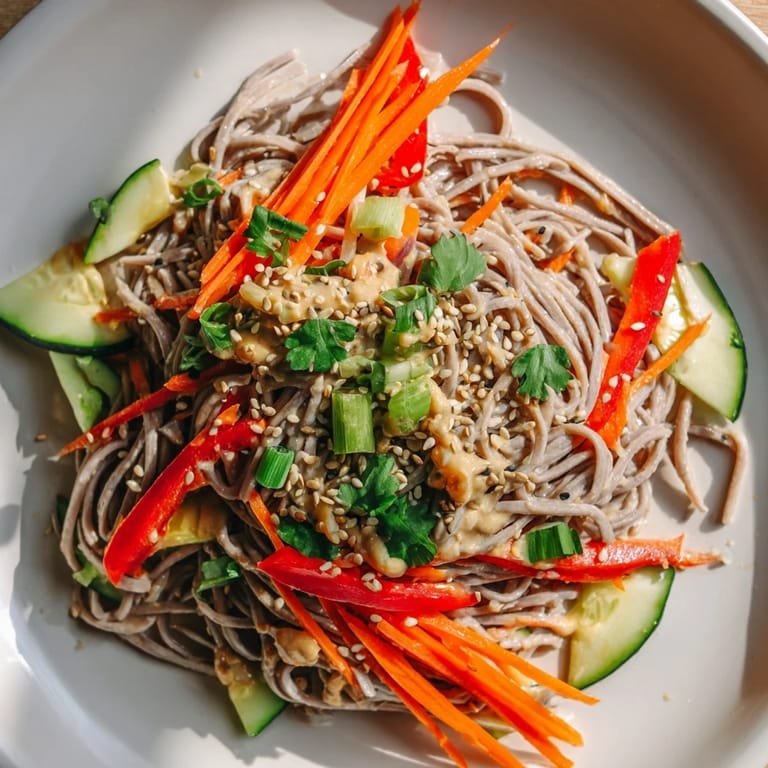
- Divide the salad among bowls and top with sesame seeds, cilantro, and a few chili slices if you like heat. Serve with lime wedges on the side so people can add their own brightness.
 Save
Save There was a moment, maybe the fifth time I made this, when someone asked me why I cared so much about how I sliced the vegetables. I realized it wasn't perfectionism—it was because thin, uniform pieces meant everything cooked and cooled at the same rate, meant the flavors distributed evenly, meant the salad tasted like I'd thought about it. That's when cooking stops being a chore and becomes something that matters.
Variations and Add-Ins
This salad is a blank canvas in the best way possible. I've added grilled tofu for protein and watched it soak up the dressing like a sponge, making the whole thing feel more substantial. Edamame adds a pop of color and texture, shredded rotisserie chicken turns it into something almost fancy, and roasted chickpeas make it crunchy and satisfying. You can also stir in some grated daikon radish for a peppery bite, or add thinly sliced mushrooms if you want earthiness. The beauty is that nothing disrupts the balance of the dressing—it's flexible without being boring.
Storage and Make-Ahead Tips
This salad lives happily in the fridge for two days, though by day three the noodles start absorbing too much liquid and lose their bounce. I've learned to store the dressing separately if I'm prepping ahead, keeping the vegetables in their own container and only tossing everything together when I'm ready to eat. A squeeze of fresh lime juice right before serving breathes new life into leftovers, making them taste almost as good as the first time.
Dietary Considerations and Swaps
This recipe is naturally vegetarian, and it's vegan too if you use maple syrup instead of honey. For a nut-free version, tahini alone is your friend—it gives you that creamy sesame depth without any peanut flavor. If gluten is an issue, look for 100% buckwheat soba noodles (some brands mix in wheat) and swap the regular soy sauce for tamari, which is gluten-free by nature. The dressing itself has no hidden allergens once you've chosen your base, but always double-check ingredient labels because manufacturers surprise you sometimes.
- Make it hearty by adding tofu, edamame, or grilled chicken for sustaining protein.
- Keep the dressing separate when storing if you're not eating it right away.
- Fresh lime juice and extra sesame seeds are your weapons when refreshing leftovers.
 Save
Save This is the kind of meal that tastes like you have your life together, but takes less effort than you'd think. Make it once and it becomes your secret weapon.
Recipe FAQs
- → How do I prevent soba noodles from sticking?
Drain and rinse the soba noodles thoroughly under cold running water immediately after cooking to remove excess starch and keep them separate.
- → Can I substitute peanut butter in the dressing?
Yes, use tahini for a sesame-forward flavor or another nut-free butter to accommodate allergies.
- → What vegetables work best in this cold salad?
Crisp and fresh vegetables like julienned carrots, sliced cucumber, red bell pepper, spring onions, and shredded cabbage complement the noodles perfectly.
- → How should I store leftover soba salad?
Keep the salad refrigerated in an airtight container for up to 2 days, refreshing it with a squeeze of lime before serving.
- → Is this dish suitable for gluten-free diets?
Use 100% buckwheat soba noodles and substitute soy sauce with tamari to make it gluten-free.