 Save
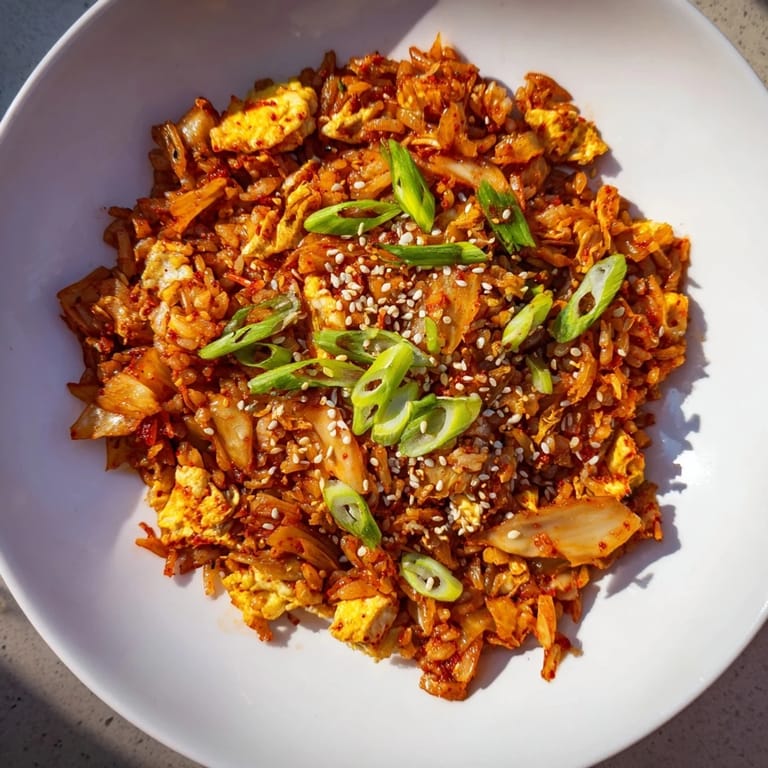
Save There's a particular magic in making kimchi fried rice on a Tuesday night when the fridge is half-empty and you're too tired to think about cooking. I stood there with yesterday's rice and a jar of kimchi I'd been saving, and suddenly the kitchen smelled like something worth staying awake for. That first bite, with the gochujang hitting at just the right moment and the egg creating this creamy binding force—it changed how I think about leftovers. Now whenever I have cold rice lingering around, I'm reaching for gochujang before I reach for anything else.
I made this for a friend who claimed they didn't really like spicy food, and I watched their face change entirely with the first forkful. They went back for seconds while asking for the recipe, and now every time I see them, they mention how they've made it three times since. That's when I realized this dish has a way of converting people—it's not aggressive or one-note, it's complex in a way that makes you want to keep eating and figuring out what you're tasting.
Ingredients
- Cold cooked white rice (2 cups, preferably day-old): Day-old rice separates beautifully in the heat and absorbs flavor without turning into mush, so don't skip the overnight rest if you can help it.
- Napa cabbage kimchi, chopped (1 cup, plus 2 tbsp juice): The juice is essential—it carries all the fermented funk and tang that makes this dish sing.
- Gochujang (2 tbsp): This Korean chili paste is the backbone of everything, so taste as you go because brands vary wildly in heat and salt.
- Large eggs (2): They scramble into the rice and add richness and protein, making this actually satisfying.
- Green onions (2, sliced): Split the white and green parts because they cook differently—whites go in early for softness, greens at the end for brightness.
- Onion, finely diced (1/2 small): This builds the flavor base and melts into the whole dish, adding subtle sweetness.
- Carrot, finely diced (1 small, optional): Adds texture and a touch of natural sweetness that balances the heat and sourness.
- Soy sauce (1 tbsp): Goes in with the gochujang to deepen the umami and add saltiness that ties everything together.
- Toasted sesame oil (1 tsp): Drizzled at the end, this is your secret weapon for depth and that nutty aroma that makes people ask what that smell is.
- Vegetable oil (1 tbsp): High-heat oil for the initial cooking so nothing sticks or smokes.
- Sugar (1 tsp, optional): If your kimchi is particularly acidic or your gochujang is aggressive, a tiny pinch rounds things out without tasting sweet.
Tired of Takeout? 🥡
Get 10 meals you can make faster than delivery arrives. Seriously.
One email. No spam. Unsubscribe anytime.
Instructions
- Build your flavor foundation:
- Heat vegetable oil in a large skillet or wok over medium-high heat until it shimmers slightly. Add the white parts of the green onions, diced onion, and carrot, stirring constantly for about 2–3 minutes until everything softens and the onion becomes translucent. This is when your kitchen starts smelling like something special.
- Coax out the kimchi's best flavors:
- Add your chopped kimchi directly to the pan and let it sit for a moment before stirring, allowing the edges to catch the heat and caramelize slightly. Stir-fry for 2–3 minutes, letting the fermented funk deepen and intensify—this is where umami happens.
- Marry the seasonings:
- Stir in the gochujang, soy sauce, and sugar if using, mixing everything thoroughly so the chili paste coats every piece of vegetable and kimchi. The color should shift to a deeper, richer red.
- Create texture with eggs:
- Push the kimchi mixture to one side of the pan, crack both eggs into the empty space, and let them sit for just a moment before scrambling them into loose curds. Don't over-mix—you want visible chunks of cooked egg throughout, not a uniform blend.
- Bring the rice into the mix:
- Add your cold rice, breaking up any clumps with your spatula as you fold it into the kimchi and egg mixture. Keep stirring and turning everything over itself for about 3–4 minutes until the rice is heated through and evenly coated in that spicy, umami-rich sauce.
- Finish with brightness:
- Pour in the reserved kimchi juice, stirring once more, then drizzle the sesame oil over everything and fold in the green parts of the green onions plus any optional meat or tofu. Taste a bite and adjust—add more gochujang for heat, more soy sauce for saltiness, or a splash more sesame oil for nuttiness.
- Rest and serve:
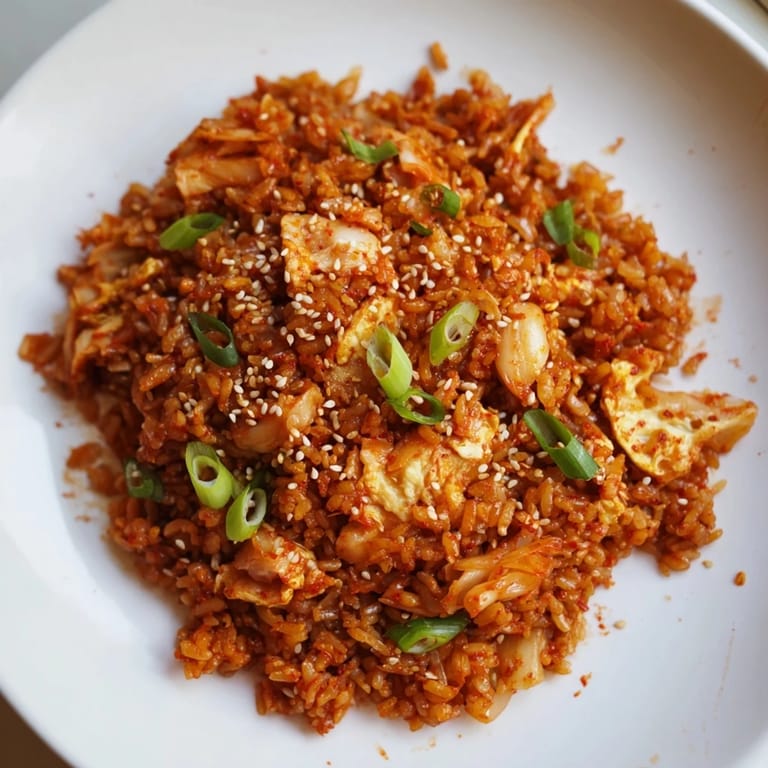
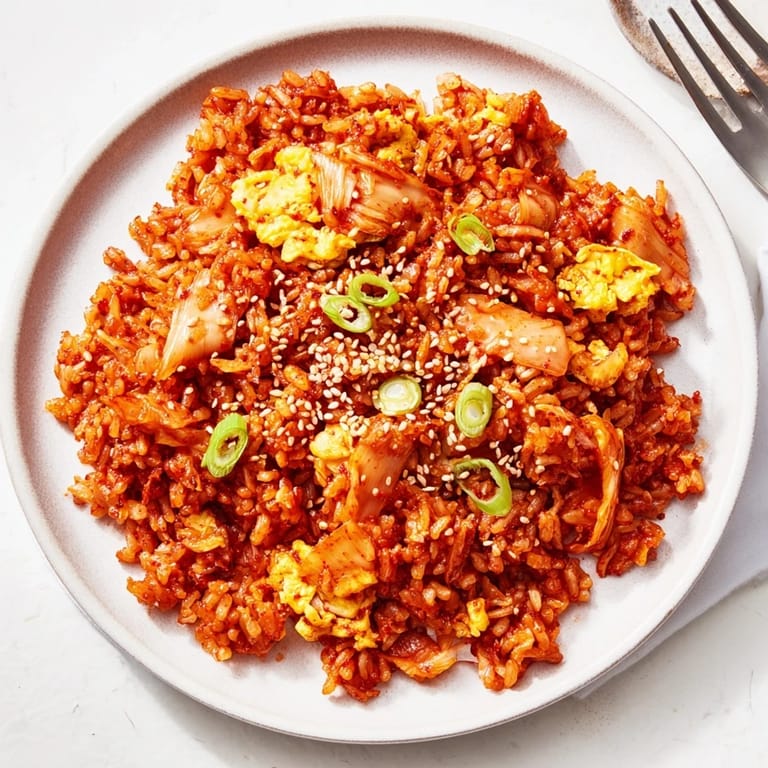
- Let it sit off heat for about 30 seconds so the green onions don't wilt into nothing. Divide between bowls, top with sesame seeds, extra green onions, and strips of roasted seaweed.
 Save
Save There's something about eating spicy fried rice straight from the pan, standing at the counter in your kitchen at 8 PM, that makes you feel like you're eating something honest. No fussiness, no pretense—just food that tastes alive and makes you feel awake. That's when I stopped thinking of this as a weeknight shortcut and started thinking of it as something worth making intentionally.
The Secret Life of Kimchi Juice
Most people pour that liquid down the drain, but it's actually the most flavorful part of the jar. It's packed with salt, acid, funk, and fermented depth that a splash of vinegar could never replicate. In this fried rice, it's the final layer that brings everything into focus and prevents the dish from ever tasting flat or one-dimensional. I learned to save it by accident when a jar tipped over into my pan, and now I keep a small container in the fridge specifically for cooking.
Why Day-Old Rice Matters So Much
Fresh hot rice contains too much moisture and will steam rather than fry, no matter how high your heat is or how good your technique becomes. The starch needs time to firm up and the rice needs to dry out slightly so each grain can move freely in the pan and pick up flavor. If you're in a rush and only have warm rice, spread it on a plate in the fridge for 15 minutes while you prep your other ingredients—it's worth the tiny bit of planning.
Making It Your Own
This is one of those dishes where you can riff endlessly depending on what's in your fridge and what your mood demands. Some nights I add a handful of frozen peas or corn for sweetness and texture, other times I'll throw in kimchi's best friend, some crispy spam or tofu for substance. The structure stays the same, but the personality changes.
- For a vegan version, skip the eggs and use crumbled firm tofu tossed in a touch of cornstarch so it gets slightly crispy.
- Brown rice or cauliflower rice works if you want the dish lighter, though the cooking time might shift slightly.
- A squeeze of gochujang in mayonnaise on the side transforms this into something you could eat as a hand-held situation in a flatbread.
 Save
Save This dish has earned a permanent spot in my rotation because it's never boring and it never feels like you're settling. Every time you make it, you're about 25 minutes away from something that tastes deliberate and satisfying, which is more than most quick weeknight meals can promise.
Recipe FAQs
- → What type of rice works best?
Day-old cooked white rice is ideal for preventing clumping and ensuring even frying.
- → Can I make this dish vegan?
Yes, substitute eggs with firm tofu and ensure kimchi is vegan-friendly by checking ingredients.
- → How spicy is this dish?
The gochujang provides moderate heat that can be adjusted to taste by adding more or less.
- → What garnishes complement the dish?
Toasted sesame seeds, extra green onions, and roasted seaweed strips add texture and flavor.
- → Can I use brown rice or cauliflower rice?
Yes, brown rice adds a nuttier flavor and cauliflower rice lowers carbs for a healthier option.