 Save
Save The first time I made tabbouleh, I wasn't thinking about authenticity or technique—I just wanted something bright to eat on a sweltering afternoon when the kitchen felt too warm to turn on the stove. I dumped bulgur into a bowl, poured boiling water over it, and while it softened, I spent the next ten minutes chopping parsley with the kind of focus you only find when you're really hungry. What came together was so clean-tasting and alive that I realized I'd stumbled into something far better than any heavy, cooked meal could ever be.
I made this for a potluck where I showed up fashionably late, and I watched someone take a bowl of it back for seconds before even trying anything else. The brightness of it seemed to cut through the heavier casseroles and meat dishes with such enthusiasm that by the end of the night, my bowl was empty and three people asked for the recipe. It's become my go-to dish when I want to contribute something that feels effortless but genuinely special.
Ingredients
- Fine bulgur wheat: The foundation—look for the fine grain, not the coarse kind, as it hydrates perfectly in just ten minutes and won't turn mushy.
- Boiling water: Pouring it hot over the bulgur is the whole trick; it opens up the grains without any stove time.
- Sea salt: Start here, in the bulgur itself, so every grain has flavor from the beginning.
- Ripe tomatoes: This matters more than you might think—buy them when they smell fragrant and barely yield to pressure, then dice them just before assembly so they don't weep too much juice.
- English cucumber: Thinner skin and fewer seeds than regular cucumbers, meaning less waste and a more delicate bite.
- Fresh flat-leaf parsley: Not the curly kind—flat-leaf has better flavor and chops into neat pieces without turning into mush.
- Fresh mint: A handful seems timid until you taste how it wakes up every other ingredient in the bowl.
- Scallions: The white and light green parts give a gentle onion presence that doesn't overpower.
- Extra virgin olive oil: Use something you'd actually enjoy drinking; it's the main fat binding everything together.
- Fresh lemon juice: Bottled juice tastes tired—squeeze it yourself, and you'll taste the difference immediately.
- Garlic: Just one clove minced fine so it distributes as a whisper rather than a shout.
- Ground black pepper: Freshly cracked tastes sharper and more alive than pre-ground.
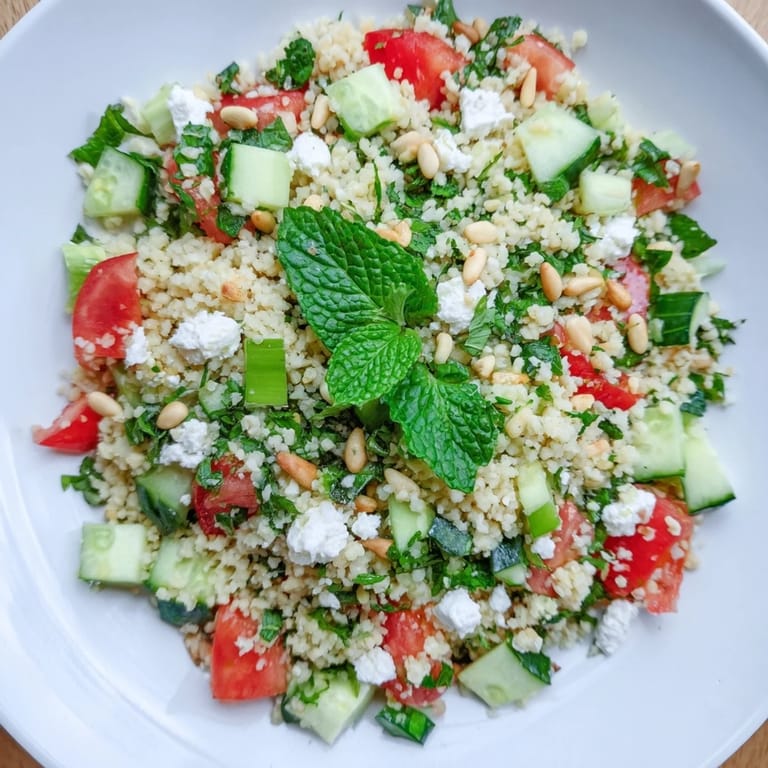
- Feta cheese and toasted pine nuts: Optional but recommended—they add a savory crunch that makes it feel more like a meal.
Tired of Takeout? 🥡
Get 10 meals you can make faster than delivery arrives. Seriously.
One email. No spam. Unsubscribe anytime.
Instructions
- Soak the bulgur into softness:
- Put the bulgur and salt in your largest bowl—you'll need the room. Pour boiling water directly over it, cover the bowl with a plate or cloth, and set a timer for ten minutes; the grains will absorb every drop and turn tender and slightly chewy. When the time's up, fluff everything with a fork to separate the grains, then let it cool to room temperature so it doesn't cook your vegetables later.
- Build your dressing:
- In a smaller bowl, whisk together the olive oil, lemon juice, minced garlic, and pepper until it feels cohesive. Taste it plain on a spoon—it should taste bright enough to make your mouth water a little.
- Combine vegetables and herbs with the bulgur:
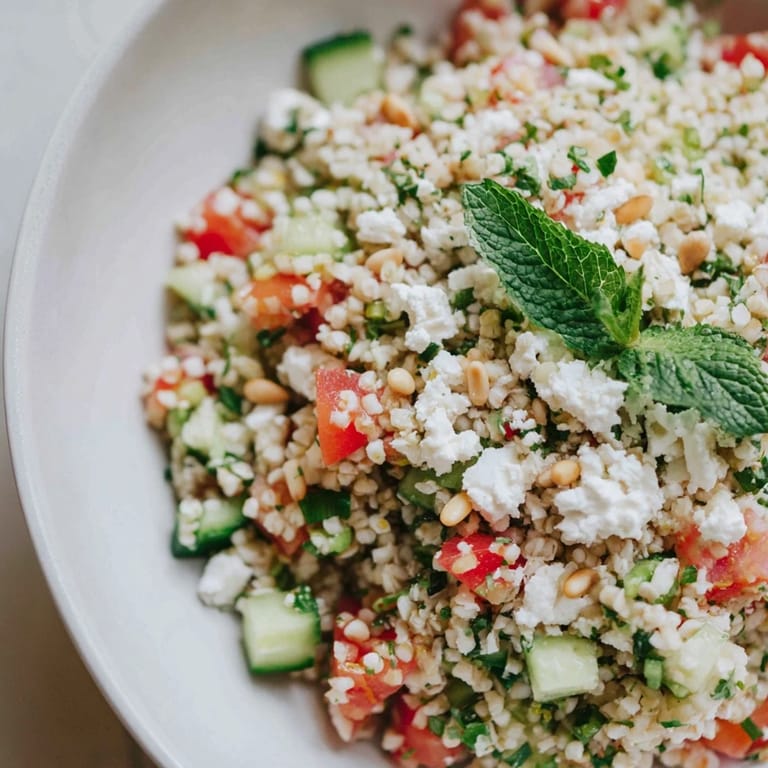
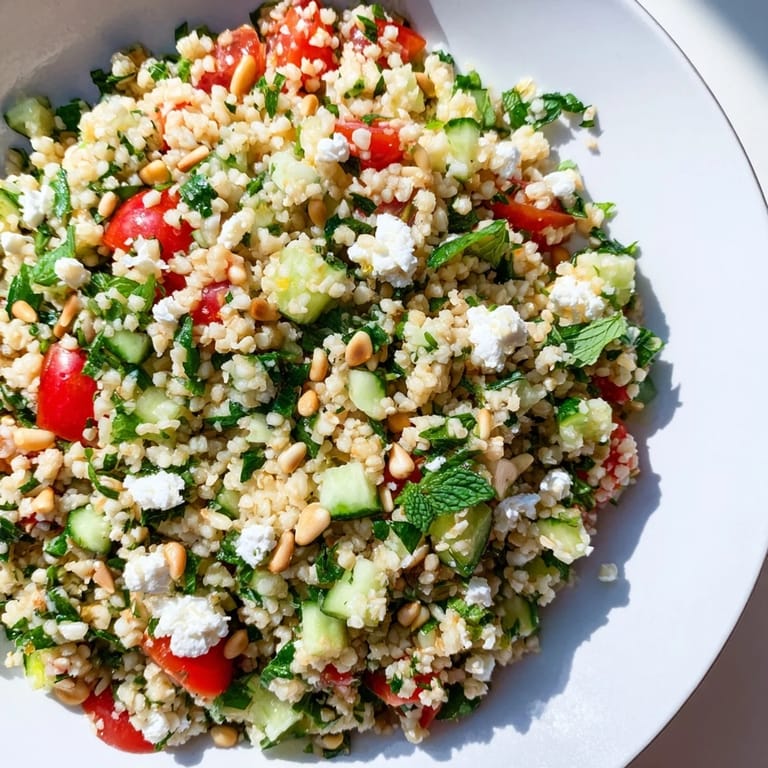
- Once the bulgur is cool, add the tomatoes, cucumber, parsley, mint, and scallions in one generous handful, then toss everything together gently so you don't bruise the delicate herbs. The mixture should look colorful and full of green.
- Dress and marry the flavors:
- Pour the dressing over everything and mix thoroughly with a gentle hand, making sure each grain gets coated without breaking anything apart. The whole bowl should glisten.
- Taste and rest:
- Pinch a piece of bulgur and taste it—adjust the salt, lemon, or pepper if needed. If you have time, cover and refrigerate for ten minutes so the flavors settle and get to know each other better.
- Serve and garnish:
- Divide into bowls, scatter feta and toasted pine nuts over the top if you're using them, and add a lemon wedge so people can brighten their bowl even more if they want to.
 Save
Save There's something about serving this to people that shifts the whole room's energy—suddenly everyone's eating something that tastes like summertime and Mediterranean coastlines, no matter what the weather actually is outside. It became the dish I make when I want to remind myself that the best meals don't need hours of work, just fresh ingredients and a little patience.
The Magic of Bulgur
Bulgur is one of those ingredients that feels like a kitchen secret once you understand it. It's wheat kernels that have already been cooked and dried, so all you're doing is rehydrating them, not cooking from scratch. This means you get all the nutty, wholesome grain flavor in the time it takes to brew a cup of tea. I learned this the hard way by trying to cook bulgur like rice on the stove once, and it turned into mush—but the ten-minute soak method is foolproof, and now I reach for bulgur whenever I want something substantial without the fuss.
Fresh Herbs as the Star
In most salads, herbs play a supporting role, but tabbouleh flips that script completely—parsley is the main event, with mint and scallions there to add depth. The sheer amount of fresh herbs is what makes this dish feel alive and clean rather than heavy. I've experimented with using less parsley out of habit, and every time I regret it within the first bite. The herbs are what transform simple ingredients into something that tastes expensive and carefully composed, even though you're just chopping and mixing.
Timing and Temperature Tricks
Temperature matters more in this dish than you'd expect, which is part of why it's so refreshing in the summer. Serving it cold or at room temperature makes every flavor feel sharper and more distinct, while a warm version tends to taste flatter. I also learned that chilling it for even ten minutes before serving lets all the flavors marry together—the dressing soaks into the bulgur, and the herbs release their oils in a way that tastes much more cohesive than if you eat it immediately.
- Make it a few hours ahead and store it in the fridge if you want the flavors to deepen even more.
- If it seems dry when you pull it from the fridge, drizzle a little more lemon juice and olive oil over the top.
- Bring it back to cool room temperature before serving if it's been chilled for more than an hour.
 Save
Save This bowl has become my answer to so many kitchen situations—too hot to cook, need something fast, want to impress without fuss, craving something green and alive. It's the kind of dish that makes you feel like you're taking care of yourself.
Recipe FAQs
- → Can I substitute bulgur for a gluten-free option?
Yes, cooked quinoa works well as a gluten-free alternative to bulgur while maintaining the bowl’s texture.
- → How long should the bulgur soak before serving?
Allow the bulgur to soak in boiling water for about 10 minutes until tender and water is absorbed.
- → What is the best way to prepare the dressing?
Whisk together extra virgin olive oil, freshly squeezed lemon juice, minced garlic, and black pepper for a balanced dressing.
- → Can I add protein to this grain bowl?
Yes, chickpeas or grilled chicken make excellent protein additions without altering the fresh flavors.
- → How should leftovers be stored?
Keep leftovers covered in the refrigerator for up to 2 days to maintain freshness and flavor.