 Save
Save One Tuesday morning, I was rushing to get out the door and realized I'd skipped breakfast again—my third time that week. Standing in front of the fridge, I grabbed eggs and whatever vegetables looked halfway decent, threw them in a muffin tin, and baked them out of sheer desperation. Twenty minutes later, I had twelve golden little packets of actual nutrition I could grab on my way out. That small accident became my secret weapon against skipping meals.
I made these for my roommate who was training for a half-marathon and complained constantly about being hungry every two hours. After she ate three of these in one morning and actually made it to lunch without raiding the pantry, she asked for the recipe immediately. Watching someone's energy level actually stabilize around food felt like I'd stumbled onto something real.
Ingredients
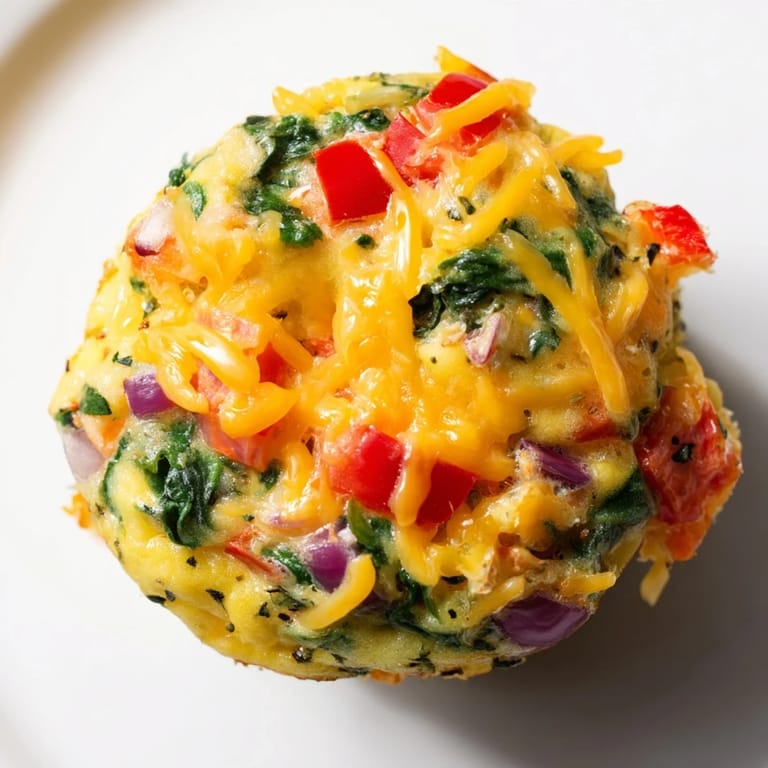
- Baby spinach: A full cup might look like a mountain, but it wilts down to almost nothing and adds iron without any bitter aftertaste if you use baby leaves instead of mature ones.
- Red bell pepper: The sweetness matters here—red ones have more natural sugar than green, so they actually taste pleasant rather than grassy when baked.
- Cherry tomatoes: Quartered so they distribute evenly; regular tomatoes would release too much liquid and make things watery.
- Red onion: Keep it finely diced so each bite gets a little sharpness without overwhelming anything else.
- Large eggs: Eight eggs is the magic number for twelve muffins—too few and they're dense, too many and they puff up and collapse.
- Milk: Just a quarter cup acts as a binder to make everything tender; oat milk works beautifully if you're plant-based.
- Cheddar cheese: Optional but genuinely worth it—it melts into the eggs and adds a little richness that makes them taste less like a health food project.
- Garlic powder and oregano: These two together are the secret seasoning combination that make people ask what herb you used, even though it's nothing fancy.
Tired of Takeout? 🥡
Get 10 meals you can make faster than delivery arrives. Seriously.
One email. No spam. Unsubscribe anytime.
Instructions
- Heat your oven and prep the tin:
- Set it to 350°F and get your muffin tin ready with grease or silicone cups—this prevents the frustration of them sticking and tearing apart when you try to pop them out.
- Whisk the base:
- Eggs, milk, salt, pepper, garlic powder, and oregano go in a bowl and get whisked until they're pale and airy. You want actual air incorporated here, which takes about a minute of actual elbow work.
- Fold in the vegetables:
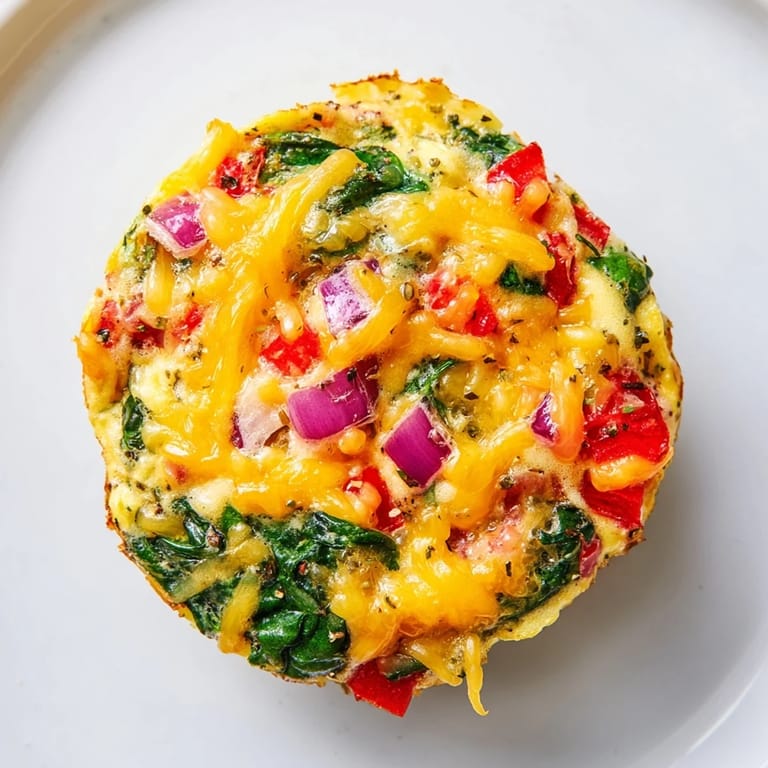
- Gently stir in the spinach, peppers, tomatoes, onion, and half the cheese—gentle is the word because you want to keep that air in the eggs. Rough stirring deflates them.
- Fill each cup:
- Divide the mixture evenly, filling each cup about three-quarters full so they have room to puff up without overflowing everywhere. A small ice cream scoop makes this job actually even.
- Top with cheese:
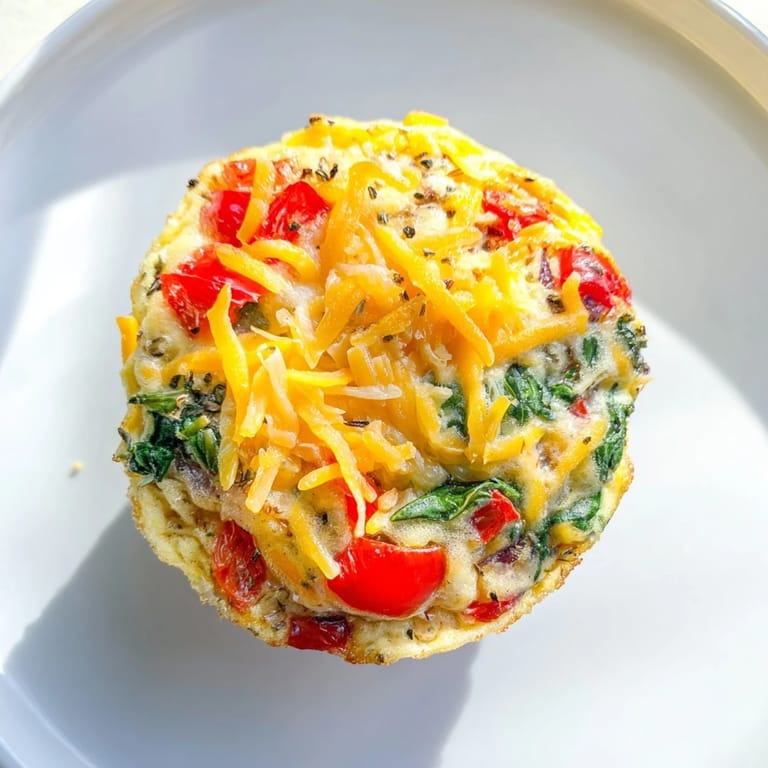
- If you're using cheese, sprinkle the remaining half on top of each one—it creates little golden spots on top that look intentional and taste amazing.
- Bake until they set:
- Eighteen to twenty-two minutes is the range; you'll know they're done when they're set in the middle but still slightly jiggly at the very center. They keep cooking a tiny bit as they cool, so don't overbake.
- Cool before removing:
- Give them a few minutes to set up completely before you try to pop them out, or they'll break apart in your hands and you'll feel frustrated.
 Save
Save My mom tried these once and immediately started making her own version with broccoli and feta, then giving them to my dad to eat before his morning walks. Months later, he told me they were the reason he actually started exercising regularly—not because of anything magical, but because having something good waiting at home made the habit feel less like punishment.
Flexibility Is the Whole Point
The vegetable combination I've given you is just a starting point, not gospel. Mushrooms, zucchini, broccoli, sun-dried tomatoes, scallions—whatever you have on hand or whatever sounds good works perfectly fine. I've made batches with literally just spinach and cheese when I was lazy, and they were still delicious. The eggs and seasoning are what hold everything together; the vegetables are just there to add texture and keep things interesting.
Storage and Reheating Without Ruining Them
These stay fresh in an airtight container for four days, which is long enough to actually eat through them during a normal week without them getting weird. Freezing works too—up to two months—though the texture gets slightly more crumbly after thawing, which honestly doesn't matter much if you're eating them at home. Reheating takes just thirty to forty-five seconds in the microwave, and they stay moist instead of turning into rubber like some other egg dishes do.
Why This Actually Works for Meal Prep
Most meal prep sounds boring because it usually is—the same chicken and rice in different containers, which starts tasting like cardboard by Wednesday. These are different because they taste genuinely good cold or reheated, they're actually portable enough to eat in your car or at your desk, and they feel enough like a real food to keep you happy. Plus, making a full batch takes maybe thirty minutes total start to finish, which is less time than it takes to go to a coffee shop and wait in line.
- You can prep these on Sunday and actually look forward to eating them all week, not just tolerating them.
- Each muffin has around seventy calories but enough protein to actually stick with you until lunch.
- They're gluten-free and vegetarian without tasting like you're punishing yourself for your dietary choices.
 Save
Save These little muffins have become the thing I reach for when I need food that actually nourishes me instead of just tasting good, and somehow they manage to do both. Once you make them once, you'll probably make them again the following week.
Recipe FAQs
- → Can I substitute vegetables in these muffins?
Yes, you can swap in zucchini, mushrooms, broccoli, or other veggies to suit your taste and availability.
- → What type of cheese works best in these egg muffins?
Sharp cheddar or feta cheese adds great flavor, but feel free to use any preferred cheese or omit it entirely.
- → How should I store the cooked muffins?
Keep them in an airtight container in the refrigerator for up to four days, or freeze them for up to two months.
- → Can I use plant-based milk and cheese alternatives?
Absolutely, plant-based milk and cheese work well for those avoiding dairy while maintaining flavor and texture.
- → What is the best way to reheat these muffins?
Reheat in the microwave for 30 to 45 seconds until warm, or warm them gently in an oven or toaster oven.
- → Are these muffins suitable for low-carb diets?
Yes, with low carbohydrate content and high protein, these muffins fit well into low-carb eating plans.