 Save
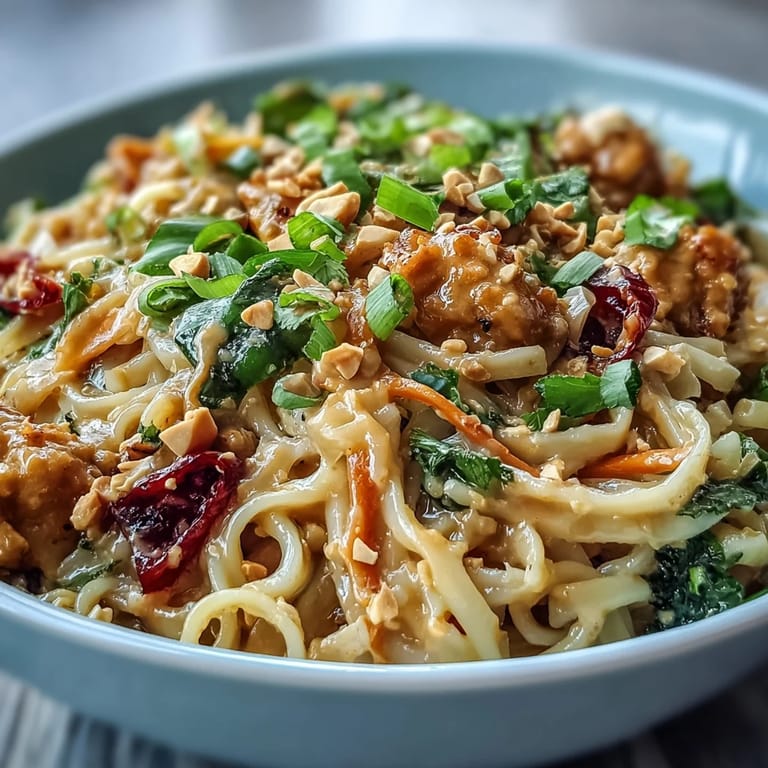
Save There's something about the smell of ginger and garlic hitting hot oil that makes you feel like you're cooking something special, even on a Tuesday night when you're just trying to get dinner on the table. I discovered this one-pan peanut noodle situation while watching my neighbor through her kitchen window (yes, really)—she was tossing noodles in a wok with such ease that I had to ask her secret. Turns out, it's all about letting the noodles cook right in the sauce instead of boiling them separately, which sounds simple but changes everything. The creamy peanut sauce clings to every strand, and the ground chicken browns right there with the vegetables in one glorious, minimal-cleanup moment.
I made this for my partner after a long day, and watching them take that first bite and close their eyes in contentment reminded me why I bother with cooking at all. They asked for seconds before finishing the first bowl, which basically never happens unless something is genuinely delicious. That's when I knew this recipe had staying power.
Ingredients
- Ground chicken: Use freshly ground if possible—it browns better and tastes cleaner than pre-packaged that's been sitting around.
- Wide rice noodles: These are the flat, almost-ribbon-like ones; they hold sauce better than thin ones and have a satisfying chew.
- Red bell pepper: The sweetness balances the savory-spicy sauce, and it stays crisp-tender rather than mushy.
- Snap peas: They add a fresh crunch that keeps every bite interesting; don't skip them even if your store doesn't have them perfectly lined up.
- Creamy peanut butter: Stir your jar well before measuring—the oil separation actually helps the sauce emulsify better.
- Hoisin sauce: This deep, slightly sweet condiment is your secret weapon for umami depth without extra effort.
- Sriracha or chili garlic sauce: Start with less and taste as you go; heat preferences vary wildly, and you can always add more.
- Toasted sesame oil: The word 'toasted' matters here—it has that rich, nutty flavor regular sesame oil lacks.
- Fresh lime juice: Bottled works in a pinch, but fresh makes the whole dish sing brighter at the end.
Tired of Takeout? 🥡
Get 10 meals you can make faster than delivery arrives. Seriously.
One email. No spam. Unsubscribe anytime.
Instructions
- Brown the chicken first:
- Heat oil in your skillet over medium-high until it shimmers, then add ground chicken and let it sit for a minute before breaking it up. This creates little crispy edges that add texture and flavor.
- Wake up the aromatics:
- Once the chicken is golden, push it to the side, add garlic and ginger to the empty space, and let them sizzle for exactly one minute—any longer and they turn bitter. Your nose will tell you when it's right.
- Quick-soften the vegetables:
- Add peppers, carrots, and snap peas and stir constantly for 2 to 3 minutes until they're barely tender with still a little snap. They'll continue cooking once the sauce arrives.
- Spread the noodles:
- Pour the dry noodles directly into the pan and spread them in an even layer—they look scary and stiff, but they're about to transform into something creamy.
- Mix the sauce properly:
- Whisk peanut butter, soy sauce, hoisin, rice vinegar, honey, sesame oil, sriracha, and broth in a bowl until there are no peanut butter lumps. A few small flecks are fine, but mostly smooth matters for even coating.
- Simmer gently with the lid on:
- Pour the sauce over the noodles, bring to a simmer, then cover and let it work for 4 to 6 minutes, stirring occasionally. The noodles will drink up the liquid and soften beautifully while everything melds together.
- Bring the chicken back home:
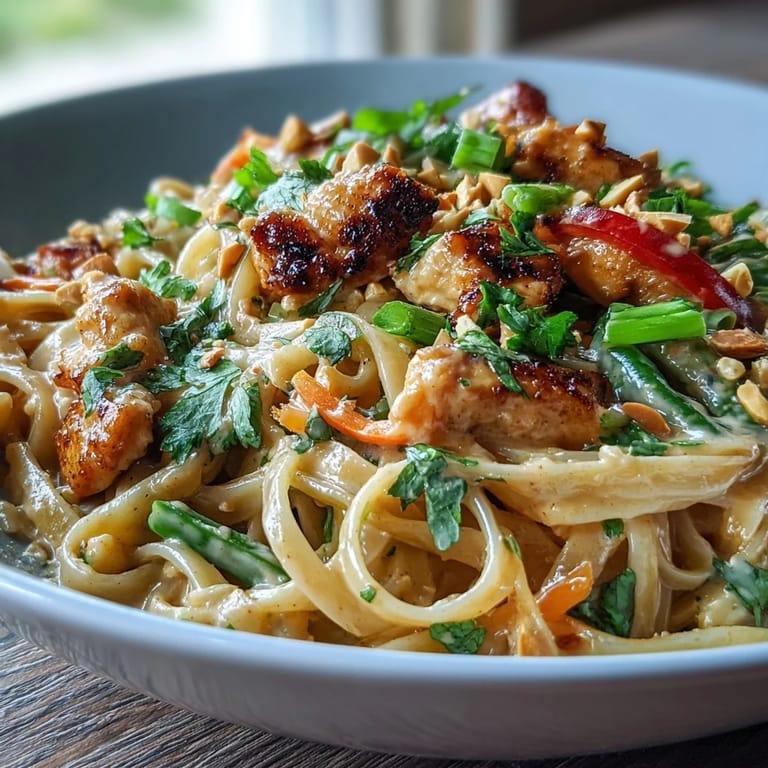
- Return the cooked chicken to the pan, toss everything together over low heat until the sauce turns creamy and coats every strand. Finish with lime juice, which brightens everything instantly.
 Save
Save My mom tasted this dish at my place and asked if it was restaurant food, which felt like the highest compliment she could give my cooking. That moment—when she looked genuinely surprised that I'd made something this good—made the whole 40 minutes feel worthwhile.
Why This Works as a One-Pan Meal
The potsticker noodle technique means everything cooks together from the start, letting flavors build and mingle instead of staying separate. The sauce releases enough liquid to hydrate the noodles while staying thick enough to coat them, creating this perfect creamy texture without any cream. It's less about following rules and more about letting the ingredients do what they naturally want to do when you give them time and the right heat.
Customizing Without Losing the Magic
Ground turkey works beautifully if chicken isn't your thing, and honestly, crumbled tofu absorbs the sauce even better for a vegetarian angle. The vegetables are flexible too—if you hate snap peas, use broccoli; if red peppers aren't in season, yellow or orange work just fine. The sauce is really the backbone, so keep that consistent and everything else adapts around it.
Serving and Storage Thoughts
Serve this hot with extra lime wedges on the side because people love squeezing their own, and it gives them control over the brightness. Leftover noodles keep for three days in the fridge and reheat gently with a splash of broth to loosen them up—they won't taste exactly the same as fresh, but they're still genuinely good for lunch.
- A crisp Riesling cuts through the richness perfectly, or Thai iced tea takes it in a more authentic direction.
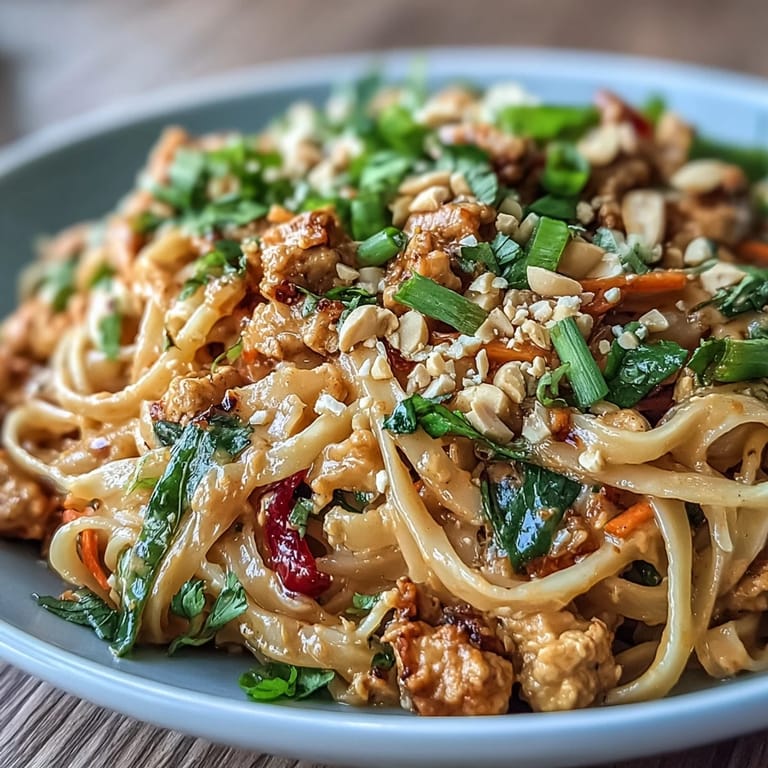
- Don't skip the chopped peanuts and cilantro on top—they add texture and freshness that changes the whole eating experience.
- Make it spicier by doubling the sriracha or adding chili flakes, or cooler by adding a splash more broth if the sauce feels too intense.
 Save
Save This dish proves that Thai-inspired food doesn't need to be intimidating or involve specialty equipment—just bold flavors, fresh ingredients, and one good pan. Make it once and it becomes part of your regular rotation.
Recipe FAQs
- → Can I substitute the ground chicken with another protein?
Yes, you can swap ground chicken for ground turkey or crumbled tofu for a different protein option that suits your preference.
- → What type of noodles work best in this dish?
Dried wide rice noodles are ideal as they absorb the creamy peanut sauce well and provide a pleasant chewy texture.
- → How can I make this dish gluten-free?
Use tamari instead of soy sauce and ensure the hoisin sauce you choose is gluten-free to keep the dish free of gluten.
- → What level of spice does this dish have?
The dish includes 1–2 teaspoons of Sriracha for mild heat, but you can adjust or omit this depending on your spice preference.
- → What garnishes are recommended to enhance the flavors?
Chopped roasted peanuts, fresh cilantro leaves, green onion tops, and lime wedges add texture and brightness to the final dish.