 Save
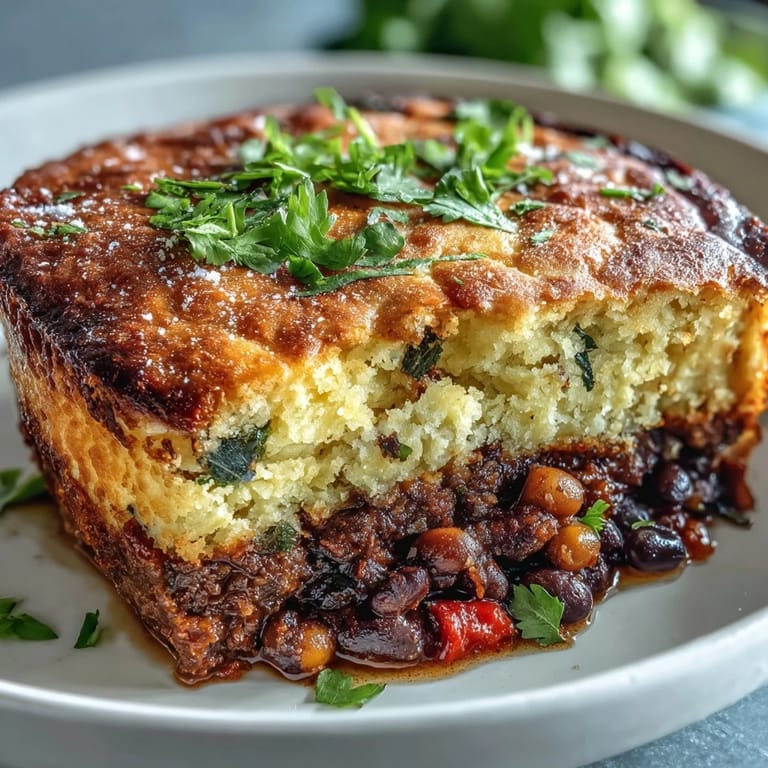
Save My friend texted me at 4 PM asking if I could bring dinner to her place that night, and I stood in front of my pantry thinking about what would feel both exciting and manageable. The black beans caught my eye, and suddenly I was imagining something warm and layered—a filling that tastes like tacos but arrives at the table as one big, golden-topped casserole. That first time I made it, I was nervous the cornbread would sink or burn, but instead it rose into this perfect golden cushion that somehow made weeknight cooking feel like an event.
I made this for a small dinner party last fall, and what surprised me most wasn't the compliments about taste—it was how people relaxed around the table once they realized it was vegan. Something about a shared, comforting casserole seems to dissolve assumptions, and suddenly everyone was just eating and talking and asking for the recipe before dessert even happened.
Ingredients
- Olive oil: Just a tablespoon gets your vegetables singing without heaviness, and it helps build that aromatic foundation where the garlic and spices can really shine.
- Yellow onion and garlic: These two are doing the flavor work—don't rush them, because their sweetness becomes the baseline for everything else.
- Red and green bell peppers: The colors aren't just pretty; they bring different sweetness levels and create texture that holds up during baking.
- Zucchini: This adds moisture and volume without overpowering the taco seasonings, keeping the filling balanced and not too dense.
- Ground cumin, chili powder, smoked paprika, and dried oregano: This blend is the soul of the dish—the cumin grounds it, the chili adds warmth, the paprika brings that toasted depth, and oregano ties it all together in a way that feels effortless.
- Black beans: Drain and rinse them well so you control the moisture and the filling doesn't become soup-like.
- Corn: Whether frozen or canned, it adds sweetness and a textural contrast that keeps each forkful interesting.
- Diced tomatoes with juices: The liquid becomes part of the filling's sauce, so use the canned version for consistency rather than fresh.
- Vegetable broth: This brings everything together into a cohesive filling that won't be dry under the cornbread topping.
- All-purpose flour and cornmeal: The ratio here creates a topping that's fluffy but sturdy enough to stand up to the steaming filling below.
- Baking powder: This is your leavening agent—it's what makes the cornbread rise into that golden cloud.
- Unsweetened plant-based milk: Soy works best for binding, but oat milk is creamier if you prefer a softer crumb.
- Neutral oil: Canola keeps the topping tender without adding competing flavors.
- Apple cider vinegar: This reacts with the baking powder to create lift, so don't skip it even though you won't taste it directly.
Tired of Takeout? 🥡
Get 10 meals you can make faster than delivery arrives. Seriously.
One email. No spam. Unsubscribe anytime.
Instructions
- Set your stage:
- Preheat your oven to 400°F and grease a 9x13-inch baking dish—having everything ready means you're not fumbling while vegetables are cooking.
- Build the aromatic base:
- Heat olive oil in your large skillet and let the diced onion soften for about 3 minutes, listening for that gentle sizzle and watching it turn translucent. Add your garlic, bell peppers, and zucchini, then cook for 5 more minutes until the peppers start to soften at the edges.
- Toast your spices:
- Stir in the cumin, chili powder, smoked paprika, oregano, salt, and black pepper, cooking for just 1 minute until the kitchen smells like a taco stand and the spices coat everything. This brief toast transforms them from flat powder into something warm and alive.
- Build the filling body:
- Add your drained black beans, corn, tomatoes with their juices, and vegetable broth, then let everything simmer for 5-7 minutes, stirring occasionally. You're looking for the liquid to reduce slightly and the flavors to marry together into something that tastes intentional.
- Transfer to your vessel:
- Pour the filling into your prepared baking dish, spreading it evenly so there are no thick spots or thin patches.
- Mix the topping dry ingredients:
- In a large bowl, whisk together flour, cornmeal, baking powder, salt, and sugar, making sure the baking powder is evenly distributed so your topping rises consistently.
- Combine the wet base:
- In a separate bowl, mix your plant-based milk, neutral oil, and apple cider vinegar—the vinegar will curdle the milk slightly, which is exactly what you want for the chemical reaction that creates lift.
- Bring it together gently:
- Pour the wet ingredients into the dry, then stir gently until just combined—lumps are your friend here because overmixing creates a dense, tough topping. You want it to feel soft and slightly loose.
- Top with intention:
- Spoon the cornbread batter evenly over the filling, spreading it gently to cover without compacting it. Some people worry about it sinking, but the filling's moisture helps it bake up rather than down.
- Watch it transform:
- Bake for 28-32 minutes until the topping is deep golden and a toothpick inserted in the center comes out clean. The smell will tell you when it's almost there—that buttery cornbread aroma is impossible to miss.
- Let it rest:
- Remove from the oven and let it sit for 5 minutes before serving, which allows the filling to set slightly and makes serving cleaner.
 Save
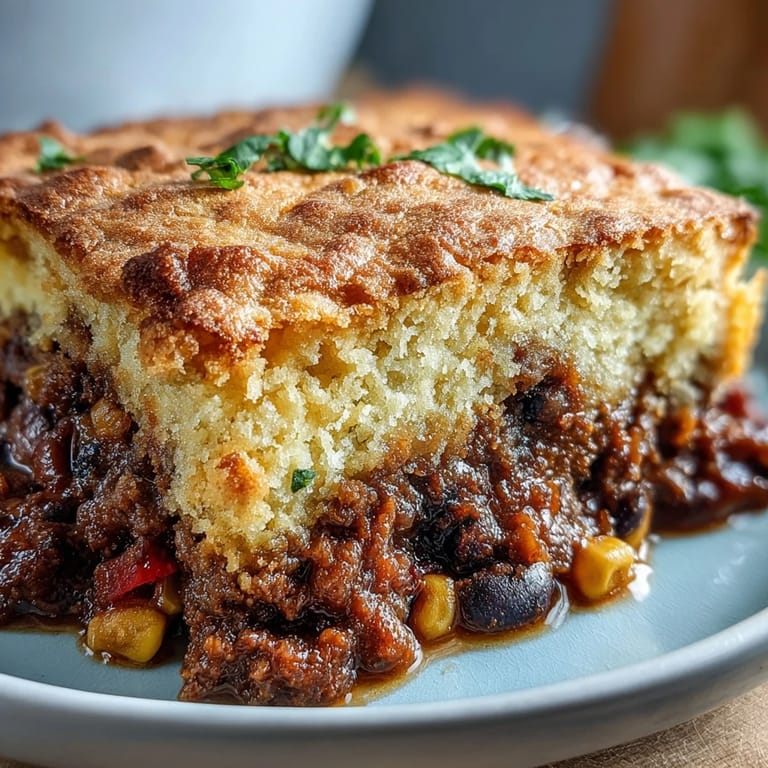
Save There's a moment about halfway through baking when your kitchen fills with that warm cornbread smell mixed with cumin and chili, and you stop whatever you were doing because the combination is so good it almost doesn't feel fair. That's when I knew this wasn't just a weeknight shortcut—it was actually something I'd come back to when I wanted to feel like I'd made something real.
Flavor Layers That Actually Matter
The genius of this dish is that you're not just dumping pre-made components together—you're actually sautéing your vegetables long enough for them to soften and release their natural sweetness, then blooming your spices so they wake up and develop depth. By the time you add the beans and tomatoes, you've already built a foundation that tastes deliberate and layered rather than flat. The cornbread topping then acts as both textural contrast and a vehicle for soaking up all that filling, which means every bite contains all the elements working in harmony.
Making It Your Own
This recipe is sturdy enough to handle additions and swaps without falling apart—I've made versions with jalapeños stirred into the filling for heat, and I've experimented with adding a quarter cup of vegan cheese to the cornbread batter for richness. Some nights I use crushed tomatoes instead of diced because I want a smoother filling, and other times I add a splash of lime juice to brighten everything up. The beauty is that once you understand how the components work together, you can adjust based on what you have on hand or what your mood calls for.
Storage and Reheating Wisdom
This casserole actually tastes better the next day once the flavors have had time to settle and mingle, so don't hesitate to make it ahead. Leftovers keep for up to 3 days refrigerated, and reheating is simple—just cover loosely with foil and warm in a 350°F oven for about 15 minutes so the topping doesn't dry out. I sometimes break mine up into individual portions and reheat just what I need, which means you get the comfort of this dish whenever a craving hits without the commitment of making the whole thing again.
- For a gluten-free version, swap all-purpose flour for a 1:1 gluten-free blend and reduce the cornmeal by 2 tablespoons to keep the ratio balanced.
- If your plant-based milk is already sweetened, reduce the sugar in the topping to 1 tablespoon so it doesn't become cloying.
- Let the filling cool slightly before topping with cornbread batter if you're worried about the batter cooking unevenly—though honestly, the heat helps the topping bake through without the bottom burning.
 Save
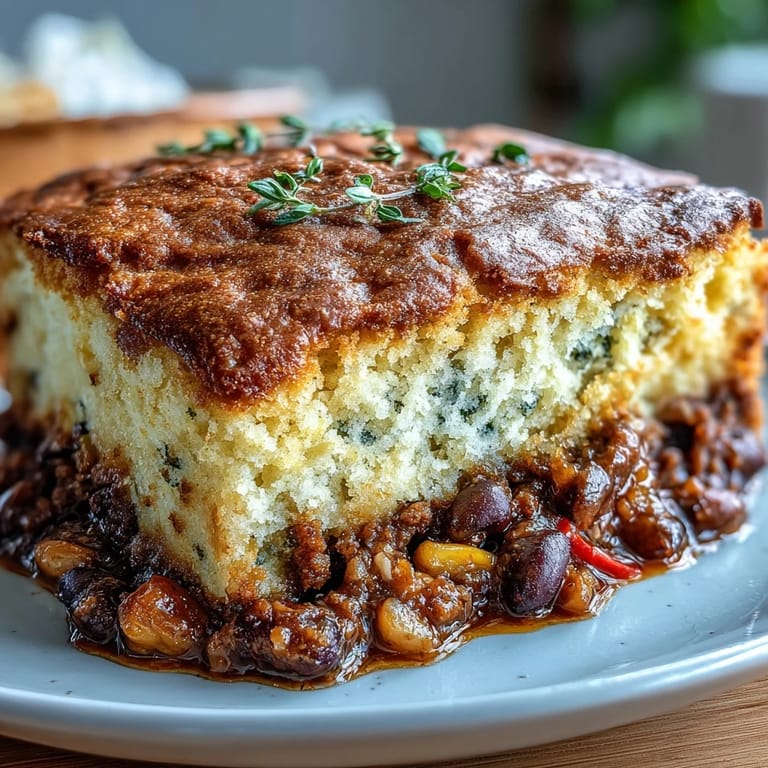
Save This is the kind of dish that makes people look at each other across the table and smile without needing to say anything, which is really all a home-cooked meal should accomplish. It's proof that you don't need anything fancy to create something memorable.
Recipe FAQs
- → What spices are used in the filling?
The filling features ground cumin, chili powder, smoked paprika, dried oregano, salt, and black pepper to create a warm and smoky flavor.
- → Can I substitute the cornbread topping for gluten-free options?
Yes, using a gluten-free flour blend in place of all-purpose flour will make the topping gluten-free while maintaining its texture.
- → How can I add extra heat to the dish?
Add a minced jalapeño to the filling for a spicy kick without overpowering the other flavors.
- → What plant-based milks work best for the topping?
Unsweetened soy, almond, or oat milk all work well to keep the topping moist and tender.
- → Is this dish suitable for meal prep?
Yes, leftovers can be refrigerated for up to three days and reheated for convenient meals later in the week.