 Save
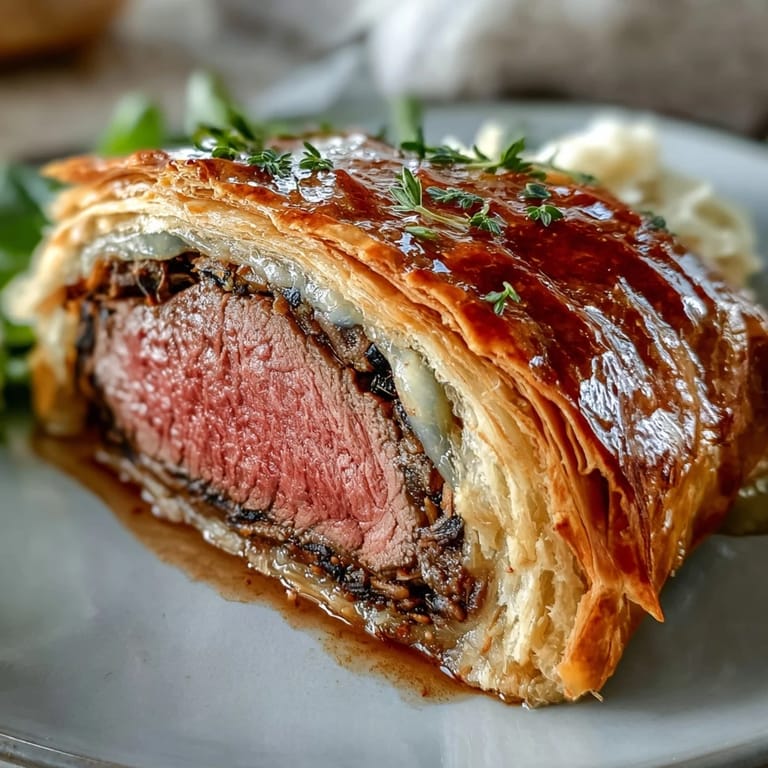
Save The first time I made Beef Wellington, my kitchen smelled like a French bistro for hours—earthy mushrooms, thyme, and butter mingling with the rich beef. My partner wandered in halfway through, skeptical that I could pull off something so fancy at home, but when that golden pastry came out of the oven, something shifted. It wasn't just dinner; it became proof that showstopper meals don't require a culinary degree, just patience and a little courage.
I learned the real magic of this dish at a dinner party where I'd invited people I was trying to impress. Halfway through cooking, I realized I'd seared the beef too aggressively and panicked about it being overdone. Turns out that slight char just added depth, and serving it medium-rare meant the inside stayed perfectly tender. That night taught me that Wellington isn't about perfection—it's about confidence and knowing your oven.
Ingredients
- Beef tenderloin (2 lb / 900 g): This is the star, so buy the best quality you can find and ask the butcher to trim it evenly so it cooks uniformly.
- Cremini or button mushrooms (1 lb / 450 g): Finely chop them by hand or pulse in a food processor until they're almost paste-like; this is where the earthy soul of Wellington lives.
- Prosciutto (10 slices): This creates a moisture barrier that keeps the pastry crisp, so don't skip it or swap it for bacon.
- Puff pastry (1 sheet, 14 oz / 400 g): Use all-butter pastry if you can—it browns more beautifully and tastes noticeably richer than the vegetable shortening versions.
- Dijon mustard (2 tbsp): A thin layer adds a subtle sharpness that cuts through the richness without overwhelming the beef.
- Fresh thyme (2 tbsp, chopped): Fresh is non-negotiable here; dried thyme will taste dusty in comparison.
- Shallots and garlic: Mince them finely so they dissolve into the mushroom mixture and create a cohesive, savory paste.
- Unsalted butter and vegetable oil: The butter gives the duxelles depth, while the oil helps you sear the beef without burning.
Tired of Takeout? 🥡
Get 10 meals you can make faster than delivery arrives. Seriously.
One email. No spam. Unsubscribe anytime.
Instructions
- Heat your oven and prep your workspace:
- Set the oven to 425°F (220°C) so it's fully preheated when you need it, and clear a large, clean surface where you can work without rushing.
- Sear the beef until it's mahogany brown:
- Season generously, then sear each side hard over high heat—you want a flavorful crust, not gray meat. Let it cool completely on a plate while you make the duxelles.
- Cook the mushroom duxelles until it's almost a paste:
- Start with shallots and garlic in butter, then add the mushrooms and thyme and let them cook down slowly until there's almost no liquid left. This takes patience, but it's the moment the filling becomes something special.
- Build your prosciutto base:
- Arrange the slices slightly overlapping on plastic wrap to form a rectangle just big enough to wrap around your beef. Spread the cooled duxelles evenly over top.
- Assemble the beef package:
- Brush the cooled beef with mustard, place it on the duxelles, then use the plastic wrap to roll everything tightly around the meat. Chill for 20 minutes so it holds its shape.
- Wrap in pastry and seal the edges:
- Roll out your puff pastry large enough to encase everything, place the beef in the center, fold the pastry over, trim excess, and seal the edges firmly so nothing leaks during baking.
- Apply the egg wash and final chill:
- Brush the pastry with beaten egg, which gives it that beautiful golden sheen, then chill for 10 minutes so the pastry doesn't shrink in the oven.
- Bake until golden and the beef reads 120-130°F:
- Watch for that deep golden color on the pastry—it should take 40 to 45 minutes depending on your oven. Use a thermometer to hit your target doneness.
- Rest before slicing:
- Let it rest 10 to 15 minutes so the juices redistribute and the pastry stays crisp. This is when the hardest part happens—waiting.
 Save
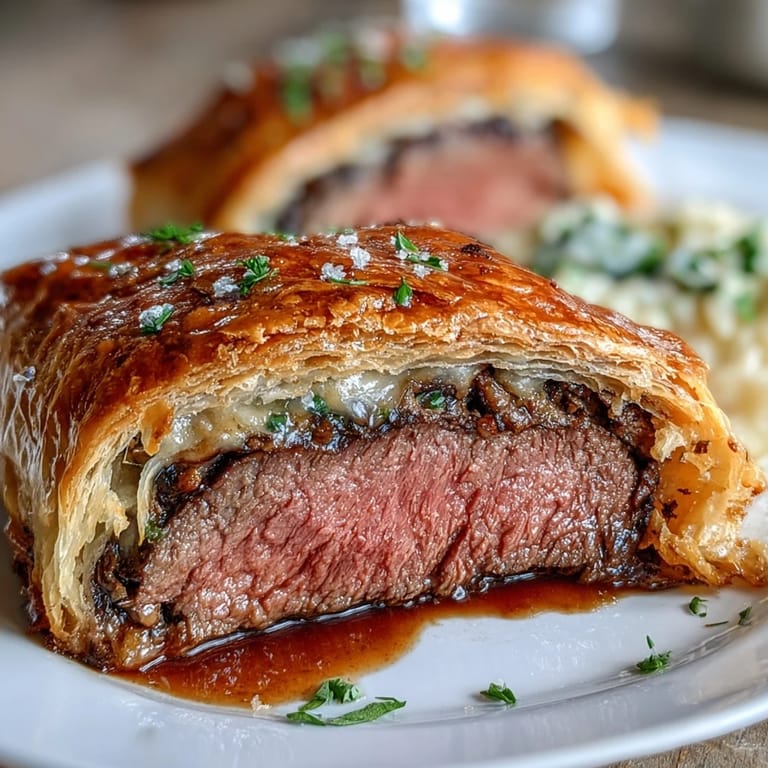
Save There's a moment, maybe 35 minutes into baking, when you stop pacing and just watch through the oven window. The pastry goes from pale to golden, and you realize you're about to serve something you made with your own hands that looks like it came from a restaurant. That's when Wellington stops being a recipe and becomes a memory.
The Duxelles is Everything
The mushroom mixture is where people either nail this dish or miss the mark entirely. I've seen home cooks skip the patient evaporation step and end up with a watery filling that seeps into the pastry and ruins the texture. The moment you stop stirring and realize there's no more liquid—when it smells concentrated and earthy and almost savory enough to eat on a spoon—that's when you know you've got it. Don't rush it, and don't add cream thinking it will help; the duxelles should be dry and paste-like, almost like a mushroom pâté.
Temperature Control is Your Friend
One of the biggest mistakes is either undercooking the mushrooms (so they release water in the oven) or overcooking the beef during the sear (so the inside is overdone by the time the pastry is golden). I learned to sear the beef quickly over truly high heat, then let it cool completely before wrapping—this ensures the hot pan doesn't keep cooking the meat. Similarly, don't skip the 10-minute chill before baking; it stabilizes everything and prevents the pastry from shrinking or sliding.
Serving and Flavor Pairings
Beef Wellington is rich and luxurious on its own, but serving it with something acidic and elegant—like a red wine sauce or a simple pan jus—cuts through the richness and makes each bite feel lighter. I sometimes make a quick pan sauce by deglazing the baking sheet with red wine and beef stock, then straining and reducing it for a couple of minutes. The beef itself is the star, so don't overshadow it with heavy sauces; let the pastry and mushrooms shine.
- A crisp salad with vinaigrette on the side provides a refreshing contrast to the richness of the pastry and beef.
- If you want to add pâté as the notes suggest, apply it thinly before the mustard—it's a luxury touch that adds depth without overwhelming.
- Serve it with creamed spinach or roasted asparagus if you want a vegetable that feels elegant without requiring extra work.
 Save
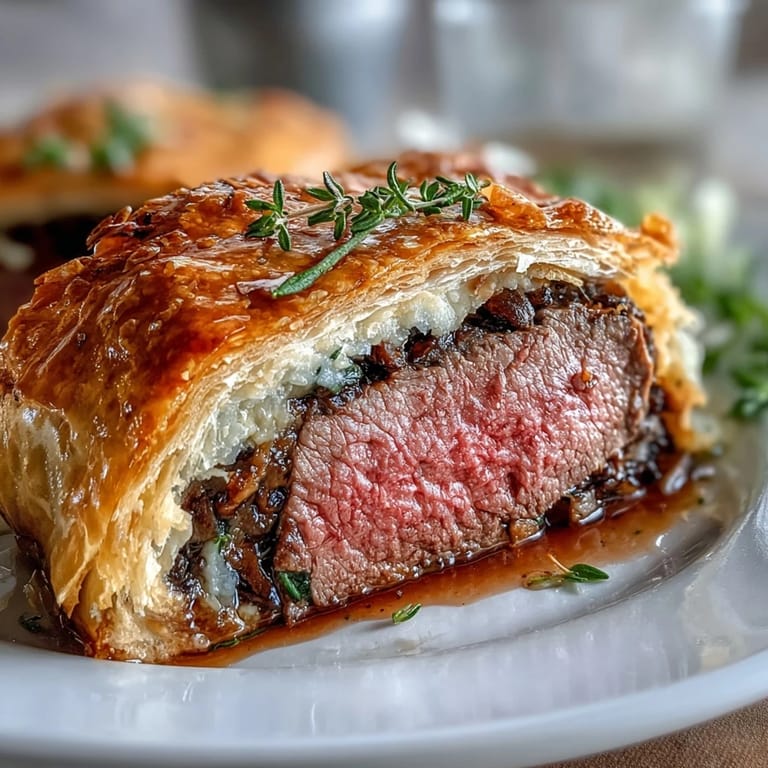
Save Every time I pull this out of the oven, I'm struck by how something so impressive comes from just knowing how to sear, how to cook mushrooms, and how to wrap things carefully. Once you've made it once, you'll make it again.
Recipe FAQs
- → Can I prepare Beef Wellington ahead of time?
Yes, you can assemble it completely and refrigerate for up to 24 hours before baking. Add 5-10 minutes to the cooking time if baking directly from the refrigerator.
- → What temperature should the beef be for medium-rare?
For medium-rare, the internal temperature should reach 130°F (54°C) after resting. Remember the beef will continue cooking slightly while resting.
- → Why is my puff pastry soggy?
Ensure the mushroom duxelles is completely dry before assembly, cook out all moisture. Also, make sure the seared beef is completely cooled before wrapping.
- → Can I use a different cut of beef?
Beef tenderloin is ideal for its tenderness and uniform shape, but you can use a center-cut beef fillet or filet mignon roast for similar results.
- → What should I serve with Beef Wellington?
Classic pairings include roasted vegetables, creamy mashed potatoes, green beans, or a crisp salad. A red wine reduction sauce complements the dish beautifully.
- → How do I prevent the pastry from becoming too dark?
If the pastry is browning too quickly, tent it loosely with aluminum foil during the last 15 minutes of baking to prevent over-browning while the beef finishes cooking.