 Save
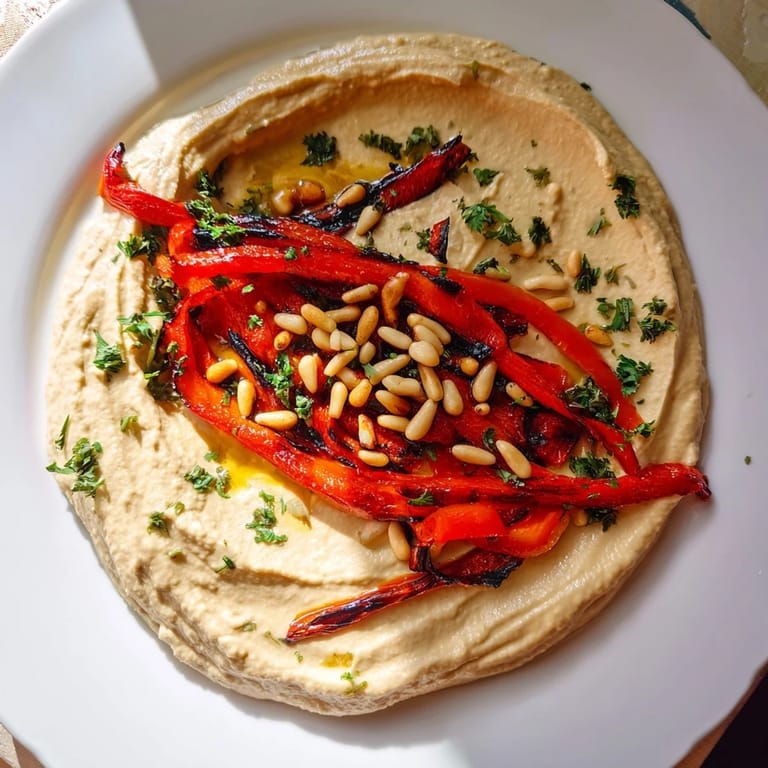
Save There's something about the smell of tahini hitting a hot food processor that makes me feel like I'm unlocking a secret. I discovered this hummus and roasted vegetable situation during a lazy Sunday when my fridge was half-empty and I had friends showing up in an hour. What started as panic became this beautiful sprawl of charred vegetables piled on creamy hummus, and suddenly I had made something that looked intentional, even though it was born from necessity. Now it's become my go-to when I want to feel like I've got my life together without actually spending all day in the kitchen.
I'll never forget the first time someone ate this at a dinner party and immediately asked what was in it—not because something was wrong, but because they wanted to figure out why it tasted so good. That moment of watching someone's face light up as they hit the toasted pine nuts made me realize how much personality you can pack into something so simple.
Ingredients
- Canned chickpeas, drained and rinsed (1½ cups): This is the foundation, and rinsing them matters more than you'd think because it rinses away that starchy liquid that can make your hummus gritty.
- Tahini (¼ cup): Don't skip this or use peanut butter instead—tahini gives you that silky texture that makes hummus actually hum.
- Fresh lemon juice (2 tablespoons): Fresh is non-negotiable here; it's what cuts through the richness and makes everything sing.
- Garlic clove, minced (1): One clove is enough; garlic can bully a dish if you're not careful.
- Extra-virgin olive oil (3 tablespoons, plus more for drizzling): Use the good stuff you actually like eating, because you taste it.
- Ground cumin (½ teaspoon): This whisper of warmth is what makes people say, 'Wait, what's in this?'
- Sea salt and cold water: Salt builds flavor, and water is how you dial in that exact creamy consistency you're after.
- Red bell pepper, zucchini, red onion, eggplant: These vegetables are sturdy enough to char beautifully without falling apart or releasing too much water.
- Smoked paprika (½ teaspoon): This is the magic—it gives you that campfire flavor without actually cooking anything over a fire.
- Pine nuts (3 tablespoons): Toasted pine nuts add a buttery crunch that ties everything together.
- Fresh parsley and sumac or zaatar: These finish the dish with brightness and a little tangy punch if you use the sumac.
Tired of Takeout? 🥡
Get 10 meals you can make faster than delivery arrives. Seriously.
One email. No spam. Unsubscribe anytime.
Instructions
- Heat your oven and prep the vegetables:
- Crank the oven to 425°F and while it's warming up, chop your vegetables into pieces that are roughly the same size so they cook evenly. This even-sizing thing actually matters more than people think.
- Season and roast with intention:
- Toss everything together with oil, smoked paprika, salt, and pepper, then spread it on a baking sheet in a single layer. Let them char for 22–25 minutes, stirring once halfway through, until the edges turn blackened and the insides are tender—that charring is where the flavor lives.
- Make the hummus while vegetables roast:
- In your food processor, combine chickpeas, tahini, lemon juice, garlic, olive oil, cumin, and salt, then blend until it's completely smooth and creamy. Add cold water one tablespoon at a time and pulse between additions until you hit that sweet spot where it's whipped but still holds its shape.
- Toast the pine nuts:
- While everything else is going, put pine nuts in a dry skillet over medium heat and stir them for 2–3 minutes until they turn golden and smell incredible. Watch them closely because they go from perfect to burnt in about 30 seconds.
- Build the platter:
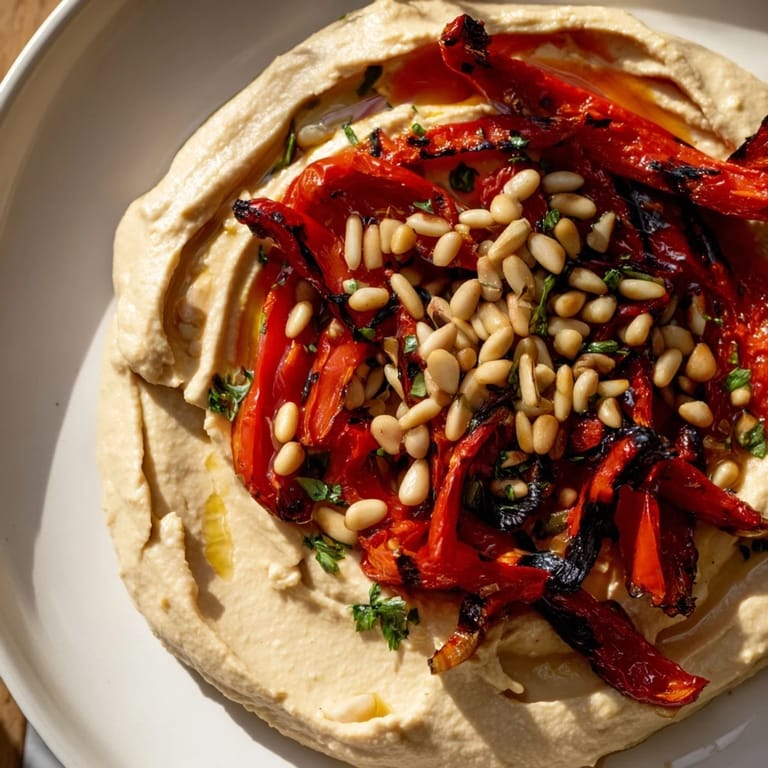
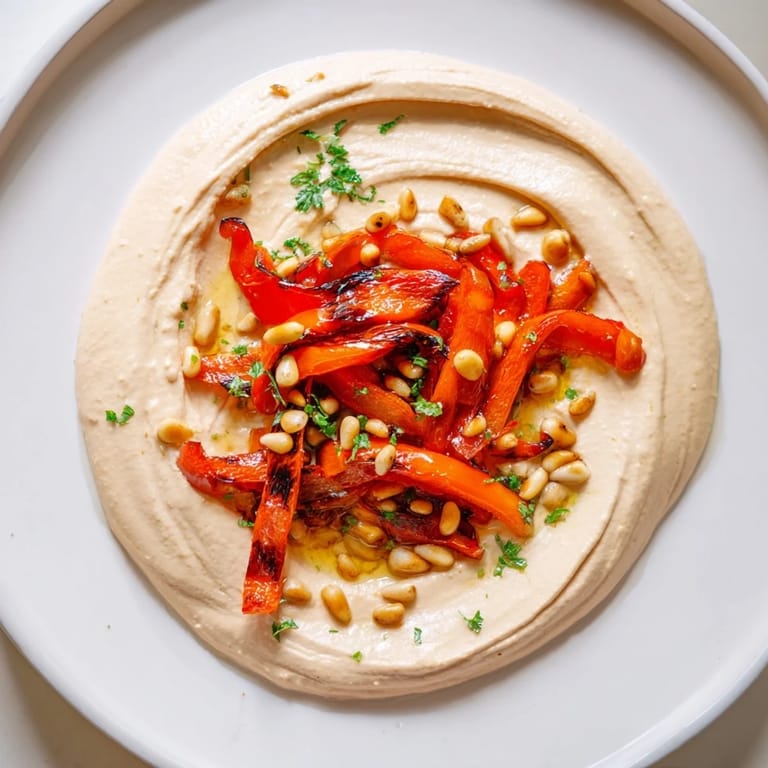
- Spread your hummus onto a serving dish and use the back of a spoon to create a shallow swoosh or well in the middle—this isn't about perfection, just intentionality. Pile the roasted vegetables on top, scatter the toasted pine nuts over everything, finish with fresh parsley and sumac if you're using it, then drizzle with good olive oil and call it done.
 Save
Save There was this one evening when I brought this to a potluck and watched three different people go back for thirds before the main course even arrived. That's when I understood that sometimes the appetizer is where the magic lives, and it has nothing to do with how complicated the recipe is.
Why Roasted Vegetables Matter Here
Roasting transforms vegetables into something almost caramelized and sweet, which is exactly what balances the richness of the hummus. The eggplant gets creamy, the peppers turn silky, and the onions shift from harsh to honeyed—this is cooking chemistry at its most elegant and least pretentious. The Maillard reaction isn't just fancy food science; it's what makes your food taste like you actually put thought into it.
The Tahini Situation
I spent years thinking I didn't like hummus because I'd only ever had versions made with too much tahini or bad tahini, and there's a real difference. Good tahini is creamy and almost sweet, while the cheap stuff tastes bitter and chalky. Once I invested in a better jar, everything changed, and I realized I'd been blaming the dish instead of the ingredient.
Making This Your Own
The beauty of this recipe is how naturally it adapts to whatever's in your kitchen or whatever season you're in. Winter calls for roasted carrots and cauliflower, summer begs for zucchini and tomatoes, and fall has mushrooms and root vegetables waiting for the roasting pan. The technique stays the same; only the vegetables change.
- Harissa adds heat if you want to wake people up, while a swirl of black sesame paste brings earthiness if you're in an experimental mood.
- This works as a dip, a side, a light lunch bowl with some grains, or spread on toast for a very satisfying snack.
- Make the hummus a few hours ahead if you want—it actually tastes better after it's had time to sit and the flavors have time to get friendly with each other.
 Save
Save This dish taught me that sometimes the simplest things, made with actual attention and decent ingredients, are what people remember. It's not fancy or complicated, but it tastes like someone who cares made it.
Recipe FAQs
- → What vegetables work best for roasting?
Vegetables like red bell pepper, zucchini, red onion, and eggplant roast well and develop rich smoky flavors. Seasonal swaps like carrots or cauliflower are excellent alternatives.
- → How do I achieve a smooth hummus base?
Blend chickpeas with tahini, lemon juice, garlic, olive oil, and a bit of cold water until creamy and smooth. Adjust water to reach desired texture.
- → Can I make the pine nuts topping ahead?
Yes, pine nuts can be toasted in advance and stored in an airtight container to maintain their crunch and aroma.
- → What spices enhance the roasted vegetables?
Smoked paprika, salt, and freshly ground black pepper add smoky warmth and depth, complementing the natural sweetness of the vegetables.
- → Is this dish suitable for special diets?
Absolutely, it's vegan and gluten-free as long as served without bread or paired with gluten-free options.