 Save
Save The first time I bit into an okonomiyaki at a tiny stall in Osaka, I was struck by how something so humble—basically a vegetable pancake—could taste so impossibly good. The vendor flipped it with one confident motion, and suddenly I understood: it wasn't just the layers of cabbage and sauce, it was the ritual, the sizzle, the way those bonito flakes danced from the residual heat. Years later, I recreate that moment in my own kitchen, and my friends always ask for the recipe before they've even finished eating.
I made okonomiyaki for my partner one weeknight when we were both exhausted, and somehow the simple act of standing together at the stove, watching the pancakes turn golden, felt like the best part of our day. By the time we sat down to eat, with those bonito flakes still trembling from the heat, we weren't talking about work anymore—we were just present, savoring something warm and alive on our plates.
Ingredients
- All-purpose flour: This is your binding agent; it gives structure without being too heavy, so the pancake stays tender inside.
- Dashi stock: If you can find it, use real dashi—it adds a subtle ocean depth that plain water simply can't match, and it's worth seeking out at any Asian market.
- Eggs: They're the glue that holds everything together, so don't skip them even if you're tempted to lighten things up.
- Baking powder: Just a touch makes the pancakes fluffy rather than dense, which changes everything.
- Green cabbage: Shred it yourself if you can; pre-shredded cabbage releases too much water and your batter becomes mushy.
- Green onions, carrot, and bean sprouts: These add texture and freshness; they're not just garnish, they're built into every bite.
- Bacon or pork belly: Optional, but if you use it, the fat renders into the pancake and flavors every layer.
- Shrimp: Cooked shrimp adds a briny sweetness; chop them small so they distribute evenly.
- Okonomiyaki sauce: This tangy-sweet brown sauce is the soul of the dish; if you can't find the real thing, mix equal parts Worcestershire, ketchup, and soy sauce and you're close enough.
- Japanese mayonnaise: It's creamier and richer than American mayo, and the difference is noticeable.
- Bonito flakes: These paper-thin flakes curl and dance from the heat; buy them fresh, not the kind that's been sitting in a cabinet for two years.
- Aonori and pickled ginger: They're the final flourish that makes it feel authentically Japanese, so don't skip them.
Tired of Takeout? 🥡
Get 10 meals you can make faster than delivery arrives. Seriously.
One email. No spam. Unsubscribe anytime.
Instructions
- Build your batter base:
- Whisk flour, dashi, eggs, salt, and baking powder together until you have a smooth, lump-free mixture. It should be thicker than pancake batter but thinner than cake batter—think of the consistency of thick yogurt.
- Fold in the vegetables:
- Gently combine cabbage, green onions, carrot, bean sprouts, and shrimp until everything is coated but not aggressively mixed. Overworking the batter will make the cabbage release too much liquid and turn the whole thing mushy.
- Heat your cooking surface:
- Get your nonstick skillet or griddle hot over medium heat, then lightly oil it. You want medium heat—too hot and the outside burns before the inside cooks through; too cool and it never develops that golden crust.
- Pour and shape:
- Use about 1/4 of the batter for each pancake, shaping it gently with your spatula into a round about 1/2-inch thick. If you're using bacon or pork belly, lay the pieces across the top now so they cook into the pancake.
- First side:
- Let it cook for 4–5 minutes without touching it. You'll hear it sizzle, smell the butter and cabbage toasting, and see the edges start to brown—that's your signal to peek underneath and check for a deep golden color.
- The flip:
- Take a breath, use your spatula to get fully under the pancake, and flip it in one confident motion. This is where practice pays off; a hesitant flip means a broken pancake.
- Second side:
- Cook another 4–5 minutes until the new bottom is equally golden and the whole pancake feels firm when you press it gently with your spatula.
- Sauce and toppings:
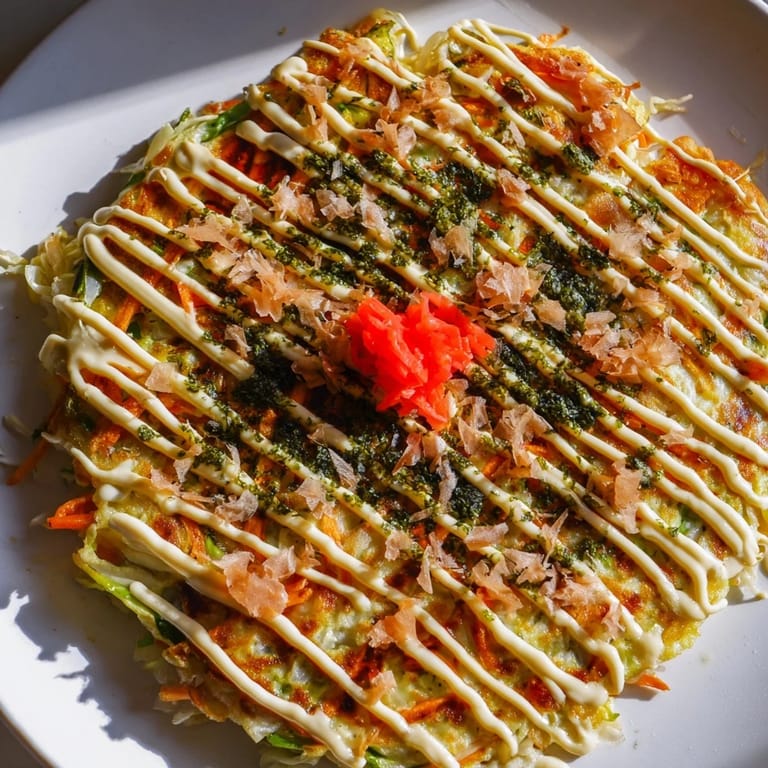
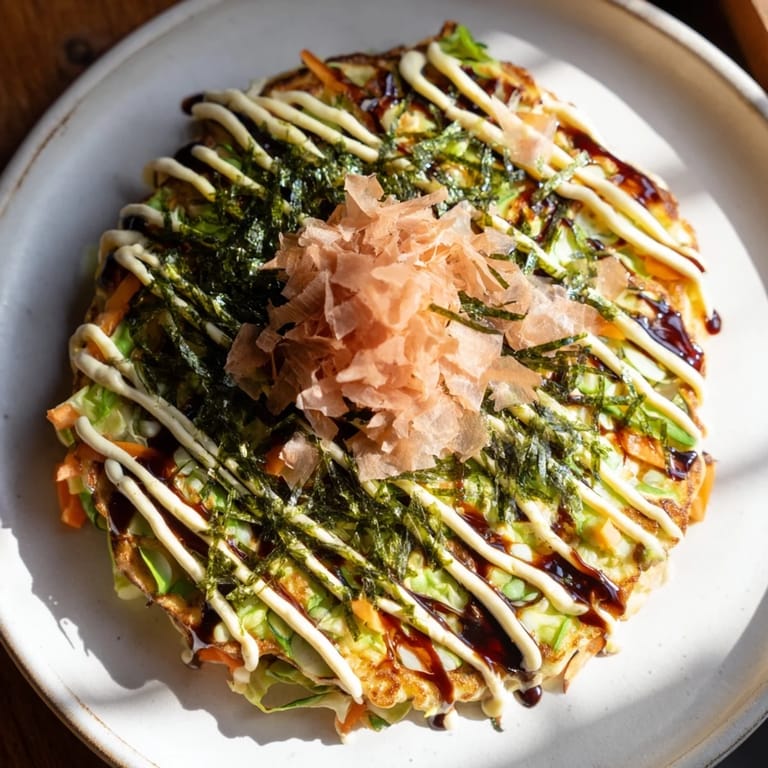
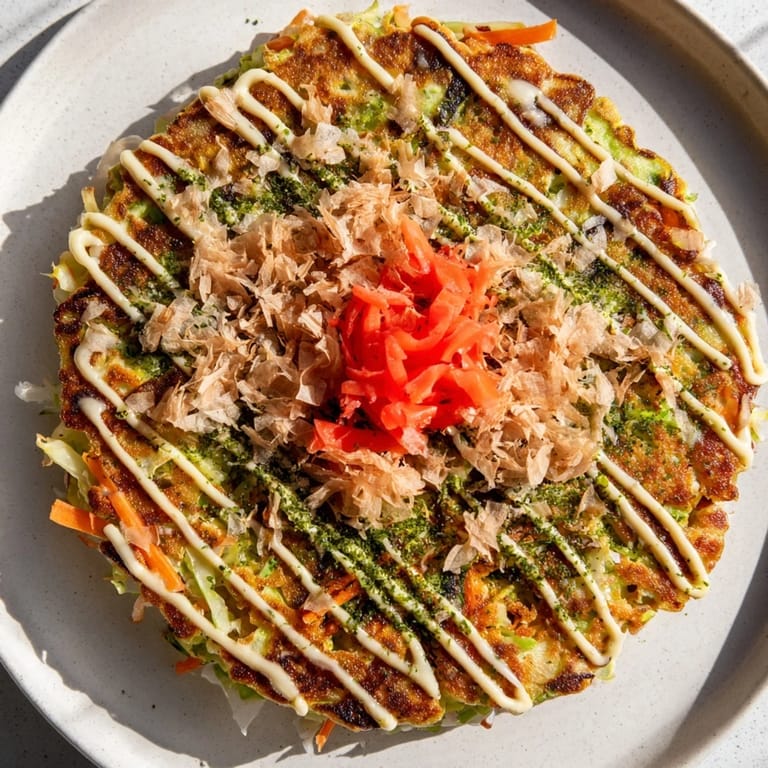
- Transfer to a plate while still hot. Drizzle okonomiyaki sauce and mayo in a crisscross pattern, then immediately sprinkle with bonito flakes, aonori, and pickled ginger—the heat activates everything and makes the flakes dance.
 Save
Save There's a specific moment when you watch someone take that first bite of okonomiyaki—their eyes widen slightly as the layers of flavor hit at once, the savory, the sweet, the umami all at the same time. That moment never gets old, and it's why I keep making this dish.
Vegetarian and Protein Variations
Okonomiyaki is wonderfully forgiving if you want to change it up. Leave out the bacon and shrimp entirely and you have a perfect vegetarian version that's just as satisfying—the cabbage and sauce carry enough flavor that you don't miss the meat. If you want to experiment, try adding corn, grated cheese, or even kimchi to the batter; the structure holds together well enough to handle variations.
Pairing and Serving Ideas
These pancakes are filling enough to serve as a main dish, but they also work beautifully as part of a larger Japanese meal alongside miso soup, pickled vegetables, or a simple green salad. The slight sweetness of the sauce means they pair wonderfully with cold beer or sake; if you want to get fancy, a light Japanese lager or crisp white wine cuts through the richness perfectly. Serve them hot, straight off the griddle, because they lose their magic once they cool down.
Building Confidence in the Kitchen
Making okonomiyaki teaches you something valuable about cooking: that the basics—mixing, folding, flipping, timing—are more important than fancy ingredients. Once you've successfully flipped one pancake, you've unlocked a small but real confidence that carries over to other dishes. Pay attention to the sizzle, trust your senses, and remember that restaurant-quality food often comes from home cooks who simply paid attention the first time they made something.
- Start with a lower heat if you're nervous; it gives you more time to recover from mistakes.
- Practice the flip on your first pancake when you're less attached to the outcome—it's okay if it breaks.
- Fresh, quality ingredients like real dashi and proper bonito flakes make a noticeable difference in flavor.
 Save
Save There's something grounding about cooking okonomiyaki, about standing at the stove with something sizzling in front of you, creating something that tastes like joy. Once you make it, you'll understand why it's beloved street food in Japan.
Recipe FAQs
- → What ingredients create the batter for these pancakes?
The batter is a blend of all-purpose flour, dashi stock, eggs, salt, and baking powder, providing a fluffy base.
- → Which vegetables are commonly included in this dish?
Shredded cabbage, green onions, julienned carrot, and optional bean sprouts are folded into the batter.
- → How is the cooking process carried out?
Pour batter onto a lightly oiled skillet or griddle, shape into round pancakes, cook until golden on both sides, roughly 4-5 minutes per side.
- → What toppings enhance the flavor and appearance?
A drizzle of okonomiyaki sauce and Japanese mayonnaise is added, followed by bonito flakes, dried seaweed flakes, and pickled ginger.
- → Can proteins be added to these pancakes?
Optional fillings include bacon, pork belly strips, or cooked shrimp, folded into or layered on the pancakes.
- → What are suitable substitutions for the sauce?
The okonomiyaki sauce can be replaced with a blend of Worcestershire sauce, ketchup, and soy sauce for a similar tangy flavor.