 Save
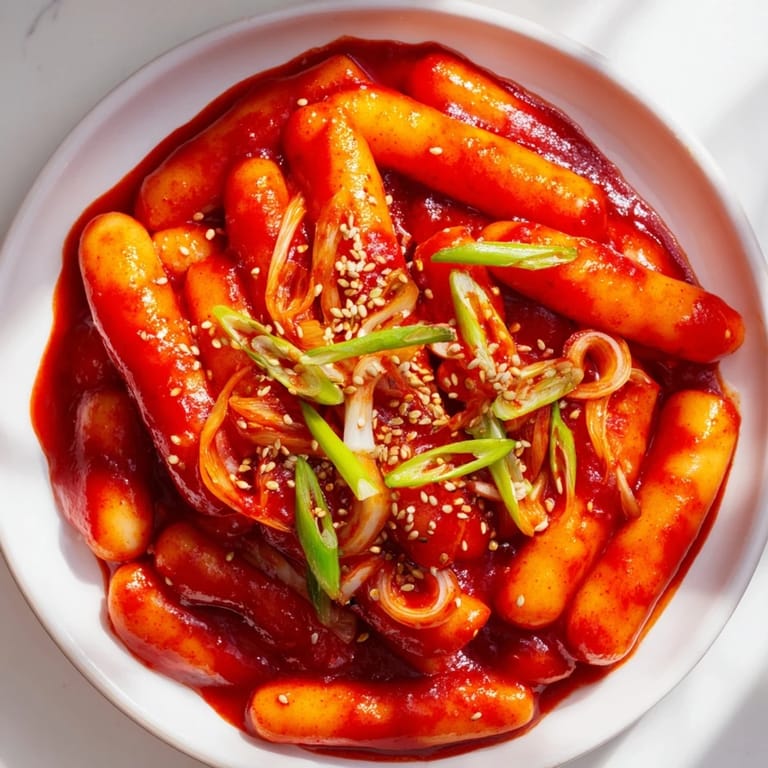
Save The first time I watched tteokbokki being made at a Seoul street stall, I was mesmerized by how those chewy rice cakes tumbled in a glossy red sauce, glistening under the vendor's careful stir. He moved with such ease, like he'd done it a thousand times, and when he handed me a stick to taste, that spicy-sweet heat hit all at once—bright, addictive, impossible to stop eating. Years later, I realized I could recreate that exact magic in my own kitchen, and now it's become one of those recipes I make when I want comfort food that actually excites me.
I made this for my roommate on a cold Tuesday night when we were both exhausted, and watching her eyes light up as she realized this wasn't takeout—it was homemade—made the whole thing worth it. She devoured two helpings while telling me about her day, and I realized then that the best recipes are the ones that bring people together without making you feel like you've been cooking all day.
Ingredients
- Korean rice cakes (tteok): Look for the cylindrical kind labeled tteok or tteokbokki—they're usually in the frozen section of Asian markets, and soaking them briefly in warm water makes all the difference if they've been chilled.
- Gochujang: This fermented chili paste is the soul of the sauce, bringing umami depth along with the heat, and a small amount goes a long way.
- Gochugaru: These Korean chili flakes add a sharp, layered spiciness that gochujang alone can't quite deliver, so don't skip them.
- Soy sauce: A good quality soy sauce rounds out the flavors and keeps the sauce from being one-dimensional.
- Honey: Just a tablespoon cuts through the heat with a gentle sweetness that feels natural rather than cloying.
- Garlic: Fresh minced garlic adds brightness and prevents the sauce from tasting flat or overly processed.
- Dried kelp and anchovies: These create an umami-rich broth that elevates the entire dish, but you can use water and add a pinch of salt if you prefer vegetarian.
- Green onions: Sliced diagonally and added at the end, they bring a fresh bite that cuts through the richness perfectly.
- Sesame seeds: A sprinkle at the end adds texture and a nutty note that feels intentional, not accidental.
Tired of Takeout? 🥡
Get 10 meals you can make faster than delivery arrives. Seriously.
One email. No spam. Unsubscribe anytime.
Instructions
- Wake up your rice cakes:
- If your tteok has been frozen or sitting in the fridge, soak them in warm water for about 10 minutes—they'll soften slightly and cook more evenly. Cold rice cakes can stay stubborn even during cooking, so this step matters more than it sounds.
- Build your broth:
- In a medium pot, combine water, kelp, and anchovies (if using) and let them simmer gently for 10 minutes. You're extracting that deep, savory backbone that makes this dish taste like it came from a street vendor, not your apartment kitchen.
- Create the sauce:
- Remove the kelp and anchovies, then stir in gochujang, gochugaru, soy sauce, sugar, honey, and minced garlic until everything is fully dissolved. The paste should loosen into a cohesive sauce with no grainy bits hiding at the bottom of the pot.
- Bring it together:
- Add the drained rice cakes, sliced onion, and chopped cabbage if you're using it, then bring the whole thing to a gentle boil. Stir occasionally so nothing sticks to the bottom, which happens faster than you'd expect with the sauce thickening up.
- Let it simmer:
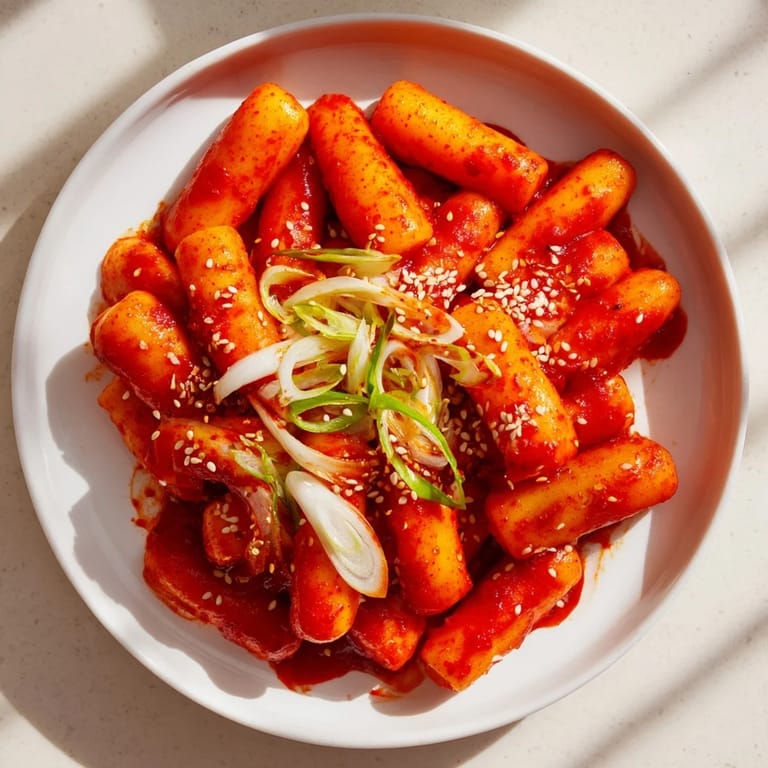
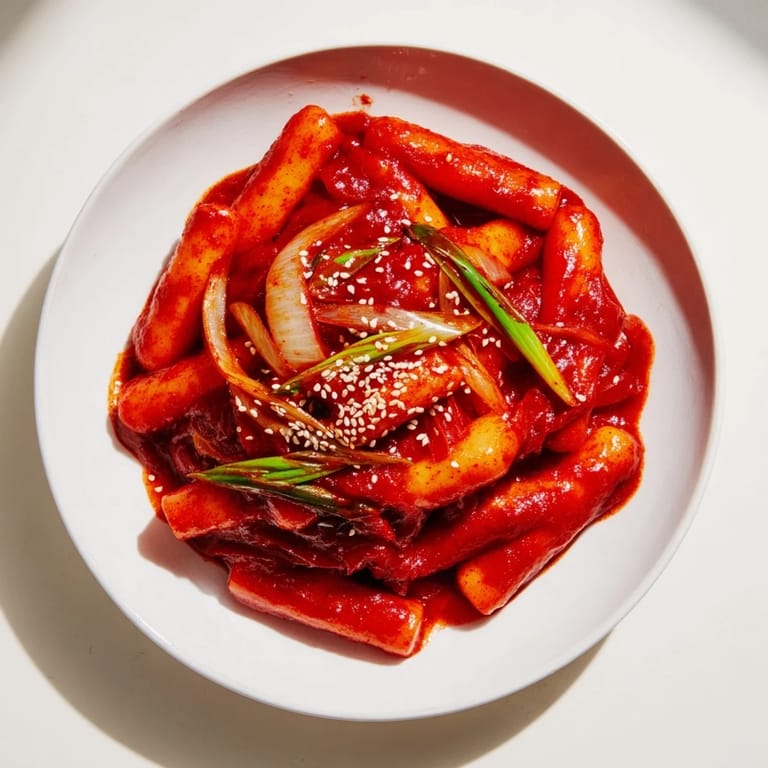
- Cook for 10 to 15 minutes until the sauce turns glossy and thick and the rice cakes are soft and chewy with just a tiny bit of resistance when you bite them. You want them tender but still distinct, not mushy.
- Finish with fresh elements:
- In the last two minutes, toss in your sliced green onions and boiled eggs if you're adding them, so they stay bright and don't lose their texture to the heat. Transfer to a platter, shower it with sesame seeds, and serve while it's still steaming.
 Save
Save There's something almost meditative about watching the sauce bubble and thicken, knowing that in a few minutes you'll have something that tastes like Korea but feels entirely personal. This dish has a way of making you feel like you're part of something bigger than just cooking dinner.
The Secret Life of That Sauce
The magic in tteokbokki lives entirely in the sauce, and I learned this the hard way by once trying to make it with just gochujang and water. The result was flat and one-dimensional, which is why the combination of gochujang, gochugaru, soy sauce, and honey matters so much—each ingredient pulls its own weight, layering heat, umami, saltiness, and sweetness into something that tastes complete. The honey is especially important because it doesn't just sweeten; it helps the sauce cling to the rice cakes and creates that glossy finish that makes people want to eat more.
Rice Cakes: Why Texture Is Everything
The rice cakes are the canvas here, and their texture determines whether this dish feels satisfying or disappointing. You want them chewy with just enough firmness that they hold their shape when you bite them, and that balance comes from not overcooking and from using the right type of tteok in the first place. Cylindrical rice cakes are standard for this dish because they cook more evenly than other shapes, and if you can't find Korean tteok specifically, Japanese udon cakes won't give you quite the same chewy-tender result.
Ways to Make It Your Own
Once you master the basic version, tteokbokki becomes a canvas for whatever you have on hand or whatever you're craving. Fish cakes sliced into strips add richness and chewiness, while vegetables like shiitake mushrooms, zucchini, or even broccoli florets can turn it into something more substantial without losing its essential character. Some nights I add a poached egg on top for extra protein, and other times I'll use the broth as a base for adding rice or noodles if I want to stretch it into a fuller meal.
- Sliced fish cakes or eomuk bring traditional textural contrast and extra umami without changing the core recipe.
- A raw egg stirred in at the very end, right before serving, creates pockets of richness throughout the sauce.
- Pickled radish served on the side cuts through the richness and prepares your palate for another spoonful.
 Save
Save Tteokbokki is the kind of recipe that tastes like you spent hours cooking when you really spent thirty minutes, and that's exactly why it's become a staple in my kitchen. It's comfort food with personality, and once you make it once, you'll understand why it's captured hearts across Korea and beyond.
Recipe FAQs
- → What type of rice cakes are best for this dish?
Cylindrical Korean rice cakes (tteok) are preferred for their chewy texture and ability to absorb the sauce flavors well.
- → Can the spiciness level be adjusted?
Yes, adjust spiciness by varying the amount of gochugaru (Korean chili flakes) used in the sauce.
- → How is the broth made for this dish?
The broth is simmered with dried kelp and optionally dried anchovies to develop a savory umami base before adding sauce ingredients.
- → What garnishes enhance the flavor?
Diagonally sliced green onions and a sprinkle of sesame seeds add freshness and a nutty finish to the dish.
- → Can this dish be made vegetarian?
Yes, omit anchovies and use only kelp for the broth to maintain vegetarian suitability without compromising flavor.