 Save
Save The first time I made zaatar focaccia was almost an accident. I'd meant to bake a simple Italian focaccia for a dinner party, but while standing in my pantry staring at jars, I spotted a tin of zaatar my neighbor had gifted me months before. Something about the earthiness of it, the way the spice blend caught the light, felt like it was waiting for this exact moment. I brushed olive oil over the dough, scattered that fragrant blend across, and topped it with briny olives. The kitchen filled with a smell so warm and unexpected that my guests asked what I was making before they even walked through the door.
I baked this for my sister one lazy Sunday afternoon when she showed up unannounced, restless and needing something comforting. While the dough rose, we sat in the kitchen talking about nothing in particular—old memories, current worries, the usual. By the time the focaccia came out of the oven, golden and dimpled and fragrant, something had shifted between us. We split it warm with our hands, not bothering with plates, and it felt like a small kindness I could give her without saying much at all.
Ingredients
- Bread flour (500 g): This needs protein content to build structure and chew; all-purpose flour will work if that's what you have, but the texture won't be quite as satisfying.
- Active dry yeast (7 g): Proof it in warm water first so you know it's alive and ready to work—a foamy layer means you're good to go.
- Fine sea salt (1½ tsp): Don't skip this or halve it; salt does so much more than seasoning, it strengthens the gluten network.
- Warm water (325 ml): It should feel like a comfortable bath on your wrist, not hot—temperature matters for even fermentation.
- Extra virgin olive oil (60 ml plus 2 tbsp for topping): This is where richness comes from, so choose one you actually like the taste of.
- Zaatar spice blend (2 tbsp): If you can't find it, ask at a Middle Eastern market or order online; nothing else tastes quite the same.
- Kalamata olives (100 g, halved): Pitted olives save you time and your teeth, and the brininess is essential to balance the earthiness of the zaatar.
- Flaky sea salt (1 tsp): The bigger crystals create pockets of intense salt that catch light and texture.
Tired of Takeout? 🥡
Get 10 meals you can make faster than delivery arrives. Seriously.
One email. No spam. Unsubscribe anytime.
Instructions
- Combine and activate:
- Whisk your flour and fine sea salt together in a large bowl. In a separate bowl, sprinkle the yeast into warm water and let it sit for five minutes—you'll see it bloom and get foamy, which means it's ready. This small pause makes a real difference.
- Bring it together:
- Pour the yeast mixture and olive oil into the flour and mix with a wooden spoon until you have a shaggy, barely cohesive dough. It will look rough and that's exactly right.
- Knead into silk:
- Turn the dough onto a lightly floured surface and knead for 8 to 10 minutes, either by hand or with a stand mixer fitted with a dough hook, until it becomes smooth and elastic. You'll feel the transformation under your hands.
- First rise:
- Oil a clean bowl, place the dough inside, cover it with a kitchen towel or plastic wrap, and set it somewhere warm for about an hour. It should roughly double in size; if your kitchen is cold, give it extra time.
- Shape and second rise:
- Oil a large baking sheet or 9x13 pan and press the dough evenly into it, working gently from the center outward. Cover loosely and let it rise for another 30 minutes until puffy.
- Heat the oven:
- While the dough rises its second time, preheat your oven to 220°C (425°F).
- Dimple and top:
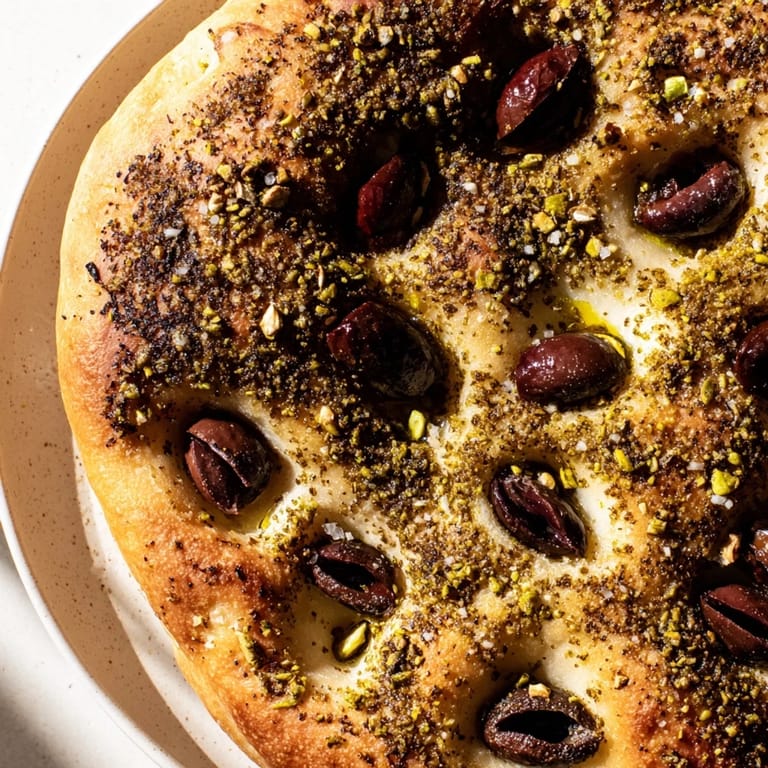
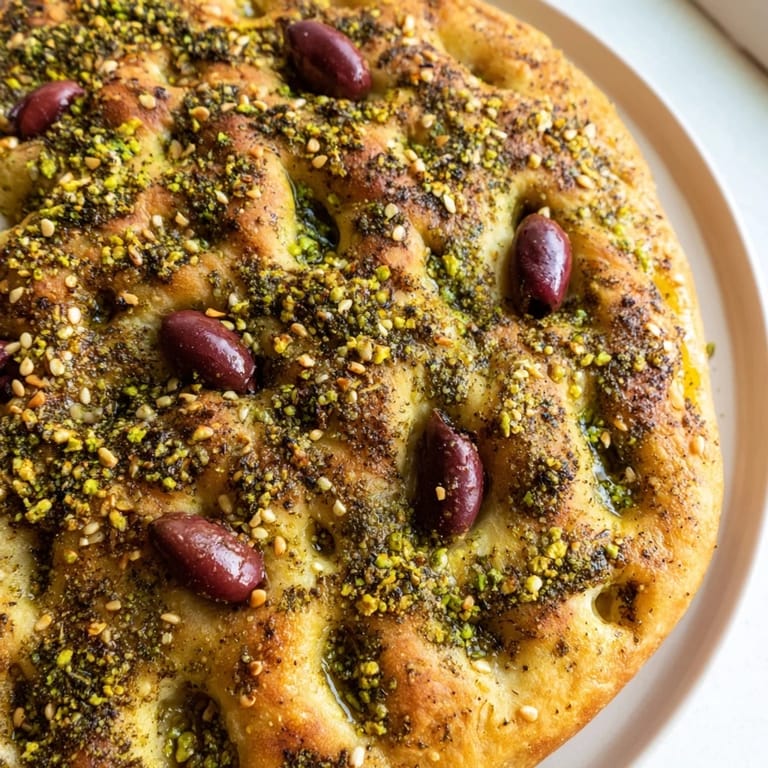
- Using your fingertips, press deep dimples all over the dough surface—this is meditative and creates pockets for oil and seasoning to pool. Drizzle generously with olive oil, scatter the zaatar evenly, scatter the halved olives, and finish with flaky sea salt.
- Bake until golden:
- Bake for 20 to 25 minutes until the edges are crisp and the top is deep golden. The kitchen will smell almost too good.
- Rest and serve:
- Let it cool for just a few minutes, then slice and serve warm or at room temperature, while the flavors are still singing.
 Save
Save There's a moment when focaccia comes out of the oven and you hear that faint crackle as the crust sets, still hot. That's when I know something has worked. With this one, it's not just bread—it's a conversation between Italian tradition and Middle Eastern flavor, and somehow they talk to each other beautifully.
Why This Mashup Works
Focaccia is fundamentally about simplicity: good flour, good oil, time, and salt. But it's also a blank canvas. I realized that zaatar, with its blend of thyme, sumac, and sesame, doesn't fight with olive oil the way some spices might. Instead, they dance together. The briny olives ground everything, preventing the spice from floating off into abstraction. What you get is bread that tastes like it has history and intention.
The Timing That Matters
I used to rush the rises, thinking a warm oven or a proofing box would speed things up. It never did—the bread just didn't taste as rich. Now I let the dough move at its own pace, especially the first rise. Slow fermentation builds flavor in ways heat alone can't. If your kitchen is cool, that's actually a gift; the dough will develop more complexity in the extra hours. This is one recipe where patience genuinely pays.
Serving and Storage
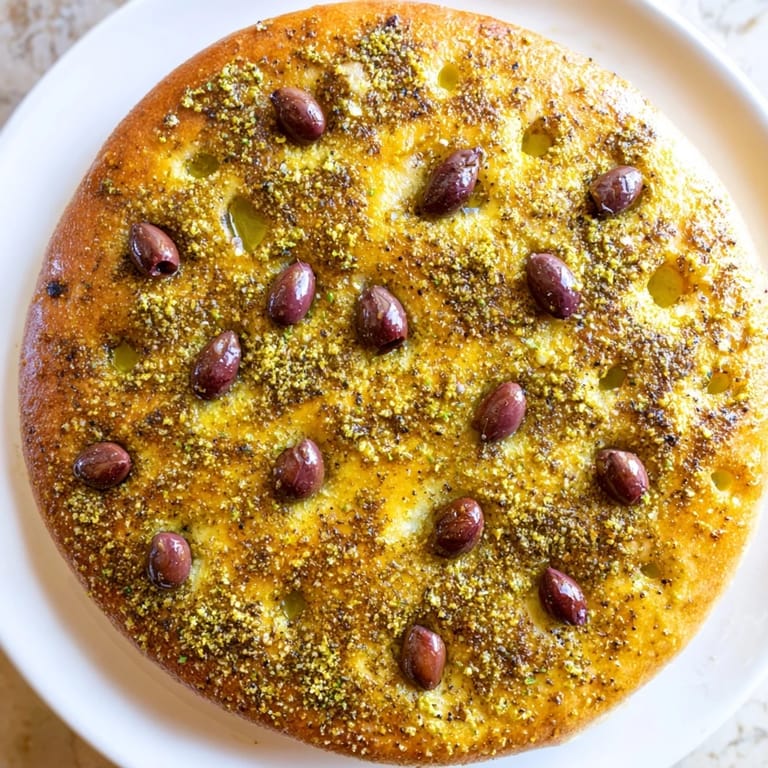
The focaccia is best eaten the same day, while the crust still has some crispness. But if you have leftovers, wrap them loosely and reheat in a warm oven for ten minutes the next day. I've also torn cold focaccia into pieces and used it for salads or sandwiches. Each version tastes slightly different, and that's part of its charm.
- Serve it alongside hummus or labneh for dipping, or with a simple salad dressed in lemon and olive oil.
- If you want to experiment, try adding sun-dried tomatoes, roasted garlic, or even crispy shallots to the topping.
- Store in an airtight container at room temperature for up to two days, though day one is always better.
 Save
Save This bread has taught me that sometimes the best flavors come from combining traditions without overthinking it. One slice is never enough, and that's not a flaw—it's the whole point.
Recipe FAQs
- → How do I achieve a fluffy focaccia texture?
Proper kneading and allowing the dough to rise twice ensures an airy and soft focaccia crumb.
- → Can I replace Kalamata olives with another type?
Yes, green olives can be used for a milder, less briny flavor without compromising texture.
- → What does zaatar add to the bread?
Zaatar infuses an aromatic, herbal, and slightly tangy profile that brightens the focaccia's flavor.
- → How should I prepare the dough before baking?
Dimpling the dough deeply with fingers and drizzling olive oil allows toppings to embed and creates a crisp crust.
- → Can I make variations to the topping?
Sun-dried tomatoes or roasted garlic can be added alongside zaatar and olives to enhance complexity.